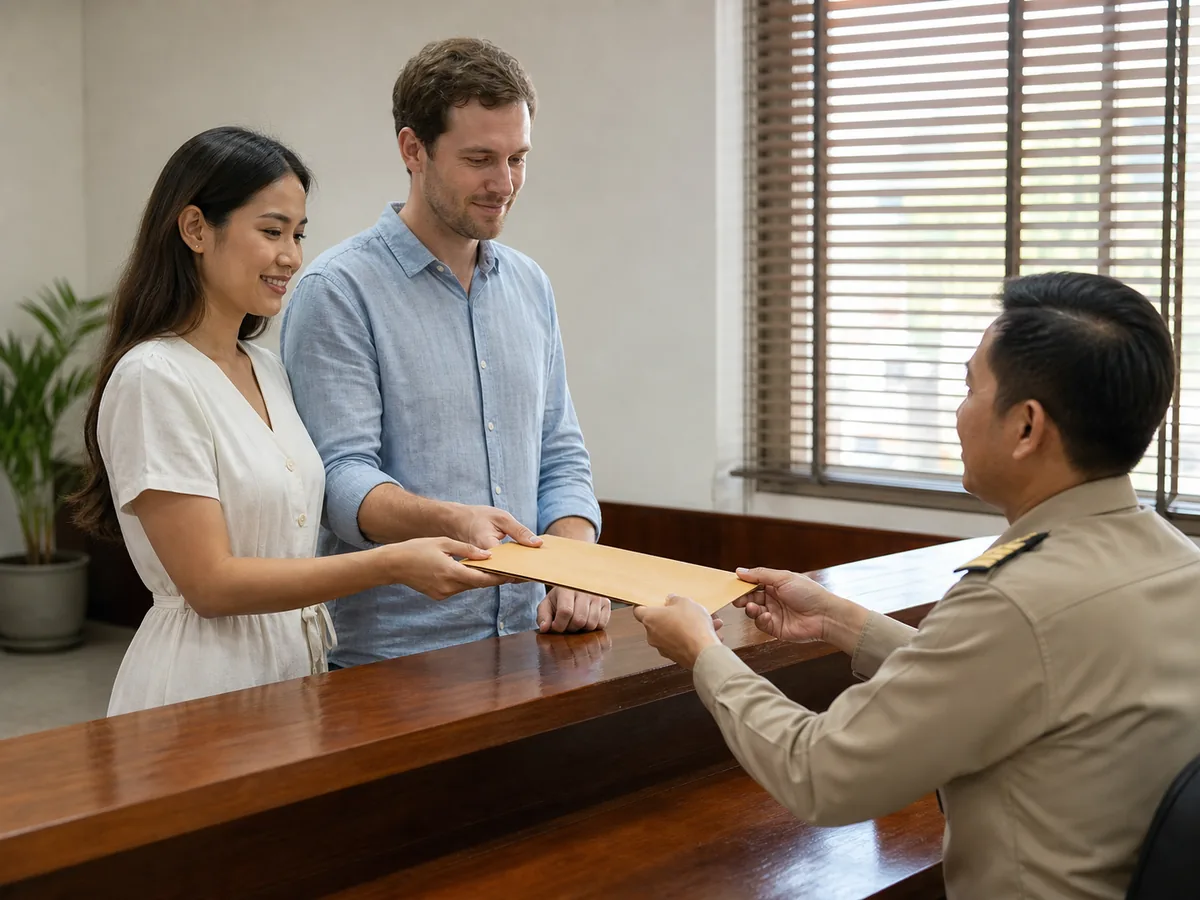
Let's be honest — plenty of couples get so caught up in planning the perfect ceremony, choosing the cake, and agonizing over the guest list that they forget the marriage registration entirely. Yet, this is the only part that actually makes your marriage legally binding in Thailand.
The good news? The process is remarkably straightforward, far less of a hassle than you might fear, and very affordable (usually free!). Whether you're two Thai nationals, an international couple, or an LGBTQ+ couple looking to register under the new Marriage Equality laws, here is your comprehensive, step-by-step guide to marriage registration in Thailand.
Important Disclaimer: Laws, regulations, and exact administrative requirements can fluctuate. This guide provides general guidance based on current Thai civil law (as of 2026). Always call the specific district (Amphoe) or Khet office you plan to visit, or consult the Department of Provincial Administration (DOPA) beforehand to confirm document requirements for your specific case.
1. What Are the Basic Conditions for Marriage?
Before you gather your documents, you must meet the legal requirements to marry in Thailand:
- Age: Both parties must be at least 17 years old. If either party is between 17 and 19 (minors under Thai law), parental consent is required.
- Single Status: Both parties must be legally single. You cannot register a new marriage if you are already legally married to someone else.
- Blood Relations: You cannot marry direct blood relatives (ascendants or descendants) or siblings.
- Post-Divorce Waiting Period: For a female whose previous marriage ended in divorce or widowhood, a marriage can only take place after 310 days from the end of the previous marriage. Exceptions apply if a child has been born, the divorced couple remmaries each other, a medical certificate proves she is not pregnant, or a court order allows it.
- Marriage Equality: As of early 2025, Thailand's Marriage Equality Act is in full effect. Two individuals of any gender can legally register their marriage under the exact same rights and conditions as heterosexual couples.
2. Documents Needed (General Case, Thai Nationals)
If both of you are Thai citizens, the paperwork is minimal:
- National ID cards of both people (original cards).
- House Registration Book (Tabien Baan) (originals and copies, though many modern offices only need the ID card, it's safer to bring it).
- At least two witnesses (must be 20+ years old) along with their original ID cards. They must be present to sign the register on the day.
- Evidence of Name Change: If either of you recently changed a title, first name, or surname, bring the official change certificates.
Special Cases (Extra Documents):
- Previously married or divorced: Bring the official divorce certificate (Kor Ror 6) or the former spouse's death certificate.
- Under the legal age (17-19): Parents or legal guardians must be present to sign the consent forms, bringing their ID cards and House Registration books.
3. Getting Married to a Foreigner in Thailand
If one or both of you are foreign nationals, the process requires significantly more preparation. You cannot simply walk into a Thai district office with a passport.
Step-by-Step for Foreigners:
- Affidavit of Marital Status: The foreigner must go to their country's embassy in Thailand and obtain an Affirmation/Affidavit of Freedom to Marry. Requirements for this vary wildly by embassy (some require proof of income, some require booking weeks in advance).
- Translation: Translate the issued Affidavit into Thai using an approved translation service.
- Legalization: Take the original Affidavit and the Thai translation to the Legalization Division of the Ministry of Foreign Affairs (MFA) in Bangkok (or a regional branch) to have the translation certified. This usually takes a few working days.
- Registration: Finally, take the legalized documents, passport, and the Thai partner's documents to the district office to register the marriage.
(Note: Some district offices in tourist areas like Bang Rak in Bangkok are very experienced with foreigners and may require translators to be present. Call ahead!)
4. Where to Register
You can register your marriage at any district office (Amphoe in provinces) or Khet office (in Bangkok) anywhere in Thailand.
- You do not need to register at the office corresponding to your House Registration.
- For example, if you live in Chiang Mai but are visiting Phuket, you can register in Phuket.
- Bang Rak District Office in Bangkok is historically the most popular place to register (the name translates to "Village of Love"), especially on Valentine's Day. If you want to register there on a popular date, you must book far in advance.
5. Cost and Fees
- Registering at the district office during normal working hours (Mon-Fri, 8:30 AM - 4:30 PM) is completely FREE.
- Off-site Registration: If you want an official to come to your wedding venue to sign the papers during your ceremony, this is possible! You must contact the district office in advance. There is an official fee (usually around 200 THB), plus you are expected to arrange transportation and provide a customary cash donation for the official's time.
6. What Happens After Registration?
Once you sign the register, you will receive two copies of the Marriage Certificate (Kor Ror 3)—one for each of you.
- Last Names: Under Thai law, spouses can choose to keep their original surnames, adopt their partner's surname, or use one as a middle name — changing it triggers its own round of post-registration paperwork.
- Titles: Female spouses can choose to keep "Miss" (Nang Sao) or change to "Mrs." (Nang).
- Marital Assets (Sin Somros): From the moment you sign, any income or assets acquired are generally considered joint marital property under Thai civil law. Assets acquired before the marriage (Sin Suan Tua) remain separate property. To set different rules, a prenuptial agreement must be drawn up and registered at the same time as the marriage.
7. Put the Paperwork in Your Wedding Plan
Many couples choose to register on the morning of their ceremony day, integrating it into the Thai water-pouring ceremony. Others pick a convenient separate day, and some consult a monk or astrologer to pick an auspicious date specifically for the registration.
Either way, add it to your checklist early. Ensure your documents are ready and your two witnesses know they need to bring their IDs. (See the full Thai Wedding Checklist).
Plan your whole wedding in one app
Don't Forget the Paperwork with Wedly
The registration is the classic thing that slips through the cracks amid flower arrangements and catering menus. In Wedly, you can add "Marriage Registration + Prepare Documents" as a high-priority task in your checklist, set a deadline, and tick it off when done. You can also track the expenses if you're paying for document translations or off-site official fees, ensuring you don't miss the single most important legal step of your union.
Summary
Registering a marriage in Thailand is genuinely straightforward for Thai nationals — simply bring both ID cards, House Registrations, and two witnesses to any district office, and it's free during working hours. Foreigners, the previously married, and minors need extra documents and should start the process weeks in advance. Add this crucial step to your wedding checklist, confirm the details with your chosen district office beforehand, and you're legally set for your happily ever after!