

Loading…
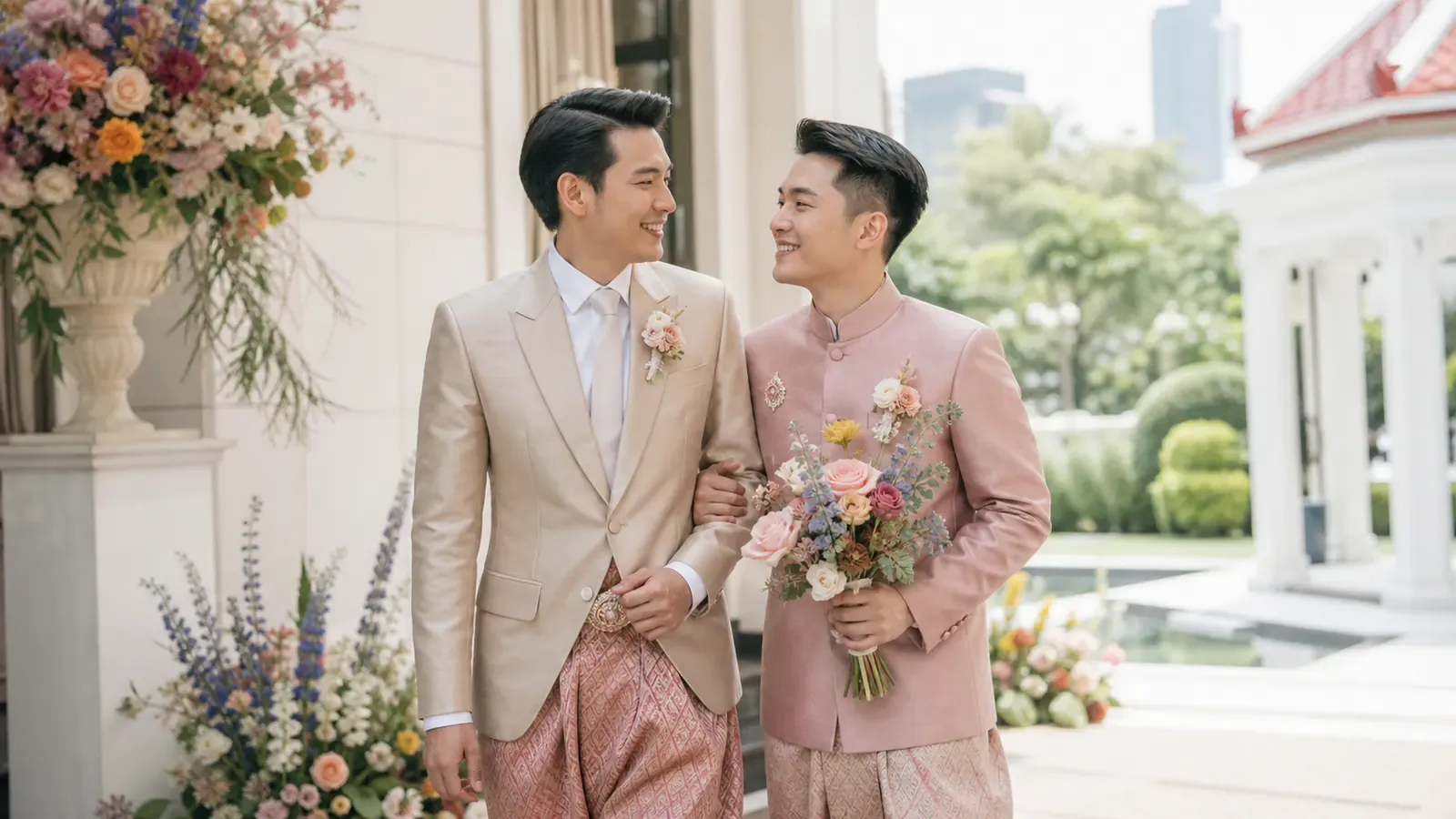
Thailand has officially made history. The marriage equality law, which came into full force on 23 January 2025, marks a monumental leap forward, making Thailand the first country in Southeast Asia (and the third in Asia) to legalize same-sex marriage.
Couples can now legally register their marriages regardless of their gender. While this is an incredibly important legal milestone providing long-awaited equal rights, it is also a cultural watershed moment. It gives LGBTQ+ couples the ultimate freedom to celebrate their love and commitment in a way that reflects their authentic selves, free from traditional constraints. 🏳️🌈
In this comprehensive guide, we separate the legal registration process from the wedding celebration itself. We will explore exactly what rights the new law grants, how to navigate the paperwork, and offer practical inspiration for building a beautifully inclusive wedding day without forcing either partner into traditional, gendered roles.
For years, LGBTQ+ couples in Thailand could hold symbolic wedding ceremonies, but they lacked legal protection. The newly amended Civil and Commercial Code has replaced gendered terms like "husband and wife" with the gender-inclusive "spouses," granting equal legal status across the board.
Depending on the couple's circumstances, here are the key legal rights now available:
(Note: Laws and administrative requirements can change, especially regarding foreign nationals and visas. The Thai Government Public Relations Department provides an official overview, but always verify your specific case with the district office, Thai embassy, or a qualified legal professional.)
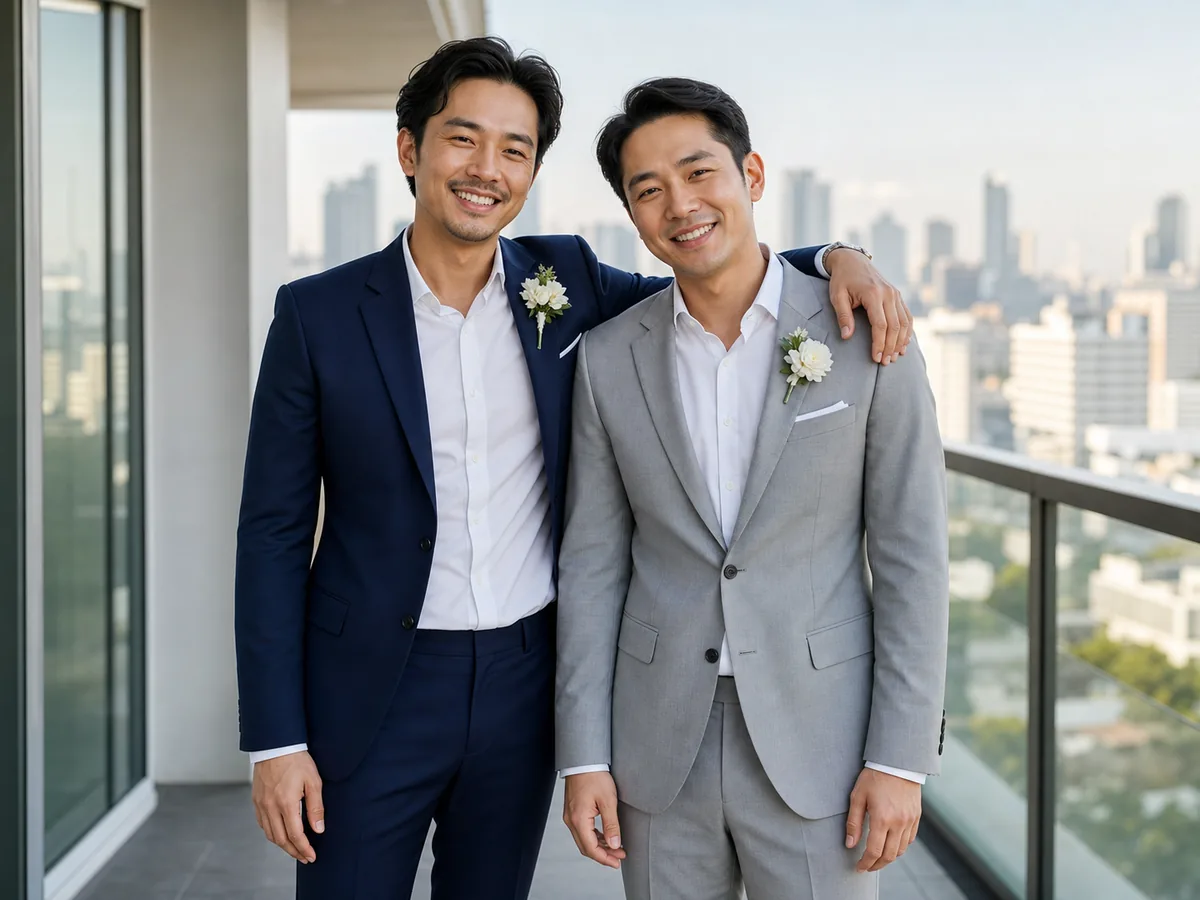
The core process of legally tying the knot in Thailand is designed to be identical for all eligible couples. Registration is a purely legal and administrative act that takes place at a government office — our full guide to registering a marriage in Thailand walks through the documents, fees and timing.
Remember, the registration is just the paperwork. Your actual wedding ceremony can happen on the same day, months later, or not at all—the choice is entirely yours.
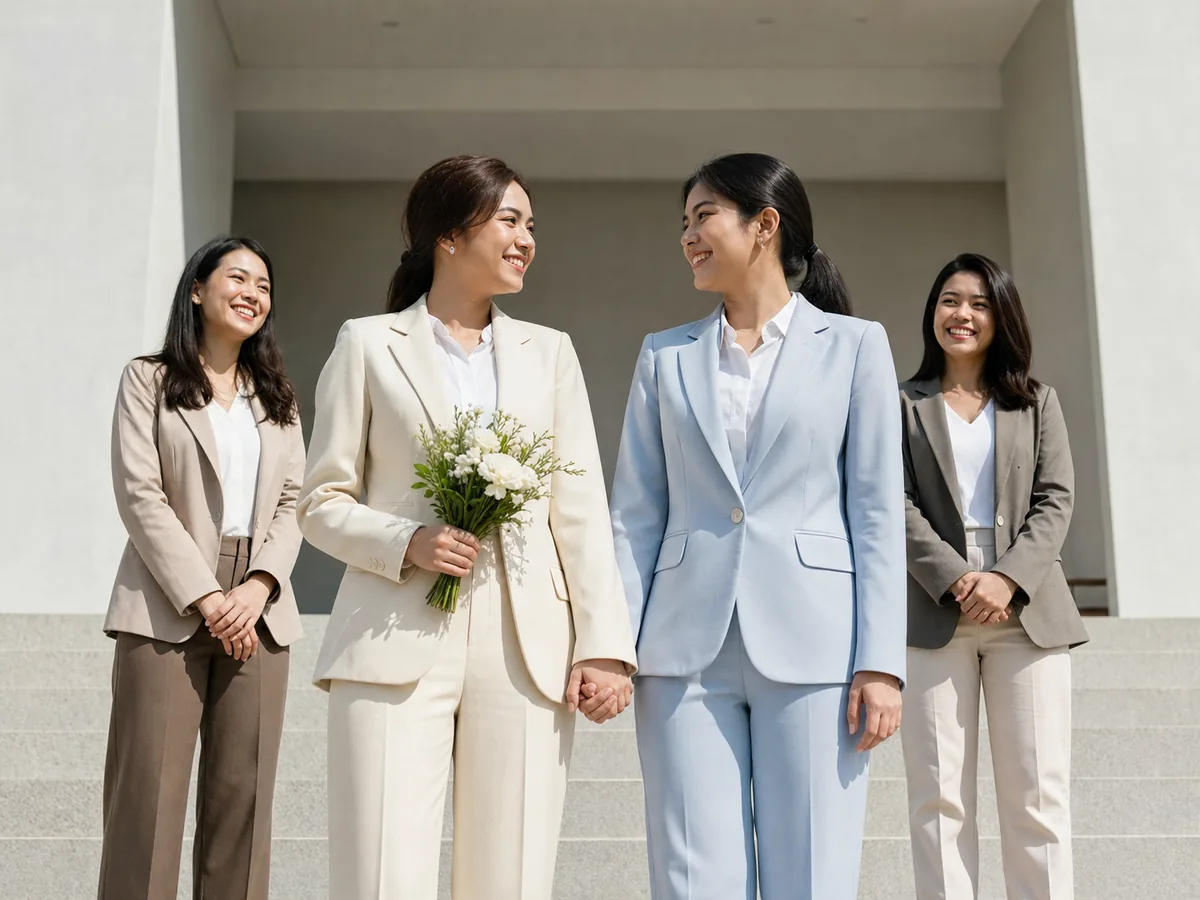
There is no single “LGBTQ+ wedding format.” The beauty of a modern wedding is that you can start with a blank canvas. Identify what each partner values, and only invite traditions in if they add genuine meaning to your relationship.
There are absolutely no rules. Wear two bespoke suits, two flowing bridal gowns, or a mix of both. Many Thai couples are embracing gender-fluid tailoring, pairing structured blazers with pleated skirts, or modernizing traditional Thai formalwear (Chut Thai) in matching or complementary pastel tones.
Ditch the traditional “bridesmaids” and “groomsmen” labels. Instead, opt for a shared “wedding party,” “honor attendants,” “best people,” or simply “our favorite people.” They can wear matching colors, coordinating suits, or whatever makes them comfortable.
Who walks down the aisle first? Whoever wants to!
Write your own vows to express your unique journey. Decide together whether you want to exchange rings, necklaces, or even matching tattoos. Furthermore, communicate with your MC or celebrant about the exact terminology you prefer (e.g., "partners in life," "spouses," or specific pronouns).
Your reception entertainment should fit your vibe. Whether it's an intimate late-night dinner with a jazz band, a high-energy DJ set, or a fabulous drag performance, make it a celebration of your community. If the night is likely to run long, treat the after-party as its own slot with its own venue rather than letting the reception drift.

While the law has changed, some relatives or even wedding vendors may still be unfamiliar with an inclusive ceremony format. A clear brief prevents awkward assumptions and microaggressions on the day.
💡 Wedly's tip: Give your photography and video teams a short "inclusion brief." List the people and relationships that matter most, the language you prefer, and clearly state any traditional staged moments you do not want to do. This ensures the final images capture your authentic love, rather than relying on a generic, heteronormative wedding shot list.
Planning a wedding that breaks the mold requires excellent organization. Whatever format, traditions, or vibes you choose, Wedly is built to help you manage it all.
Keep your budget, guest list, RSVPs, seating plan, and run sheet in one intuitive, shared app—so both partners, your wedding party, and your planners are always working from the exact same page. Celebrate your love, your way!
Yes. The law took effect on 23 January 2025 and gives spouses equal family rights regardless of gender, including rights involving marital property, inheritance, medical decisions, divorce, and joint adoption. Individual circumstances can involve other laws, so seek current official or legal advice for a specific case.
The core registration process is the same for every eligible couple. Thai nationals generally bring government-issued identification and supporting registration documents; foreign nationals may need a passport and proof of single status. Confirm the current document list with the district office or Thai mission before visiting.
Absolutely. Choose, adapt, or leave out traditions according to what feels meaningful to both of you and your families. Attire, entrances, processions, vows, and honorifics do not have to follow a bride-and-groom script.
Ready to start planning your wedding?