

Loading…
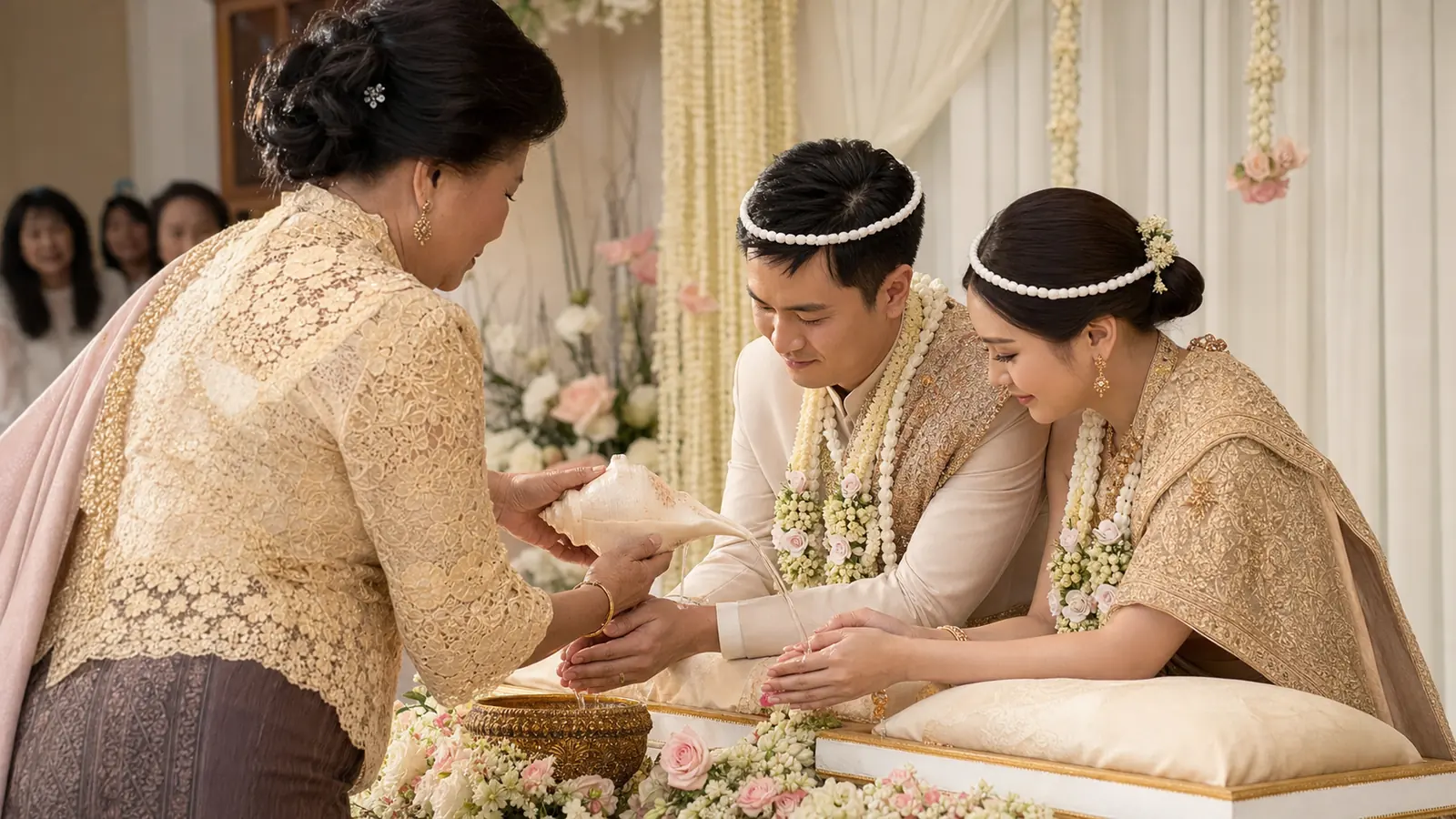
If you had to pick the most moving part of the Thai morning ceremony, many would name the water-pouring (rod nam sang) — the moment the couple receives blessings from the elders before both families, following the khan maak procession and sinsod counting. Here's what to prepare, how to set it up, and the full order.
Elders pour sacred water (nam sang) over the couple's hands while giving blessings — a blessing and a formal recognition of the marriage before the senior relatives. Honestly, it's the warmest, most meaningful part of the whole morning.
Set up the ceremony seat as the focal point, then prepare the accompanying items.
| Item | Purpose |
|---|---|
| Ceremony seat + arm rest | Couple sits side by side, hands pressed together |
| Water-catching tray | Catches the poured water |
| Mongkol faet | Paired sacred threads worn on the couple's heads, joined by a holy thread |
| Conch shell + sacred/scented water | For pouring over the hands |
| Anointing powder | The president anoints the forehead in blessing |
| Garland tray + incense tray | Ceremonial accompaniments |
| Hand towel + spare water | Ready to top up during the ceremony |
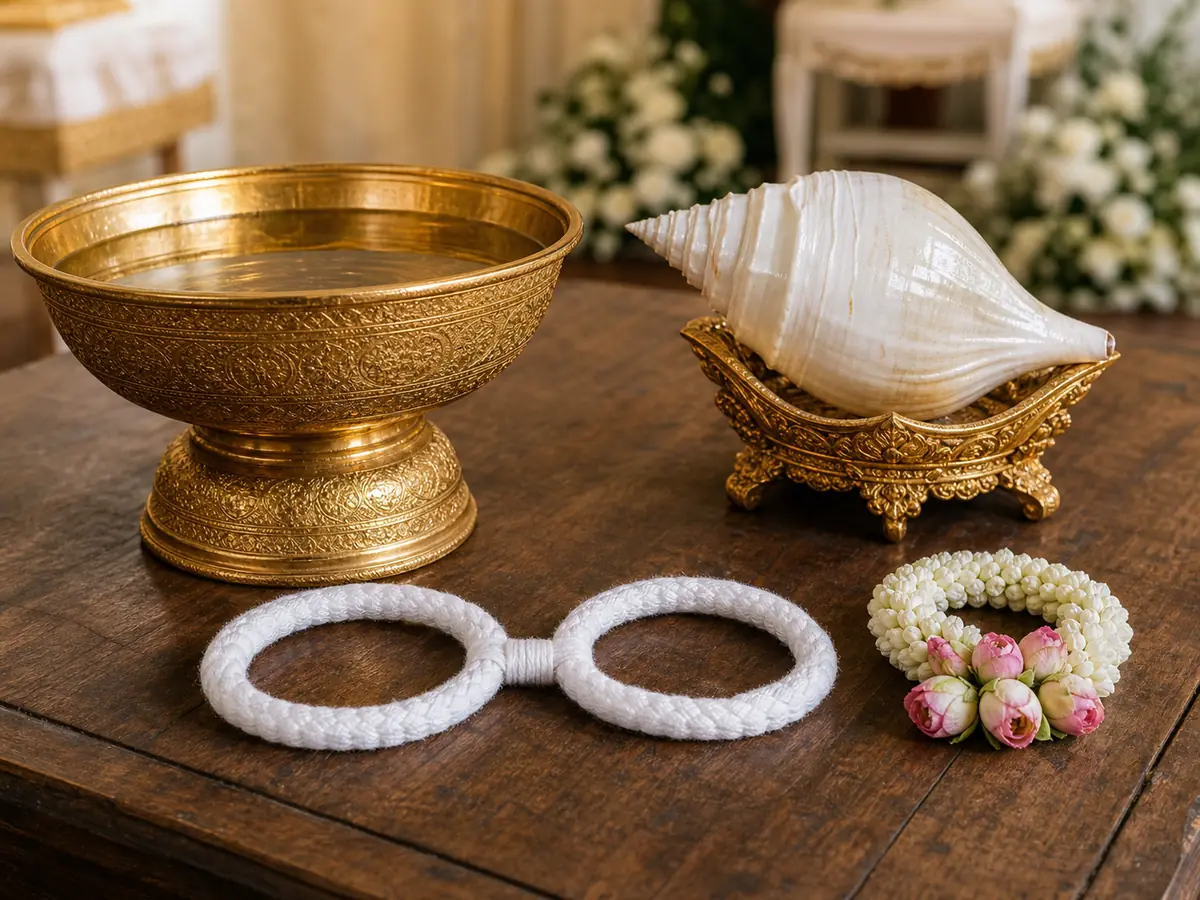
Items and details vary by family and region — the morning ceremony team or the elders in charge usually assemble this set for you.
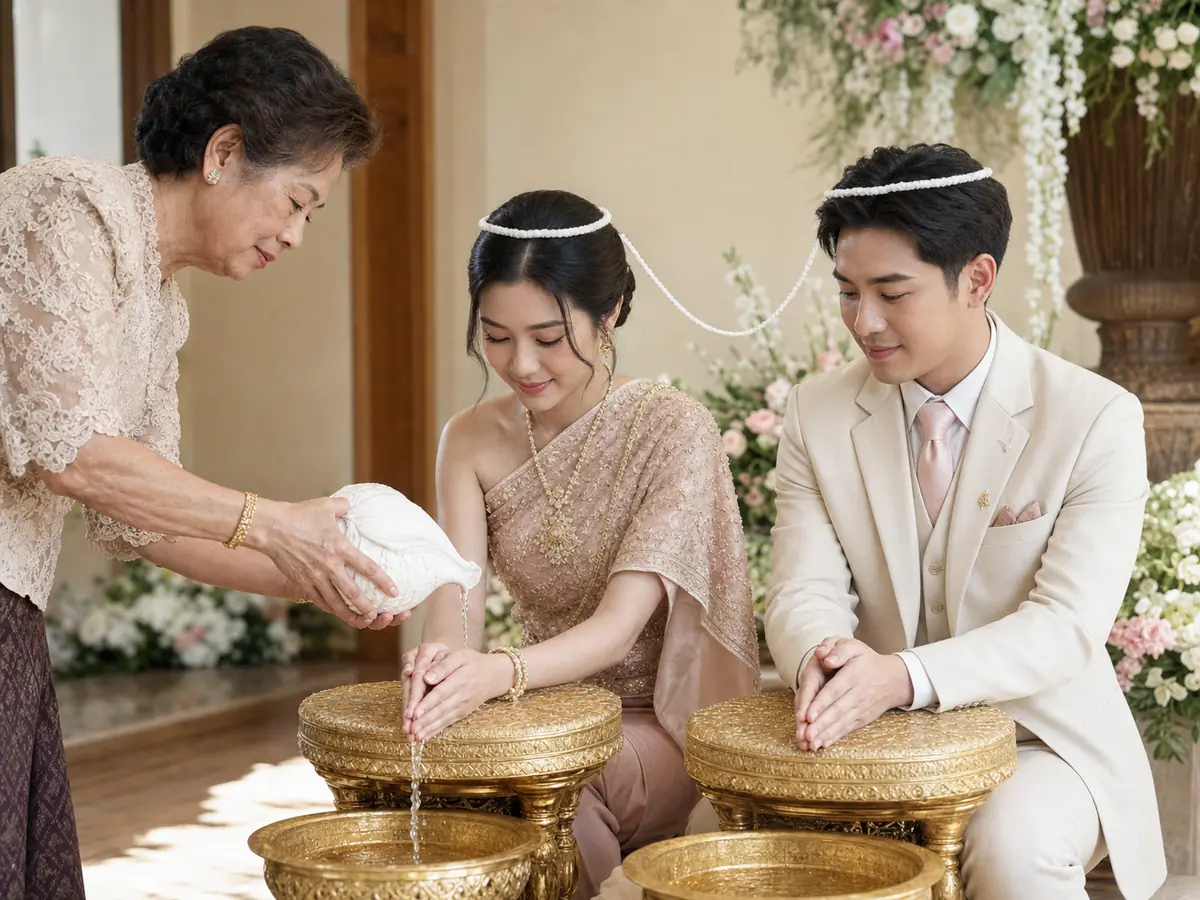
Start on the water-pouring auspicious time, then arrange the elders who'll pour around it — see how to place auspicious cues in the morning ceremony schedule.
Generally start with the president (the most senior or respected), then by seniority from both sides — parents, grandparents, senior relatives. The trick is to prepare a list of the order in advance with someone to invite them one by one, so there's no confusion and it doesn't drag.
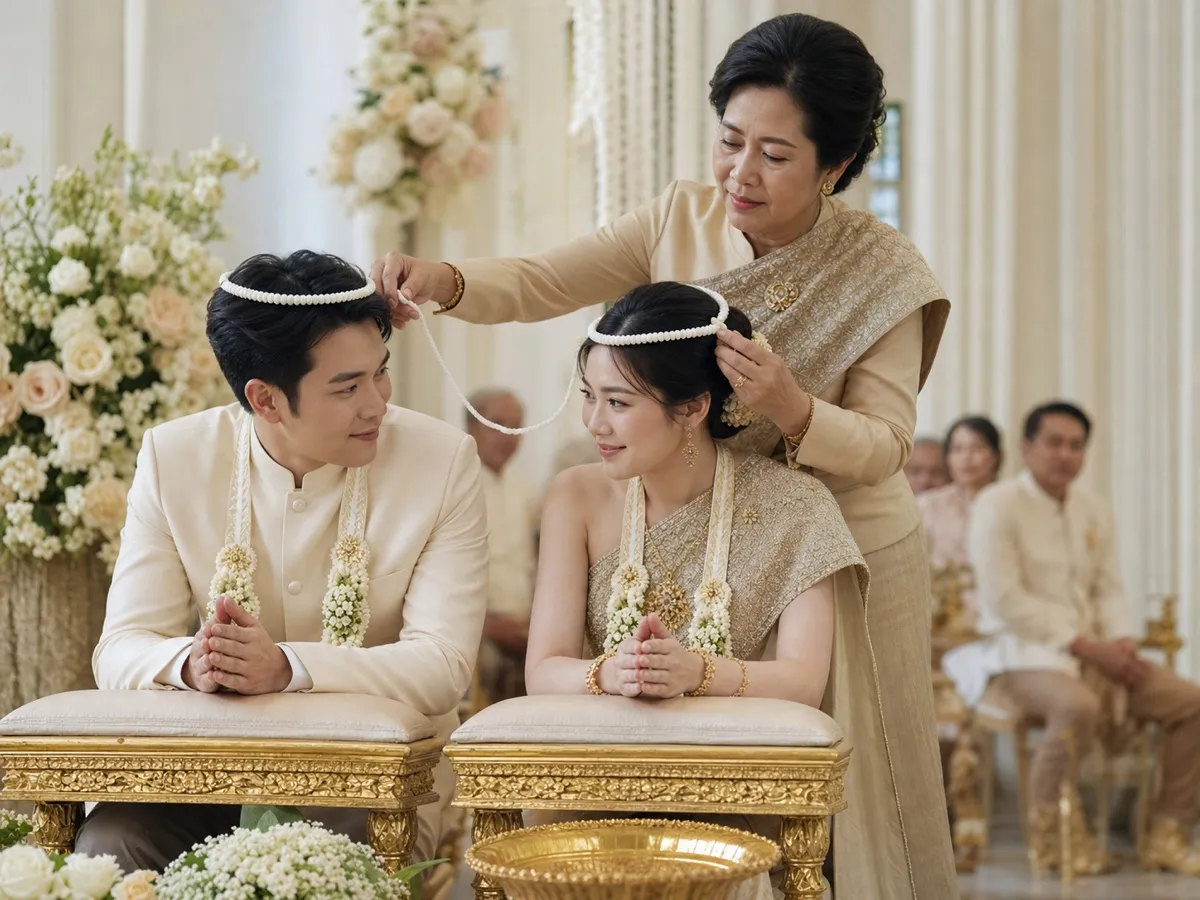
The water-pouring ceremony has both items to prepare and an order to manage. In Wedly you add the water-pouring auspicious time to your run sheet and build a checklist of the morning ceremony items (mongkol, conch, sacred water, anointing powder) in one place, shared with your team and family — so nothing's forgotten and the auspicious time is kept.
The water-pouring ceremony is warm and smooth when you prepare everything, start on the auspicious time, and arrange the elders in advance — from the president placing the mongkol and pouring first, through every elder's blessing. Plan it alongside your wedding checklist so nothing slips.
It's the ceremony where elders pour sacred water over the couple's hands while giving blessings. It's a blessing and a formal recognition of the marriage before the senior relatives, and it's the highlight of the Thai morning ceremony.
The ceremony president — the most senior or respected elder — pours first, followed by other elders in order of seniority, alternating or combined between the two sides as the family arranges.
They sit side by side at the ceremony seat with hands pressed together over a tray. Left-right positions vary by family custom, though the groom generally sits to the bride's right.
It depends on how many elders pour. With many senior guests it can take a while, so start on the auspicious time and prepare the order of elders in advance.
Ready to start planning your wedding?