

Loading…
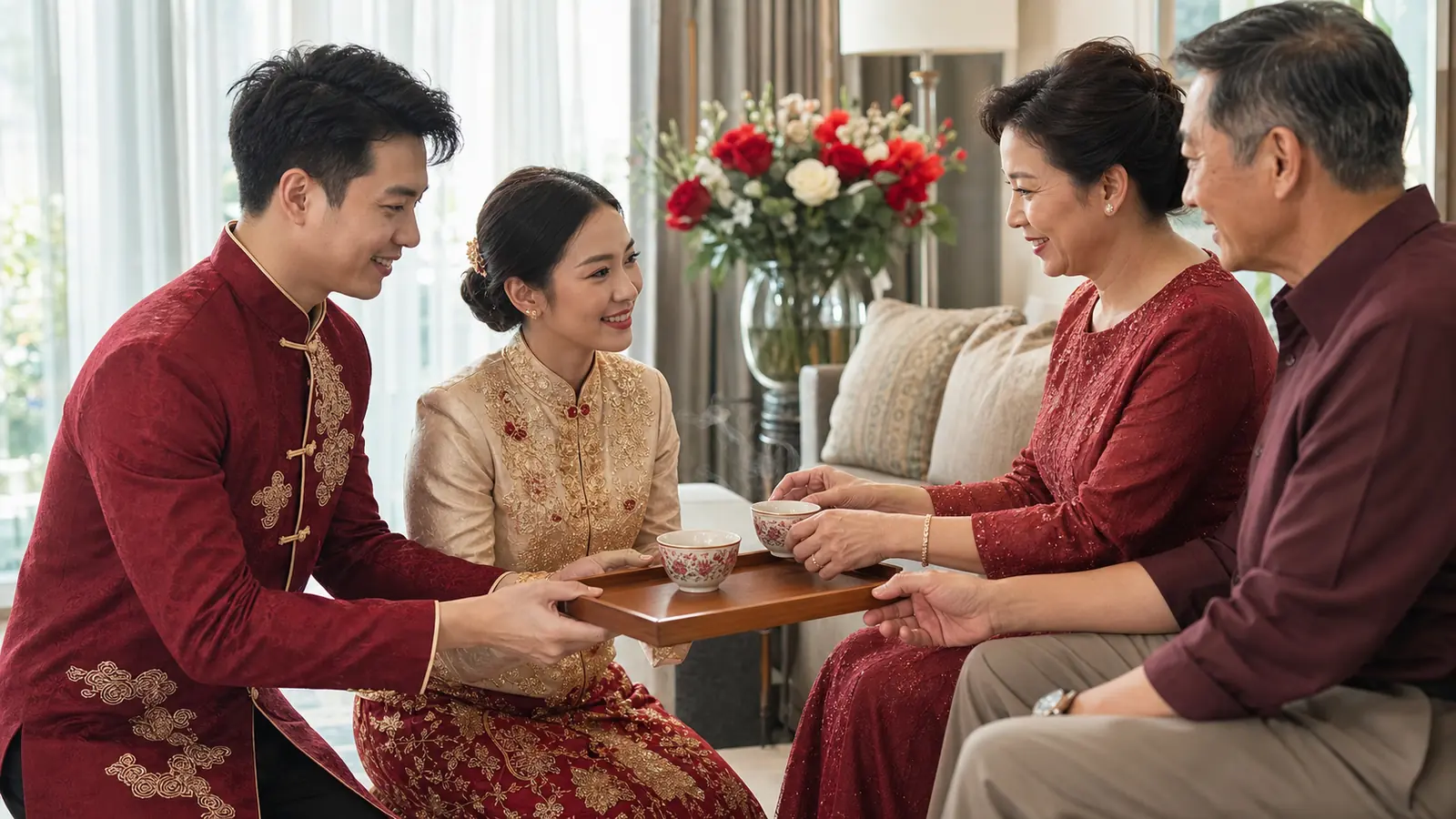
Ask a Thai-Chinese couple which part of the wedding day moves them most, and a lot of them say the exact same thing — the tea ceremony. While the white gown and the evening reception are glamorous, the tea ceremony is the intimate, deeply emotional heart of the day. It is the moment the couple formally shows respect to, and introduces themselves to, the elders of both families.
If you are planning a Thai-Chinese wedding, this ceremony is usually non-negotiable for the parents and grandparents. Here is a comprehensive guide to what it means, what you need to prepare, the correct order of serving, and the etiquette of receiving the famous ang pao.
In Chinese culture, serving tea is a profound sign of respect. In the context of a wedding, it serves a dual purpose:
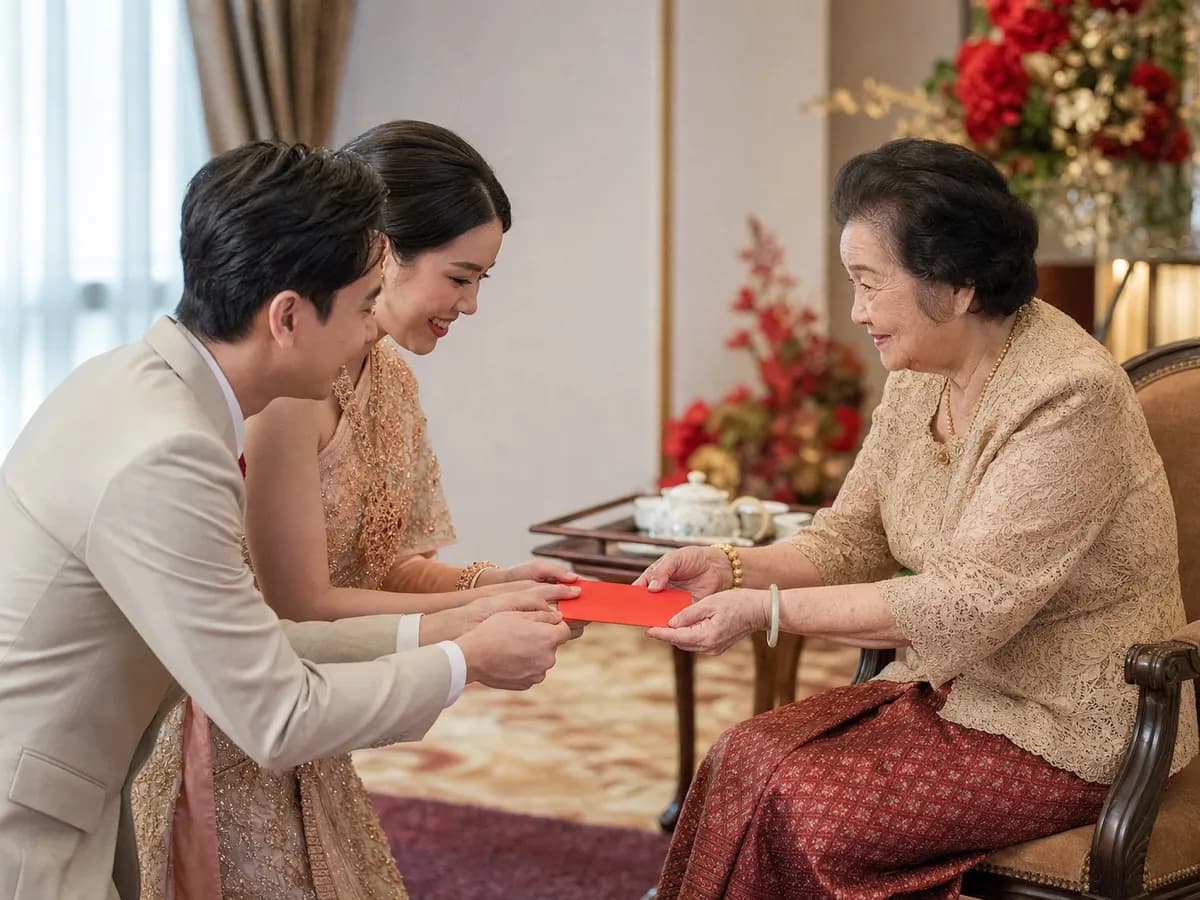
The elders who receive the tea will reciprocate by giving the couple a gift—typically an ang pao (red envelope containing cash), gold jewellery, or family heirlooms—along with words of wisdom and blessings for their marriage.

Traditionally, the tea ceremony was held at the groom's house after the bride was "brought in." Today, it is much more flexible and depends entirely on the families' preferences and logistics:
Advice: Discuss this early with both sets of parents. The venue will dictate how much time you have and how many relatives you can comfortably invite.

Preparing for the tea ceremony is relatively simple, but getting the details right shows respect for tradition.
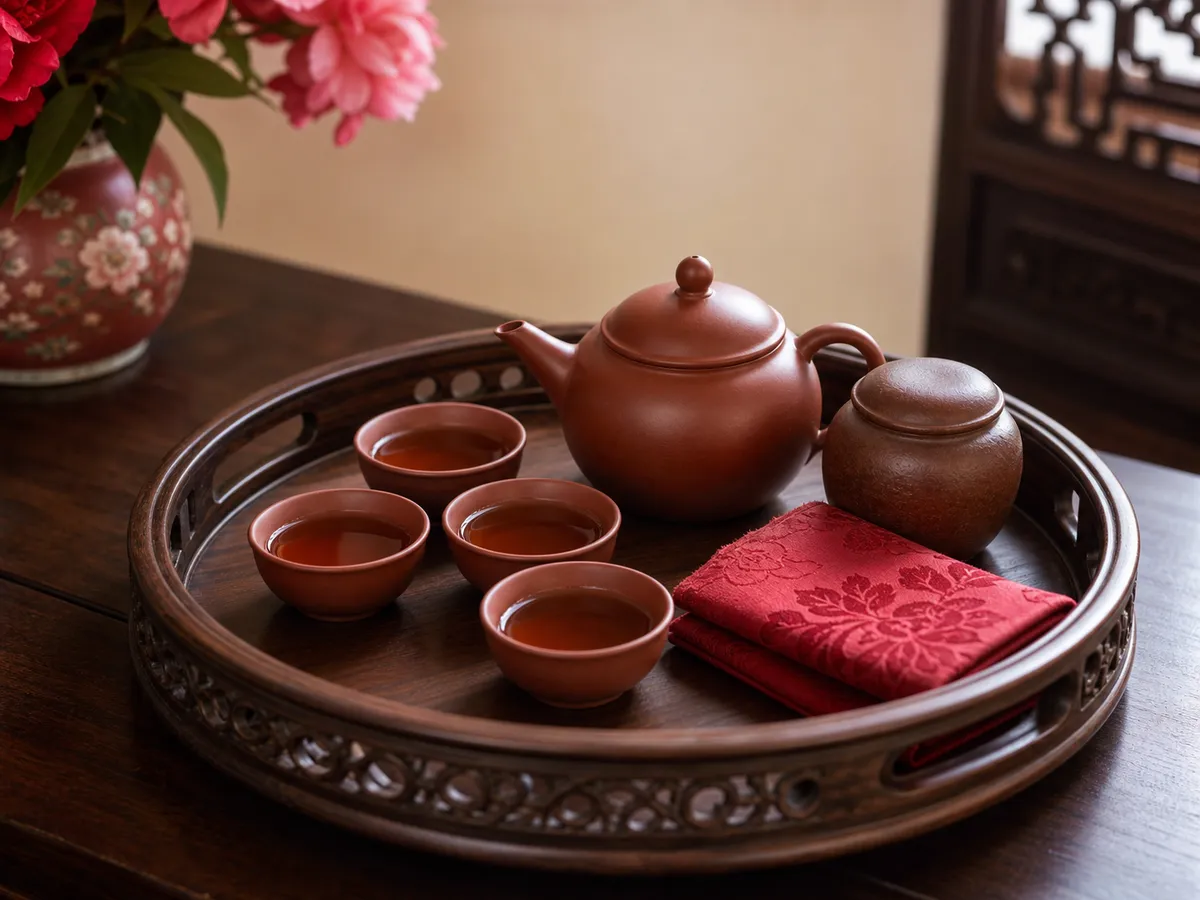
| Item | Notes |
|---|---|
| Tea set (pot + small cups) | Usually a red-and-gold ceramic set purchased specifically for the wedding. It symbolises good fortune. |
| Chinese tea | Standard black, oolong, or pu-erh tea, but the additions are what make it special. |
| Auspicious ingredients | Lotus seeds (for fertility/children), red dates (for sweetness and early arrival of a baby), and goji berries. |
| Serving tray | A beautiful tray (often red or wooden) for the couple to hold the cups on. |
| Kneeling cushions | Two comfortable cushions, usually red, for the couple to kneel on. |
| Ang pao / gold (elders' side) | The elders prepare these themselves to reciprocate after drinking the tea. |
Pro Tip: Items and details vary by Chinese dialect (Teochew, Hakka, Hokkien, Cantonese, etc.) and family custom. For example, some dialect groups insist on leaving the lotus seeds whole, while others prefer them halved. Ask the elders or a professional Chinese wedding planner to be sure you are following your family's specific traditions.
The most critical aspect of the tea ceremony is the order in which you serve the relatives. It must be strictly based on seniority.
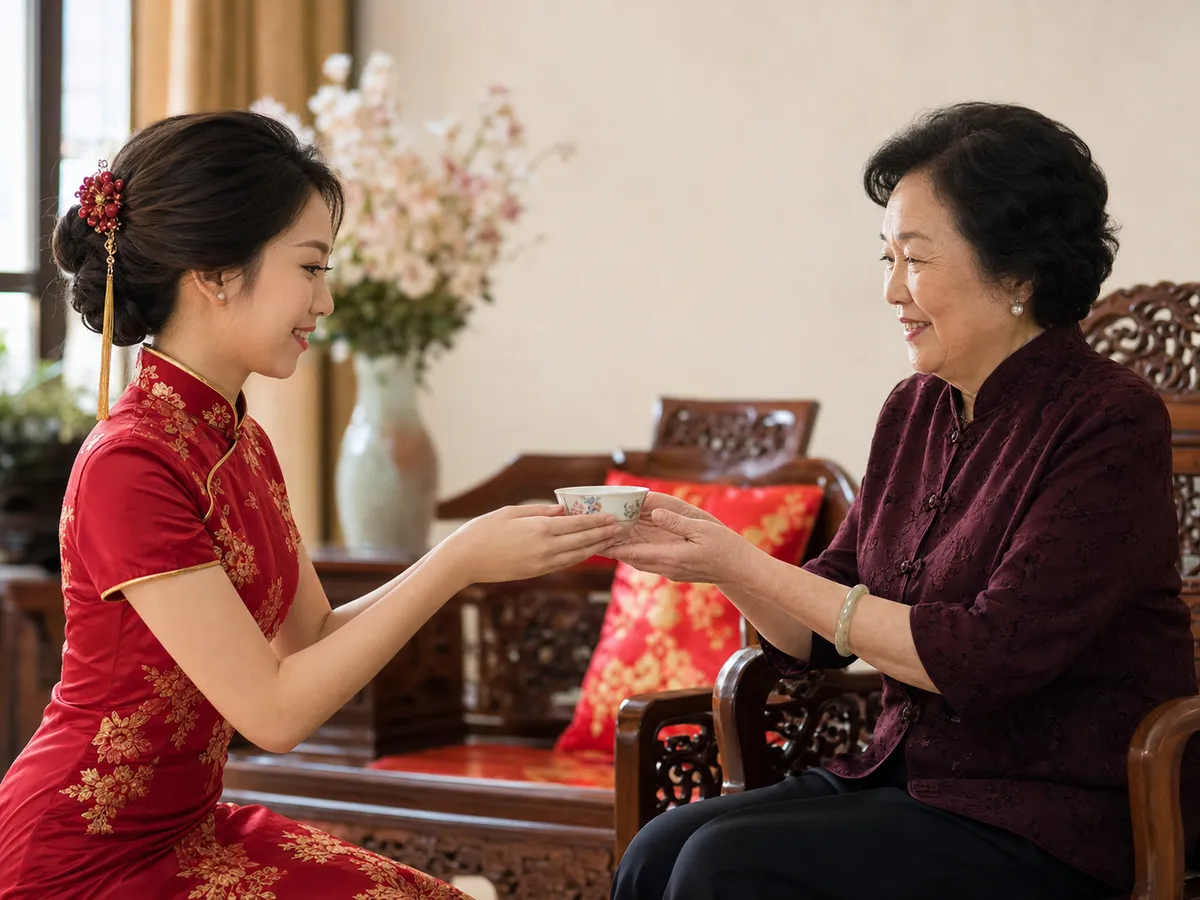
Note: The groom's family is typically served first, followed by the bride's family, though in a combined ceremony, families sometimes alternate. Confirm this with your parents.
A lifesaver tip: Prepare a list of the elders' order in advance! Assign a loud, confident cousin or a professional MC to call the names out one by one. There is nothing more awkward than accidentally skipping an older uncle or having relatives argue over who should go next.
The tea ceremony usually pairs with the Chinese banquet in the evening. Laying out the morning ceremony (tea) and the evening cues clearly keeps the whole day flowing. If certain VIP relatives arrive late to the morning tea ceremony, you can sometimes arrange a private, mini tea-pouring for them in a holding room before the evening reception begins. (See Ceremony Schedule and Chinese Banquet Seating).
The ang pao the elders give is not just a gift; it's a social ledger. Chinese tradition dictates that you must record who gave you what, so you or your parents can reciprocate with an equal or greater amount when their children get married.
When you are receiving dozens of red envelopes during a rushed 45-minute ceremony, things get lost. Wedly helps you log gift money / ang pao instantly—who gave how much—so the data is safe and searchable. Furthermore, you can drop the tea ceremony cue, including the name-calling list, directly into your digital run sheet, ensuring your MC and bridesmaids know exactly what happens when.
A beautiful tea ceremony starts with complete preparation, a clear order of elders, and serving respectfully by seniority. The auspicious tea ingredients and exact order should follow the family's specific dialect custom. Do that, and this deeply traditional moment of joining the family will be warm, emotional, and auspicious for both sides. It is a moment you, and your grandparents, will remember forever.
Usually in the morning at one family's home or before the reception, depending on the family's custom. Some hold it separately at the groom's and bride's homes, others combine it. Agree with both families' elders in advance.
Serve elders in order of seniority — grandparents first, then parents, then other senior relatives. The couple kneels or bows, offering the tea with both hands and a respectful greeting.
Chinese tea is often prepared with auspicious ingredients like lotus seeds, red dates and goji berries, symbolising children and sweetness. The details vary by Chinese dialect and family custom.
After receiving the tea, elders usually give the couple an ang pao (red envelope), gold or jewellery, with a blessing — welcoming them into the family and wishing them a smooth married life.
Ready to start planning your wedding?