

Loading…
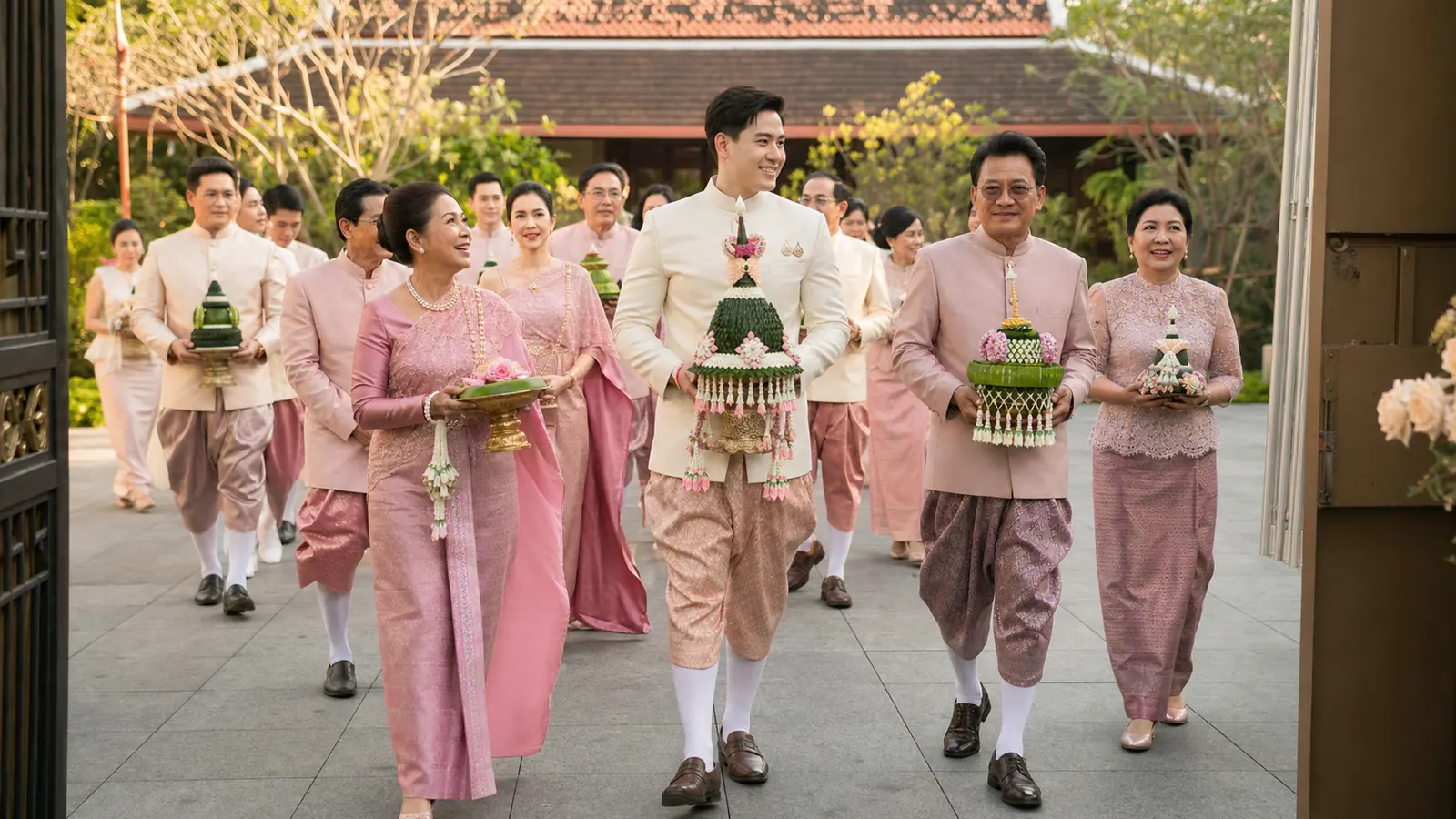
If any part of the morning ceremony is pure fun with a dash of suspense, it's the khan maak procession — but a jumbled order or a forgotten item throws the whole thing off fast. This deep dive follows on from the ceremony run sheet: who walks where, what goes in the khan maak ek and tho trays, and how the gate ceremony plays out.
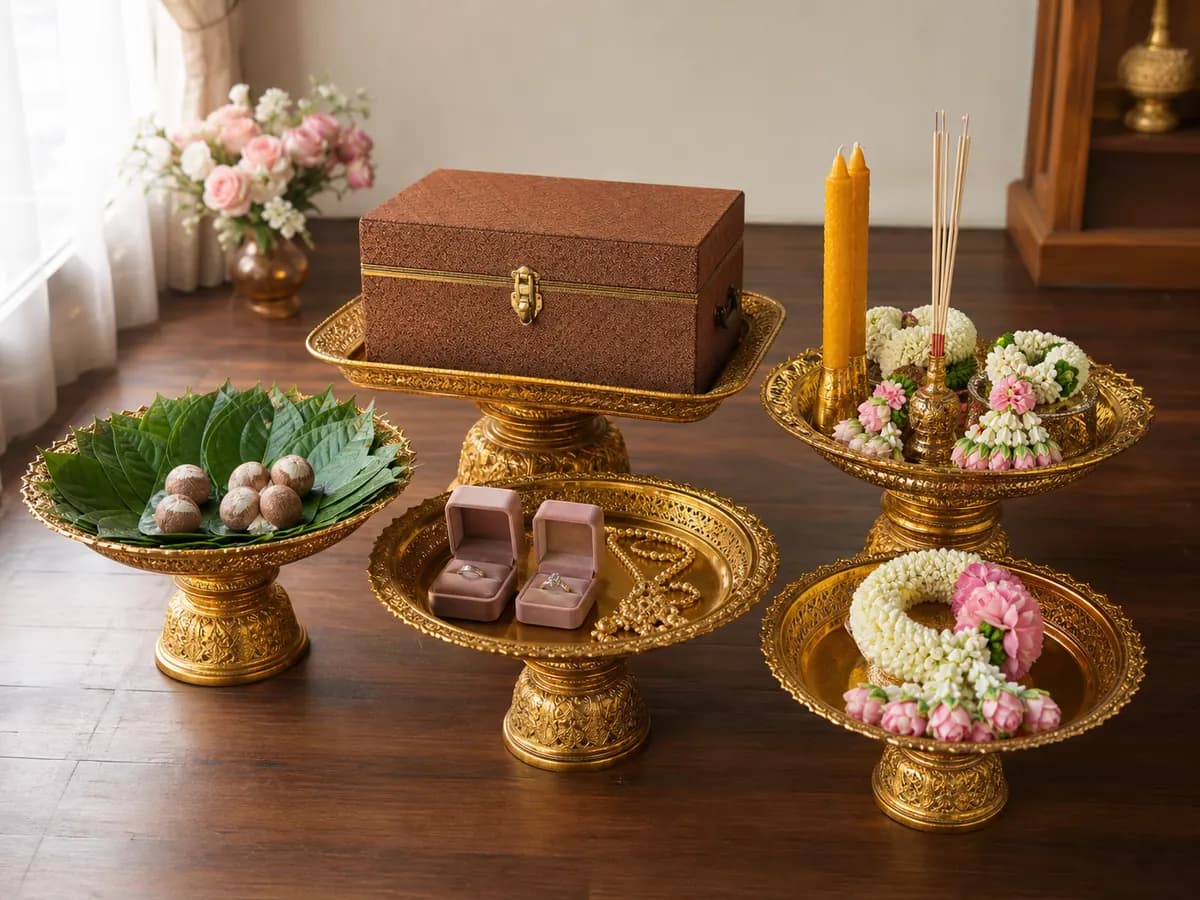
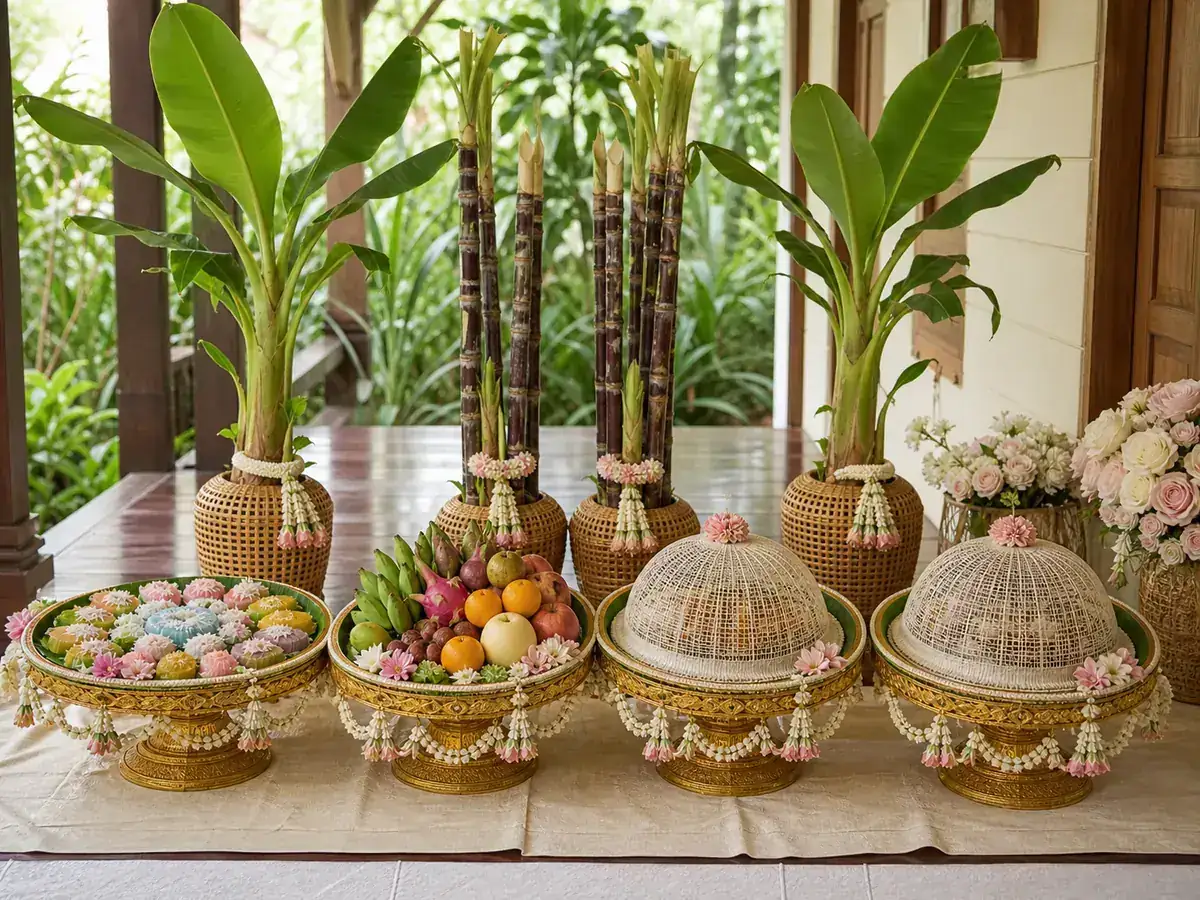
The procession always carries two groups of trays, arranged as a pair — ek is the main ceremonial trays, tho is the food gifts.
| Group | Role | Common contents |
|---|---|---|
| Khan maak ek | Main ceremonial trays, must be complete | Sinsod tray, engagement gold tray, ring tray, candle/incense tray, betel & areca tray, gold & silver bags + beans/sesame/popped rice/flowers (scattered when counting sinsod) |
| Khan maak tho | Food gift trays, adding abundance | Auspicious sweets (gold-named desserts), auspicious fruit, savoury dishes (pork/chicken/duck), liquor/water, paired banana and sugarcane plants |
Good to know: arrange the trays in even numbers for good fortune, and pick auspicious items for their fortunate names (like "gold" sweets, symbolising wealth). The exact list varies by family and region.
Every item carried in the procession has a deep symbolic meaning, blessing the couple with a prosperous future:
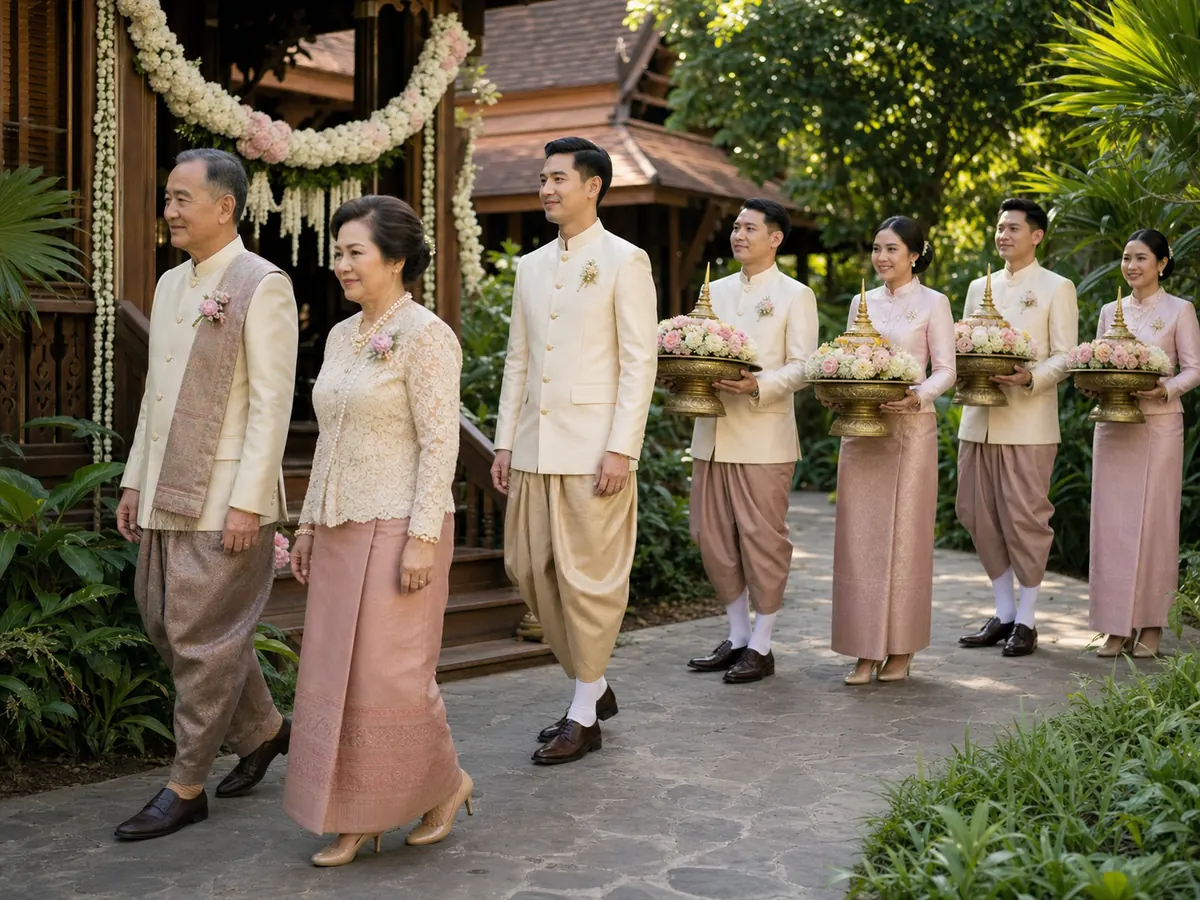
Arrange from the head of the procession to the tail (adjust to your family's custom):
| Order | Who / what | Notes |
|---|---|---|
| 1 | Elder / procession leader | The groom's senior negotiator leads |
| 2 | Long drums / brass band / lion dance | Sets the mood (Thai-Chinese often add lion dance) — optional |
| 3 | The groom | May have someone holding a parasol |
| 4 | Khan maak ek trays | Sinsod, gold, rings, candles, betel (senior relatives carry the key trays) |
| 5 | Khan maak tho trays | Sweets, fruit, savoury dishes, liquor, banana & sugarcane |
| 6 | Remaining relatives | Follow at the tail |
Tray-bearers are usually unmarried relatives or friends in Thai dress, walking in pairs — line the pairs up before setting off so it isn't chaotic on the day.
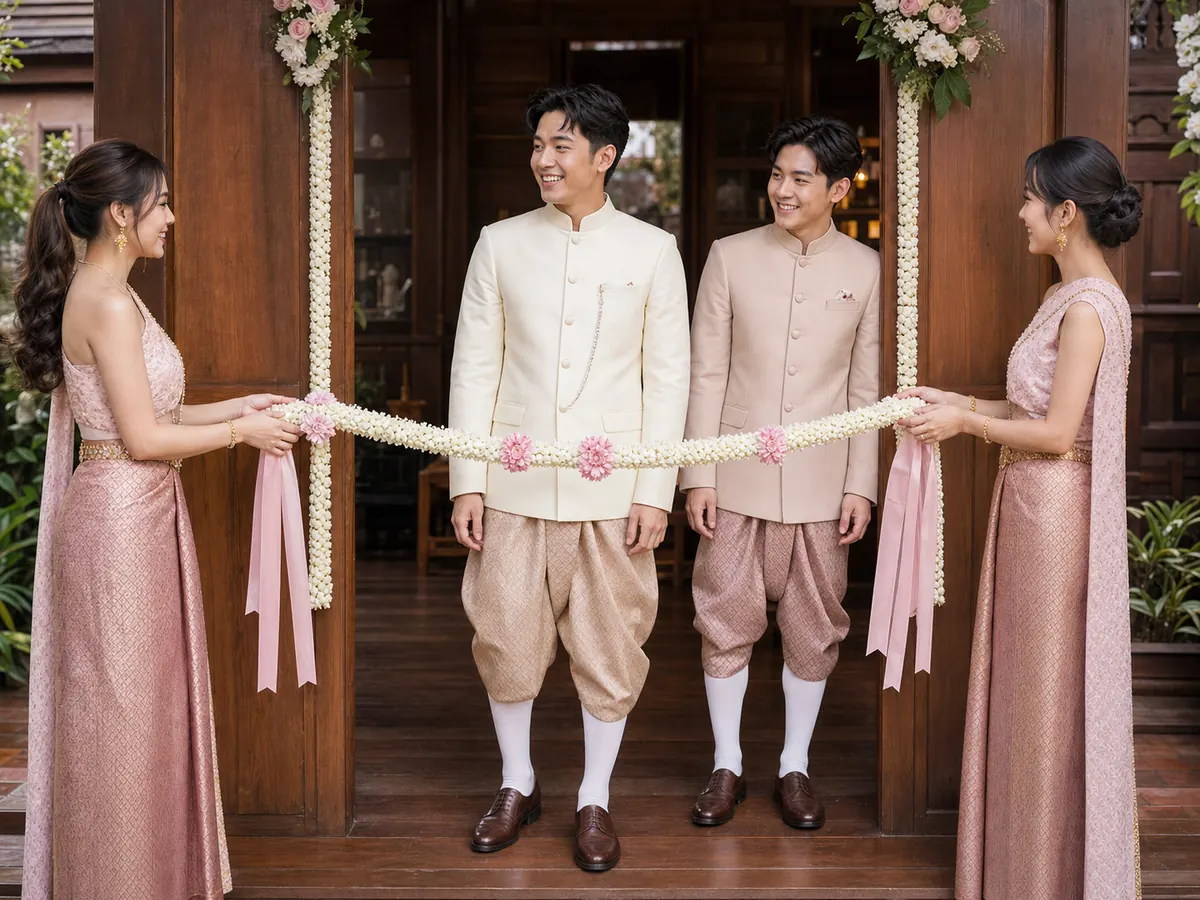
When the procession reaches the bride's home, her relatives block the way with symbolic gates — a "silver gate", "gold gate" and so on, formed by a necklace or belt. The groom pays a gate-passing envelope to get through, and it's a fun, laughter-filled moment.
The procession enters, the trays are set down, and the ceremony continues per the run sheet — opening the khan maak and counting the sinsod (scattering beans, sesame, popped rice and flowers), then the ring exchange and water-pouring (see the full order in the morning ceremony schedule).
The khan maak involves a lot of trays and items — far too easy to forget from memory. In Wedly you can build a checklist of each tray's contents, link it to the khan maak procession cue in your run sheet, and assign who carries which tray — all in one place, so nothing's forgotten on the day.
A smooth khan maak procession starts with complete ek and tho trays, even numbers, and a clear order from the leader out front to the relatives at the tail. Have the gate-passing envelopes ready, and the procession and gate ceremony become the most fun part of the morning — without missing the auspicious time. Pair it with your wedding checklist.
Khan maak ek is the main ceremonial set holding the sinsod, engagement gold, rings, betel and candles. Khan maak tho is the set of food gifts — auspicious sweets, fruit, savoury dishes, liquor, banana and sugarcane. They are arranged as a pair in the procession.
There's no fixed number — it depends on how many trays you arrange. Trays are usually kept to an even number for good fortune, and tray-bearers walk in pairs, along with the elders, the groom and any drum troupe.
Traditionally unmarried relatives or friends in Thai dress carry the trays, walking in pairs. Some families have senior relatives carry the most important trays like the sinsod and gold.
Not required, but a long drum or brass band adds a festive atmosphere. Many weddings include one; simpler or space-limited events skip it.
Ready to start planning your wedding?