

Loading…
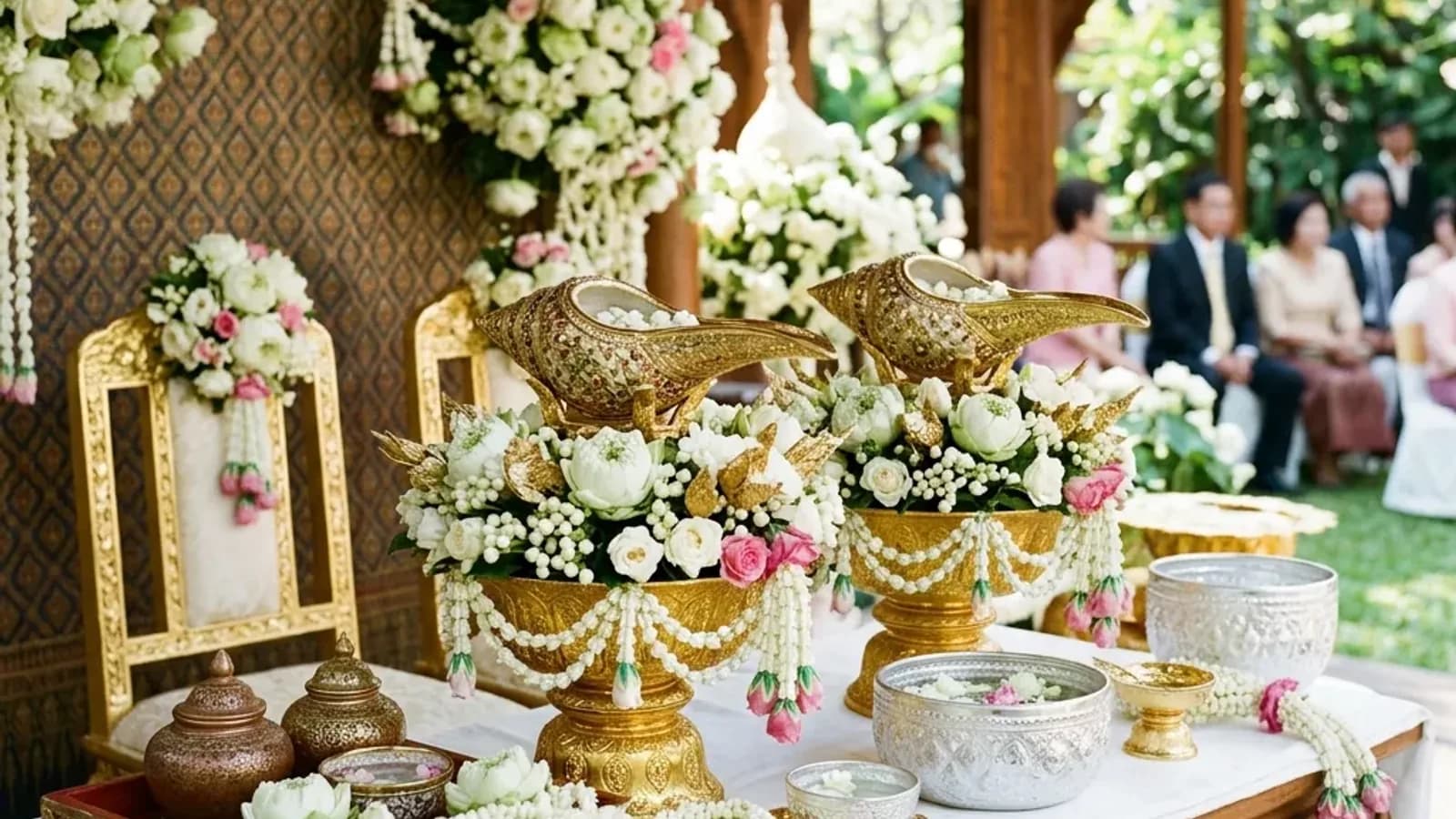
The Khan Maak procession is one of the most vibrant, joyous, and culturally rich highlights of a traditional Thai wedding. However, when it comes to actual preparations, many couples find themselves asking, "What exactly do we need to prepare for the Khan Maak?" Today, Wedly will take you on a deep dive into every detail of preparing the Khan Maak procession, ensuring your wedding ceremony is perfect and culturally authentic. This piece stays on the trays themselves — what belongs in each one and what it means. How the procession itself unfolds on the morning is a story we tell separately, and if you want the emcee's words and the timing of each stage, that's in our Thai morning ceremony script and timeline.
In ancient times, betel nuts and leaves (Mak and Phlu) were traditional snacks offered to welcome guests into a home. The Khan Maak (betel nut tray) symbolizes bringing the most valuable and auspicious items to the bride's family as a sign of respect and an official marriage proposal. Today, the Khan Maak is divided into two main parts: Khan Maak Ek (The Main Trays) and Khan Maak Tho (The Secondary Trays).
The Khan Maak Ek consists of the most important trays in the procession. They are usually carried by respected elders who have a happy and long-lasting marriage. The items in these trays all hold auspicious meanings and are essential for the main ceremony.
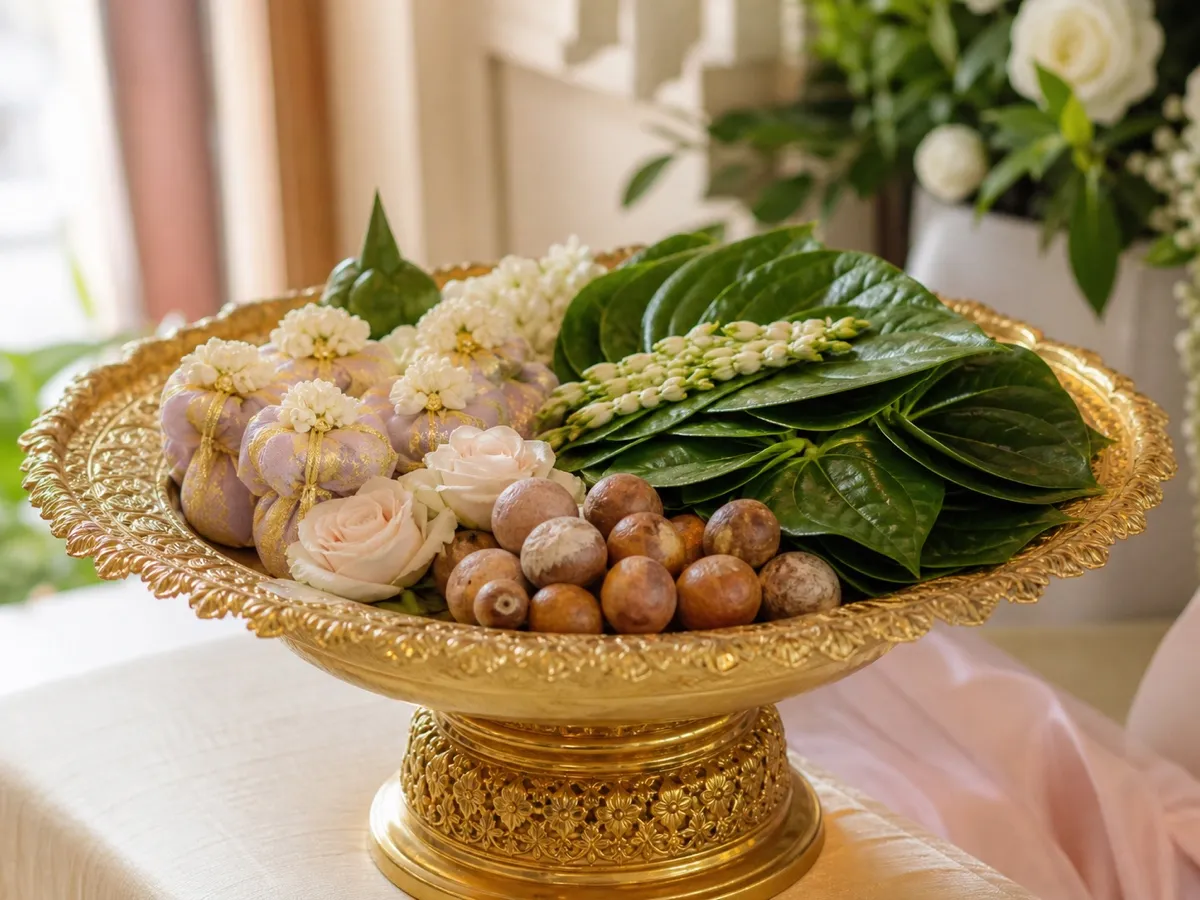
This is the very first tray that leads the procession. It contains betel nuts, betel leaves, silver, gold, and copper-colored leaves, along with small auspicious bags filled with seeds like paddy rice, mung beans, and sesame. These seeds symbolize growth, prosperity, and fertility in the couple's new life together.
This tray is used to display the cash, gold, or other valuables that the groom brings as a dowry to the bride's family. It is beautifully lined with auspicious leaves and sprinkled with rose petals or other lucky flowers. If the figure itself is still open, our sinsod calculator gives you a starting point to bring to the conversation with the elders.
Dedicated to the bride's engagement ring, this tray is often exquisitely decorated with fresh flowers or a small floral arrangement to make the ring stand out beautifully during the ring exchange ceremony.
Used during the respect-paying ceremony (Phiti Rap Wai), this tray symbolizes reverence and gratitude towards the parents and elders of both families.
Following the main trays, the Khan Maak Tho consists of secondary trays filled with auspicious desserts, fruits, and other items symbolizing sweetness and abundance. The number of these trays is typically an even number (such as 2, 4, 8, or sometimes 9, depending on specific regional customs).
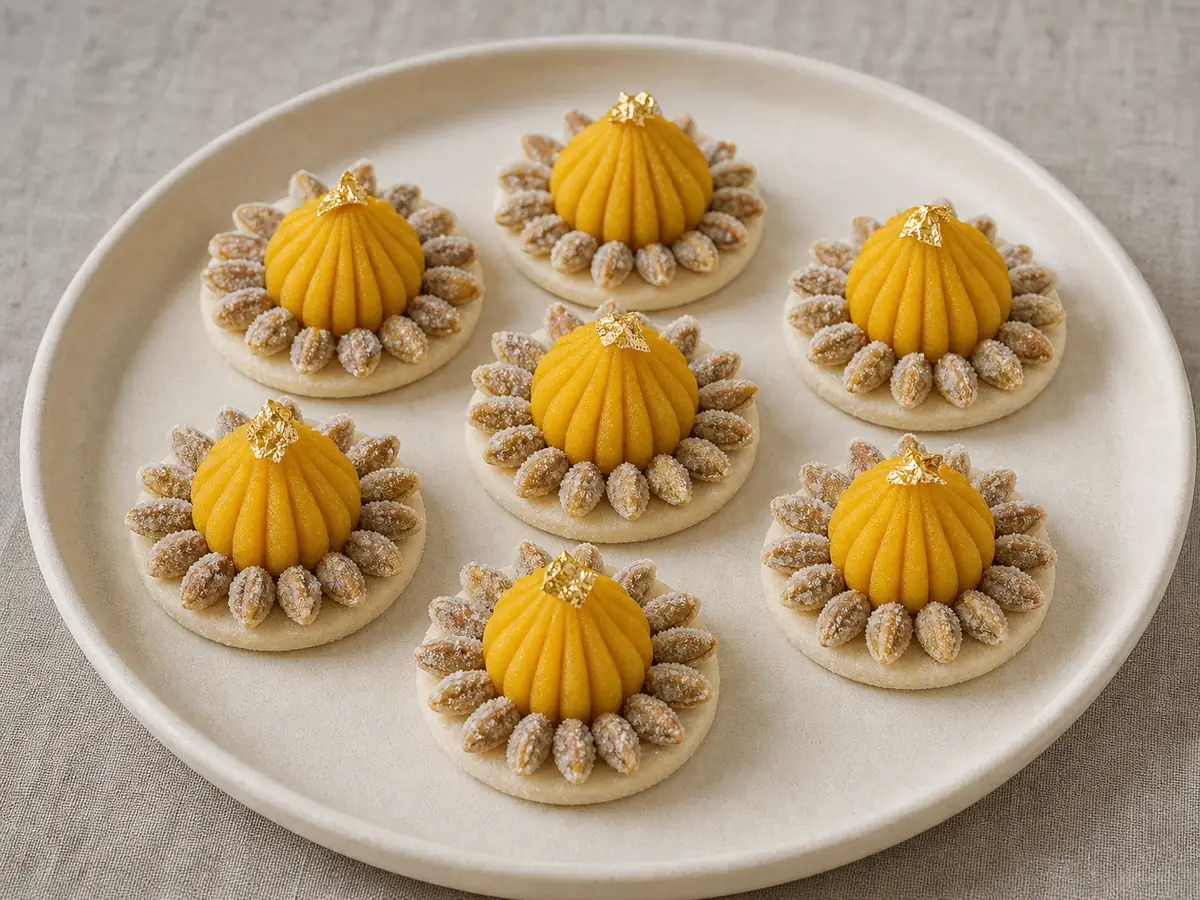
No Thai wedding is complete without traditional sweets. The nine essential desserts often include Thong Yip, Thong Yot, Foi Thong, Thong Ek, Ja Mongkut, Saneh Jan, Look Choup, Khanom Chan, and Tuay Foo. These sweets represent sweet love, career advancement, and wealth — we unpack what each auspicious dessert means in more detail elsewhere.
These are indispensable symbols in the procession. The banana tree represents fertility and having many children, while the sugarcane tree signifies a love that is sweet and enduring.
Fruits with auspicious meanings are carefully selected, such as young coconuts (purity), bananas (abundance), pomelos (prosperity), and pomegranates (strong family bonds).
Some traditions also include savory food trays, such as boiled pork belly, boiled chicken, and snakehead fish, to symbolize a bountiful and well-fed married life.
With the contents sorted, two things are left. The first is who carries what, and in what order. The Khan Maak Ek trays go to respected elders with happy marriages of their own, while the banana and sugarcane trees should go to the groom's strongest friends — they're heavier than they look. The full running order of the Khan Maak procession is covered separately.
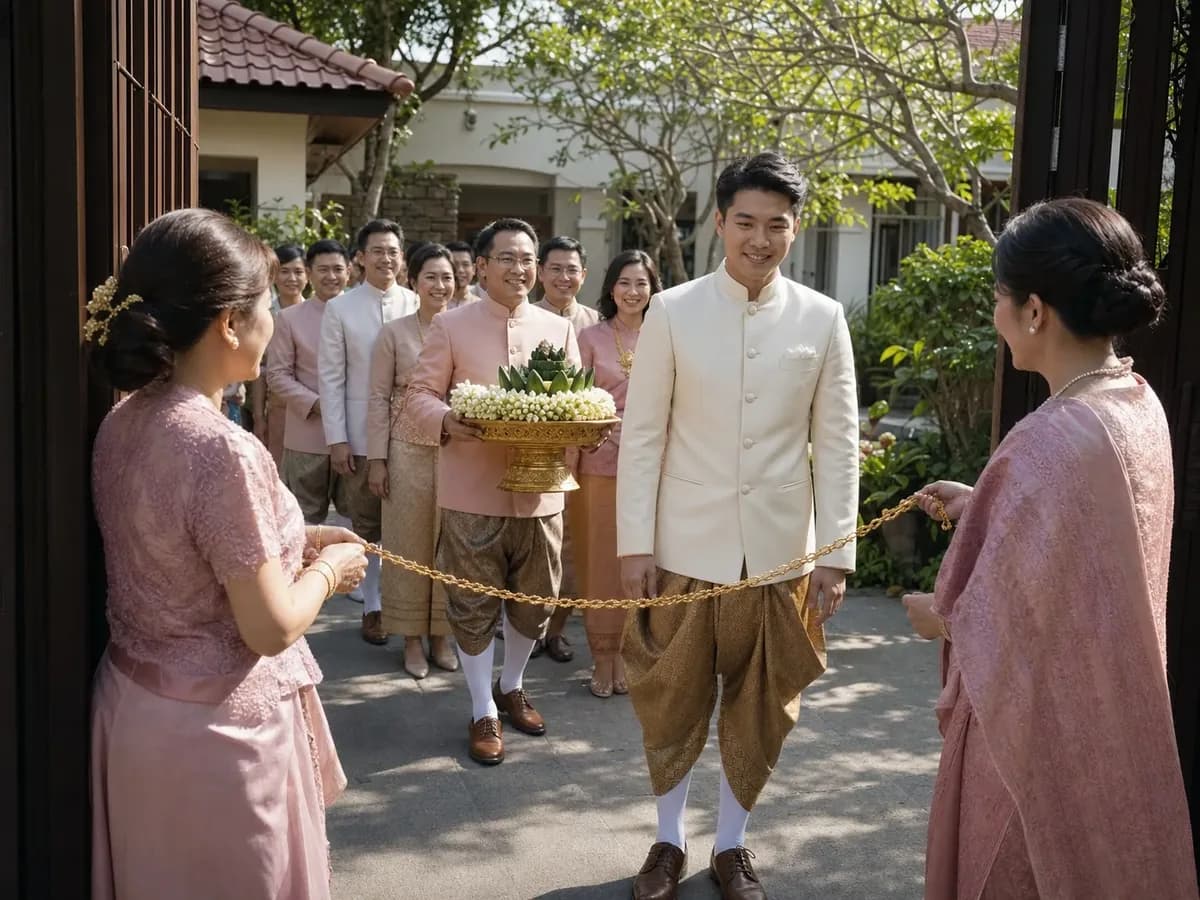
The second is envelopes for the silver and gold gates waiting at the bride's house. The bride's side can find gate ideas in our guide to the silver and gold gates, while the groom's side should split the envelopes in advance with the gate envelope splitter — rather than counting cash on the doorstep with the whole procession watching.
Preparing a Khan Maak procession might seem complex and highly detailed, but every single item holds a beautiful, auspicious meaning for the start of a married life. Today, many comprehensive wedding services can help prepare these trays for you. Whether you choose to DIY or hire an organizer, understanding the deep meanings behind these traditions will make your wedding ceremony even more profound and memorable.
Khan Maak Ek are the working trays of the ceremony itself — betel nuts, the dowry, the ring, and the incense and candles. Khan Maak Tho are the trays that follow: auspicious sweets, fruit, banana and sugarcane, carried for blessing and celebration.
An even number is usual — two, four, or eight — though some traditions count nine. Ask both sets of elders before you order anything, because families genuinely count differently.
Respected older relatives with happy, settled marriages traditionally carry the Khan Maak Ek. Give the banana and sugarcane to the strongest of the groomsmen; those plants are heavier than they look.
Ready to start planning your wedding?