

Loading…
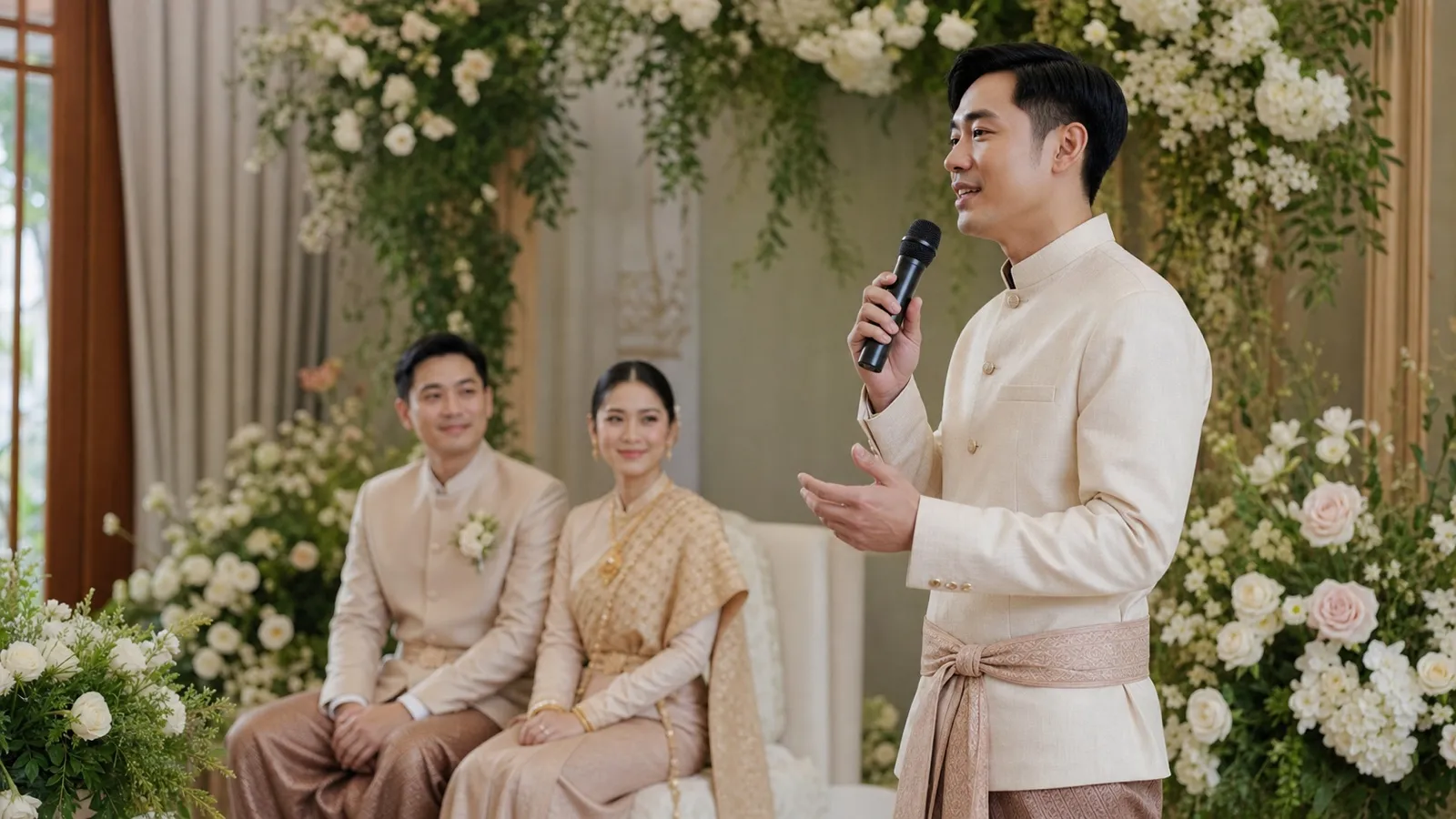
Hosting a traditional Thai morning wedding ceremony is a sacred and beautifully cultural moment. Many couples and even newly-appointed emcees (MC) often worry about the exact timeline and the proper script to use during the event.
Today, Wedly is sharing a complete timeline and "morning wedding ceremony emcee script" so you can easily adapt it for your own special day with confidence!
Having a clear timeline is very important so that honorable guests and elder relatives know the schedule. We recommend the following standard timeline:
When the auspicious time arrives, the groom's Khan Maak procession will line up to march into the bride's home (or the wedding venue). If you haven't yet worked out who carries which tray and in what order, our guide to the Khan Maak procession walks through it. For the contents of each tray, check off what goes in the Khan Maak Ek and Tho.
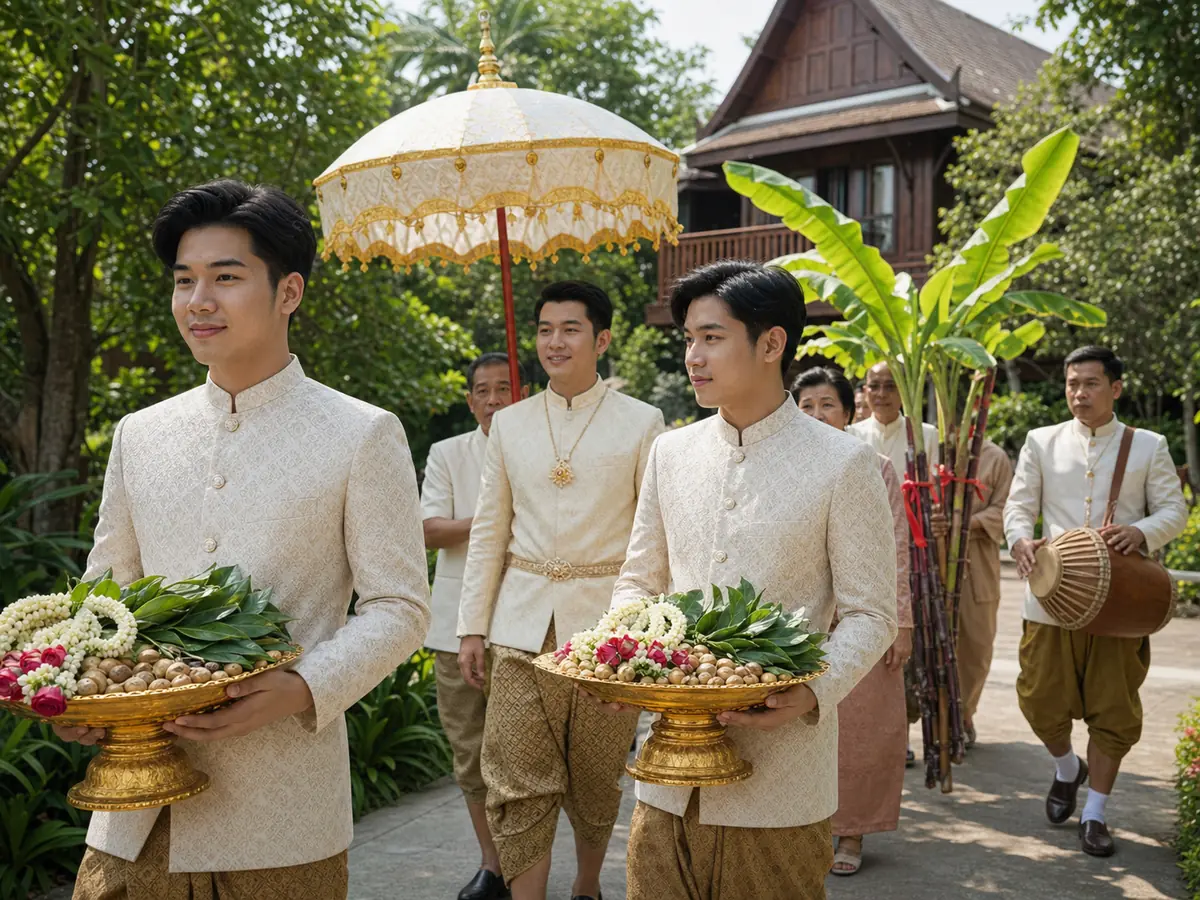
Emcee Script: "Good morning, honorable guests. Today is a highly auspicious day as we gather to witness the joyous union between (Bride's Name) and (Groom's Name). The auspicious moment has arrived, and the groom's Khan Maak procession is ready to begin. We invite everyone to join in the traditional cheers to welcome the procession for good fortune... Ho... Hiew... Ho..."
(When the procession arrives at the gates)
Emcee Script: "The Khan Maak procession has now arrived at the entrance. As you can see, the bride's relatives and friends are warmly waiting to welcome them (and block the silver and gold gates). We invite the groom's representative to negotiate passing through the gates to meet the bride."
The gates are only fun when the groom's side arrives with the envelopes already split, one per gate. The silver and gold gate envelope splitter works the amounts out beforehand, so nobody is counting cash on the doorstep while the procession waits.
After passing through the gates, the representatives (Taokae) from both families are invited to sit and talk.
Emcee Script: "We would like to invite the groom's representative, the bride's representative, and the parents of both families to take their seats on the stage. Today, the groom's side has brought the Khan Maak trays and the dowry. We invite the groom's representative to begin the official proposal."
(Groom's representative makes the proposal, and the bride's representative accepts)
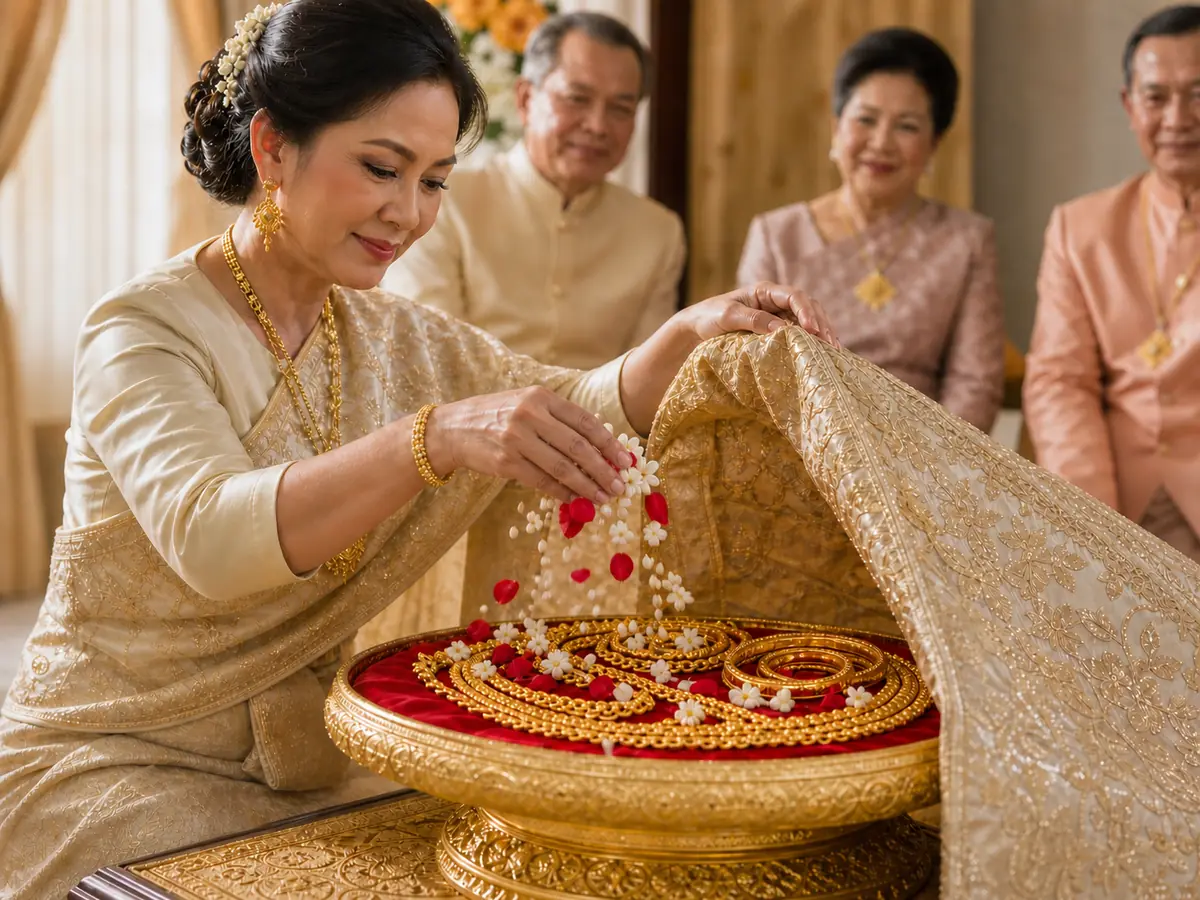
Emcee Script: "Now that the bride's family has joyfully accepted the proposal, the next step is the traditional inspection and counting of the dowry. We invite the bride's mother to open the dowry trays and perform the counting."
(The bride's mother performs the counting gesture, sprinkles auspicious flowers and popped rice for good luck, then wraps the dowry in cloth and carries it over her shoulder)
The dowry figure should always be agreed well before this morning. If the two families are still talking, the sinsod estimator gives you a starting range based on both sides' circumstances.
The moment everyone has been waiting for is the ring exchange, symbolizing love and commitment.
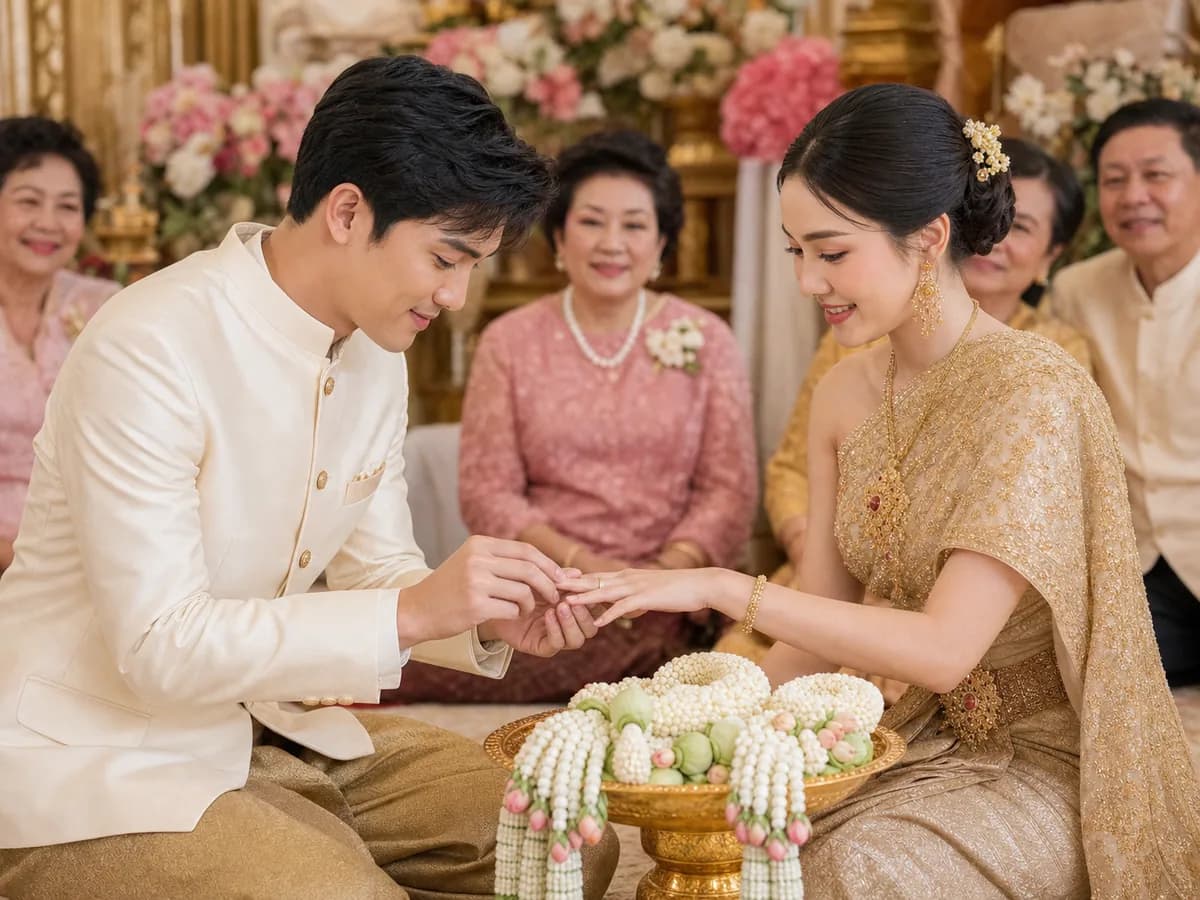
Emcee Script: "And now we have arrived at one of the most important moments, the ring exchange ceremony. The auspicious time has come. We invite the groom to place the engagement ring on the bride's finger."
(The groom puts the ring on the bride and pays respect. Then the bride puts the ring on the groom and pays respect (krab) at his lap or chest)
Emcee Script: "Please give a big round of applause for the newly engaged couple. What a beautiful and touching moment."
This ceremony allows the couple to pay their respects and entrust themselves to the elder relatives of both families.
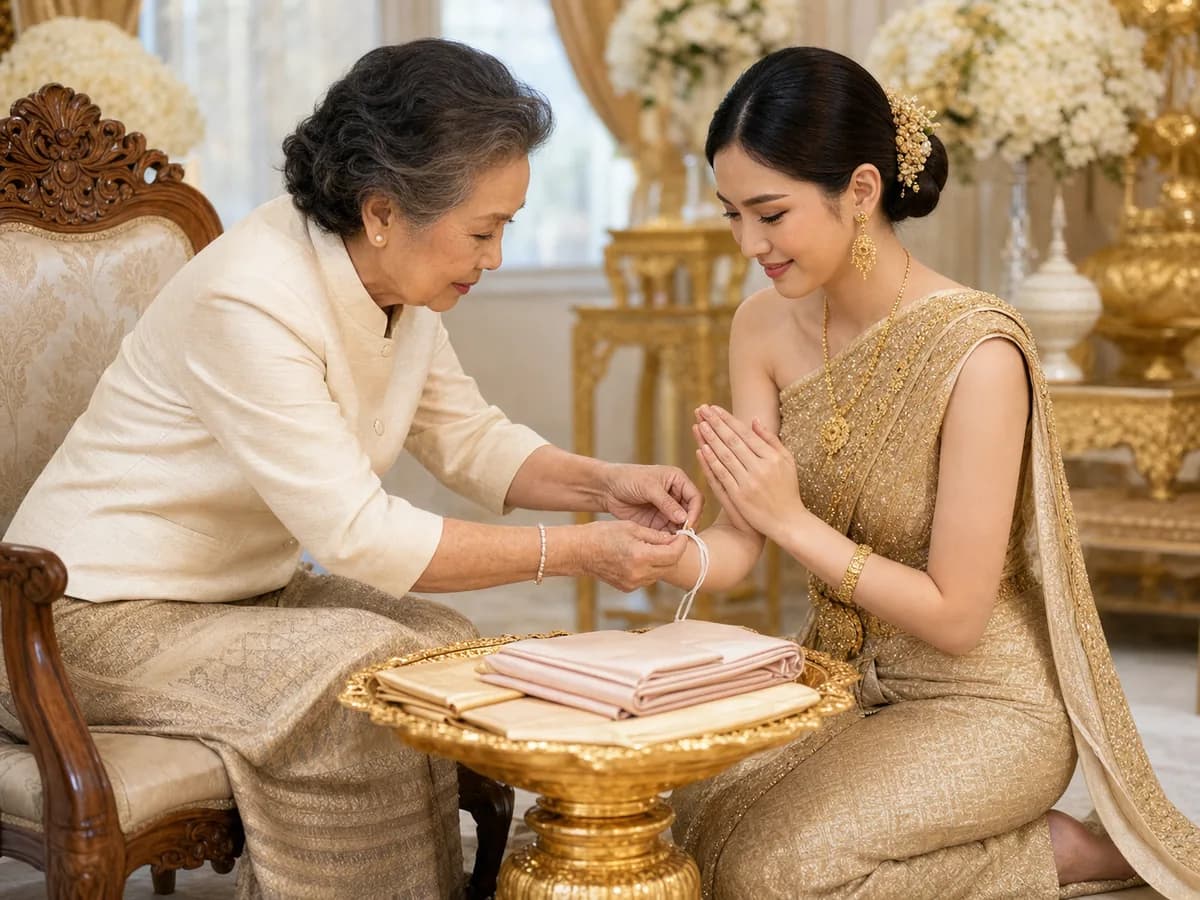
Emcee Script: "The next part of the ceremony is paying respect to the elders. This is for the couple to show their gratitude and formally introduce themselves. We invite the parents of the groom and the bride to come up first."
(The couple bows and presents a gift. The elders bind their wrists or give blessings along with a gift envelope)
Emcee Script: "Next, we would like to invite (Name and relationship of the elder in order) to receive the couple's respect and give them your blessings."
The water pouring ceremony blesses the couple with sacred water and marks the completion of the morning rituals. For the meaning behind each step and the items you need to prepare, see our guide to the water pouring ceremony.
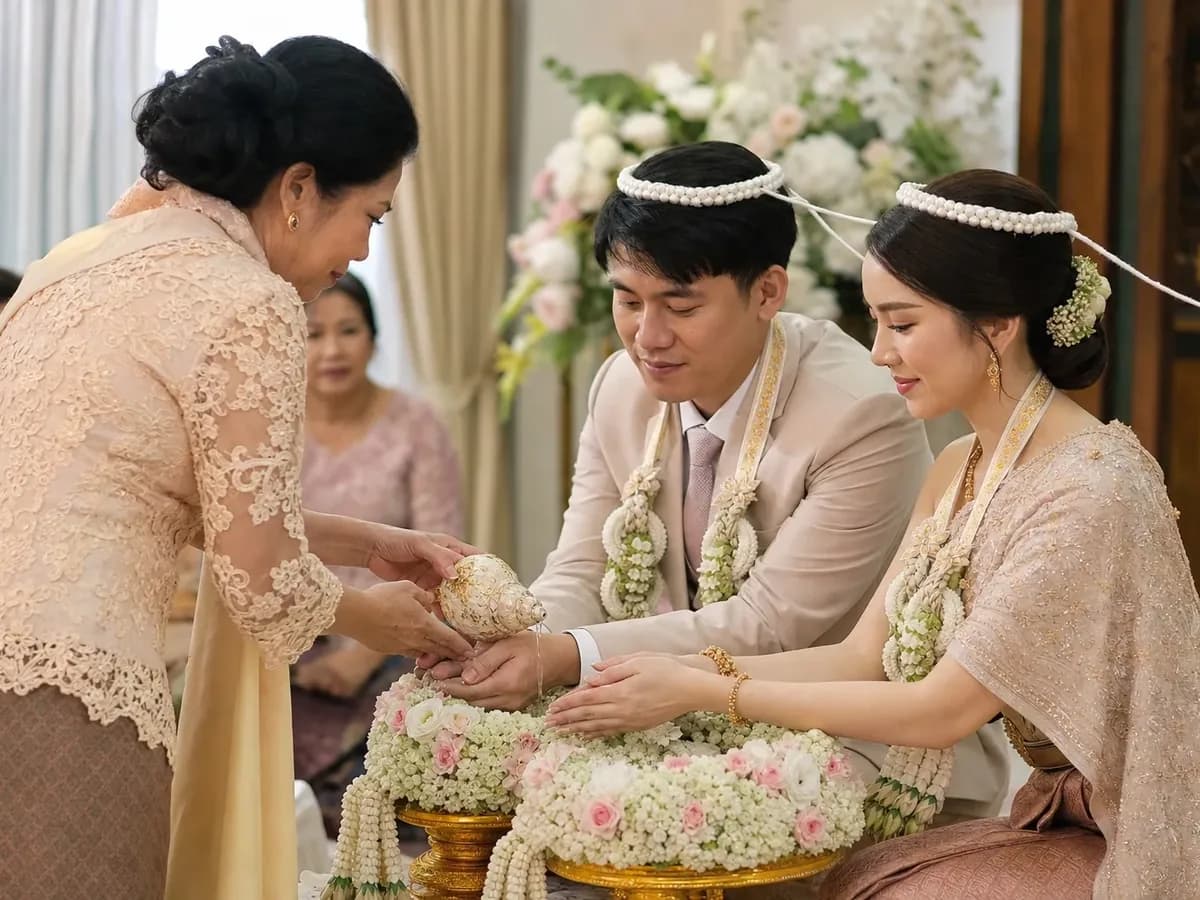
Emcee Script: "Moving on to a highly sacred and auspicious ceremony, the Holy Water Pouring Ceremony. We invite the bride and groom to take their seats at the water pouring station."
(The couple sits at the station)
Emcee Script: "We are honored to invite the ceremony's guest of honor, (Name-Surname and title), to place the flower garlands, anoint the couple's foreheads, and place the Mongkol Faed (auspicious twin headpieces) on the couple. We also invite them to pour the first holy water and give their blessing. Please welcome them."
(Guest of honor performs the ceremony)
Emcee Script: "Thank you very much to our guest of honor. Next, we invite the parents, elder relatives, and all honorable guests to join in pouring the holy water and blessing the couple for a prosperous married life. Please come forward."
Once all guests have poured the holy water, the emcee concludes the event and invites everyone for the meal.
Emcee Script: "On behalf of the bride, the groom, and their families, we would like to express our deepest gratitude to all honorable guests for taking the time to witness and bless the couple today. The morning wedding ceremony has now been successfully completed. We invite everyone to enjoy the meal prepared by our hosts and take commemorative photos with the couple at the front of the venue. Thank you and have a wonderful day."
If a reception follows that evening, we have a separate evening reception script — handy if different people are hosting each half of the day.
With this, your morning wedding ceremony will flow smoothly and impressively. We hope the script and timeline Wedly provided today will help the bride, groom, and emcee prepare for the big day with ease!
On the timeline in this guide it starts with the monk ceremony around 07.09 and finishes after the water pouring, with guests eating by 11.30 — roughly four and a half hours. Skip the monk ceremony and it shortens by about two.
No. It is optional and only applies if you are inviting monks to chant. Without it, the day begins with the Khan Maak procession at the auspicious time.
Traditionally the bride's mother opens the dowry trays and performs the counting, sprinkles popped rice and flowers for good fortune, then wraps the dowry in cloth and carries it over her shoulder.
Ready to start planning your wedding?