

Loading…
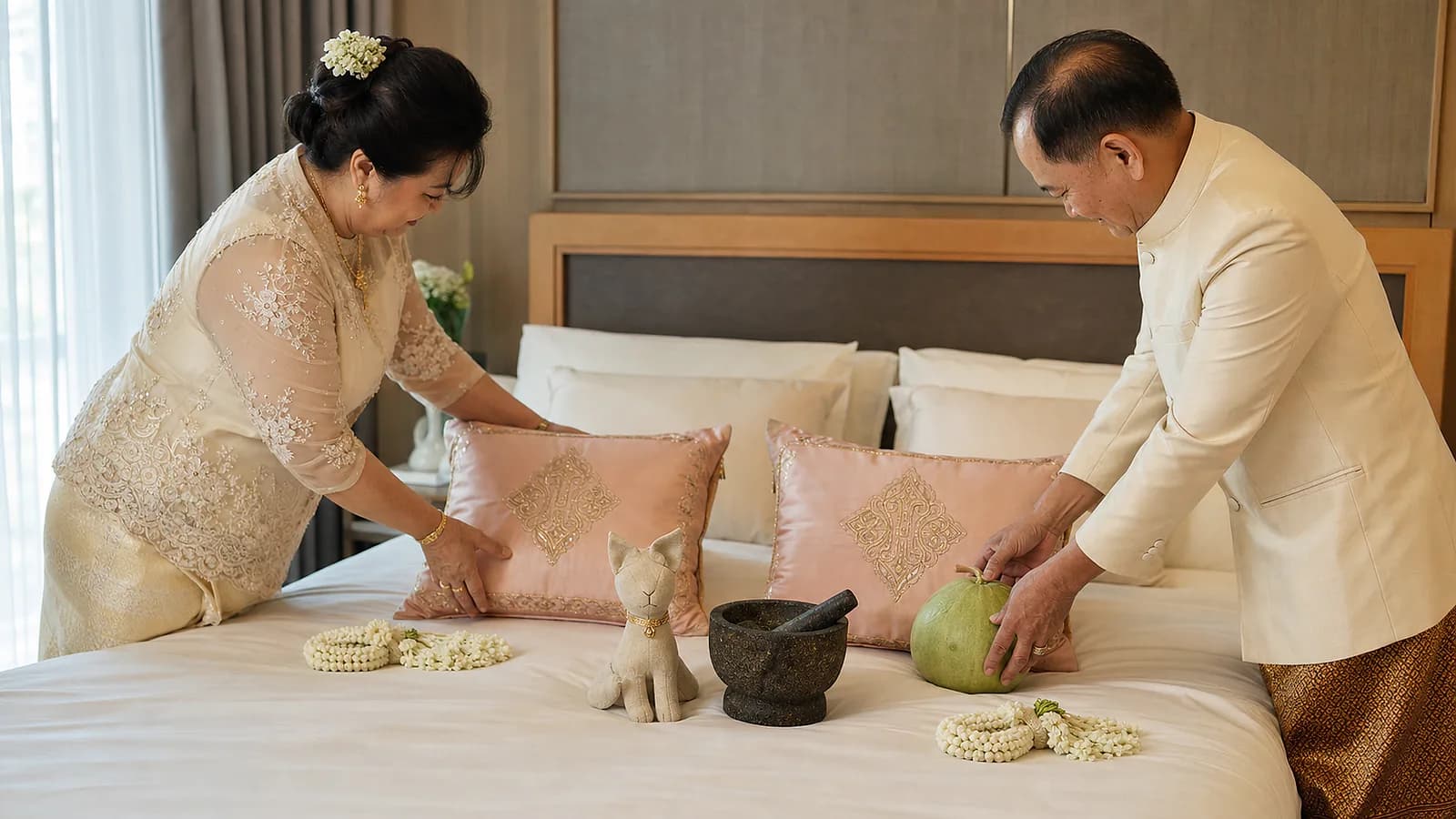
The Bridal Bed Making and Sending-Off Ceremony (พิธีส่งตัวเข้าหอ - Phithi Song Tua Khao Ho) is the final, deeply symbolic ritual in the Thai wedding day running order. It typically takes place late at night in the bridal suite or the couple’s new home, marking the official moment they begin their life together. Rooted in ancient Thai beliefs, this private, intimate ceremony is filled with beautiful symbolism, traditional artifacts, and heartfelt blessings for a fruitful and enduring marriage.
For modern couples, incorporating this tradition can feel both magical and slightly mystifying. What are all those items on the bed? Why do other people lie down on your bed first? In this comprehensive guide, we will walk you through every aspect of the Thai Bridal Bed Making Ceremony so you can fully appreciate its profound meaning.
In Thai culture, marriage is not just the union of two people, but the merging of two families and the start of a lifelong journey. The bridal bed is considered the sanctuary of the marriage. The ceremony is designed to bless this sanctuary, ensuring that the couple’s new life is built on a foundation of peace, prosperity, fidelity, and unwavering love.
According to ancient Thai beliefs, the energy of a successful, loving marriage can be transferred. This is why the selection of the individuals who prepare the bed is of utmost importance.
The most critical element of this ritual is selecting the elders to make the bed. You cannot choose just anyone. The couple (or their parents) must carefully select an older, highly respected married couple to act as the "Bed Makers" (เถ้าแก่ปูเตียง).
Criteria for the Elder Couple:
The belief is that by having this exemplary couple make the bed, their good fortune, stable relationship, and positive energy will rub off on the newlyweds. It is considered a tremendous honor to be asked to perform this role.
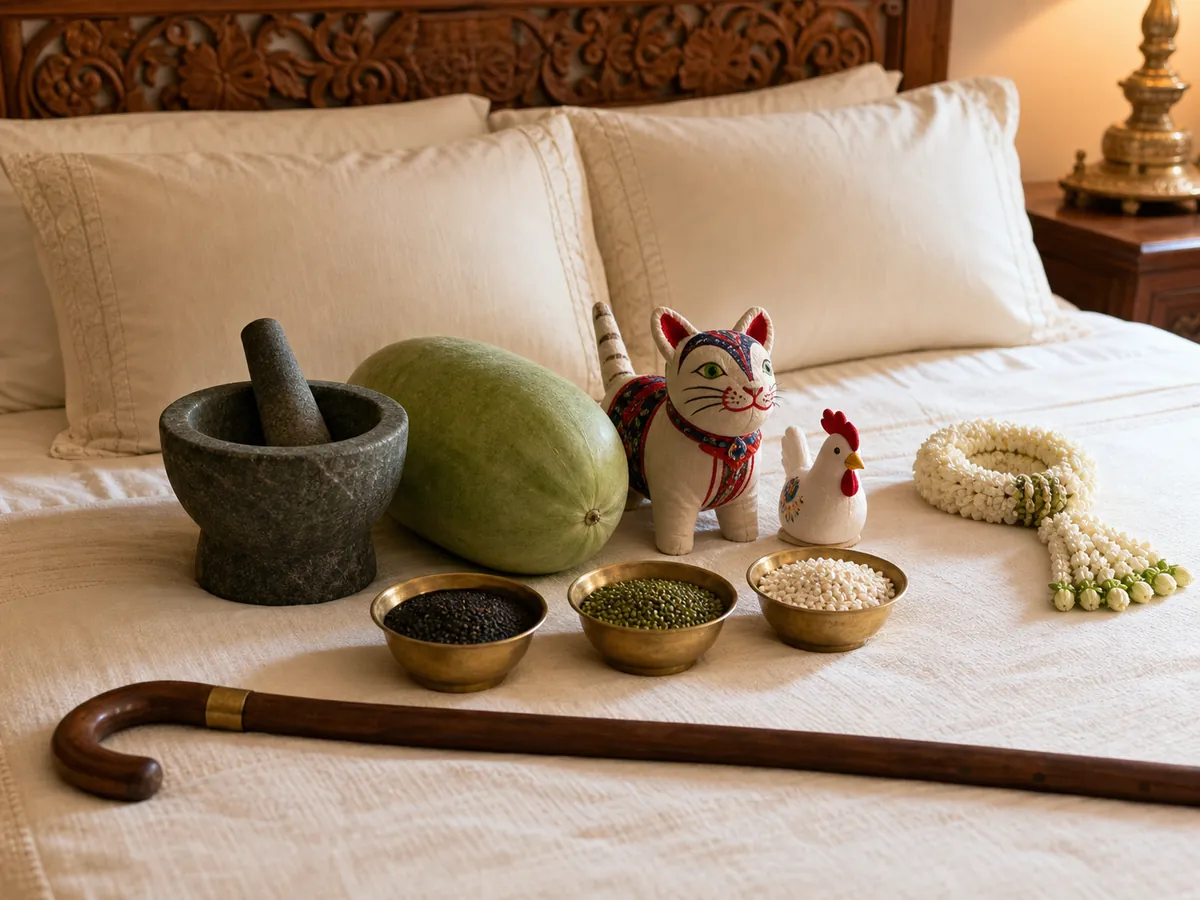
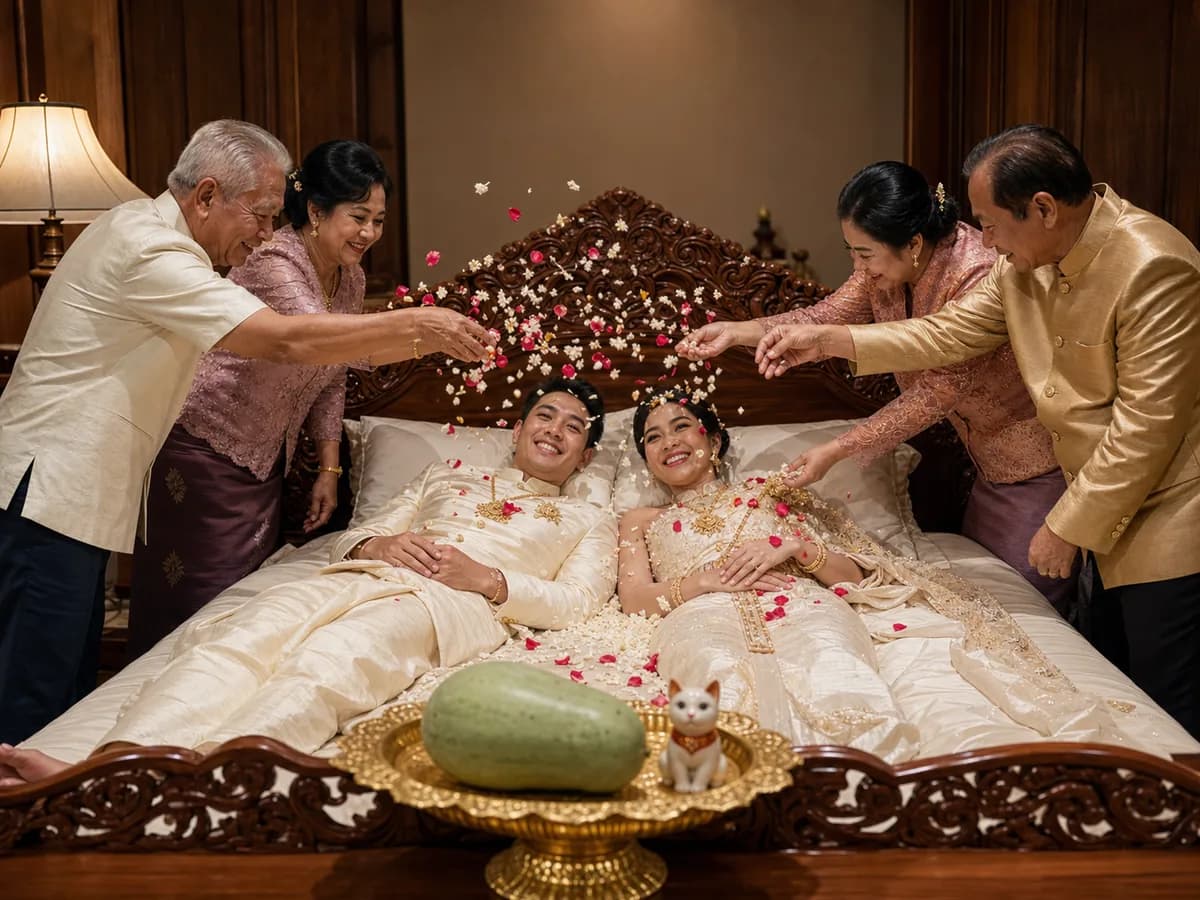
During the ceremony, the elder couple will arrange several symbolic items on the bridal bed. These items, often placed on a golden tray (Phan) or arranged directly on the sheets, carry deep meanings for the couple's future.
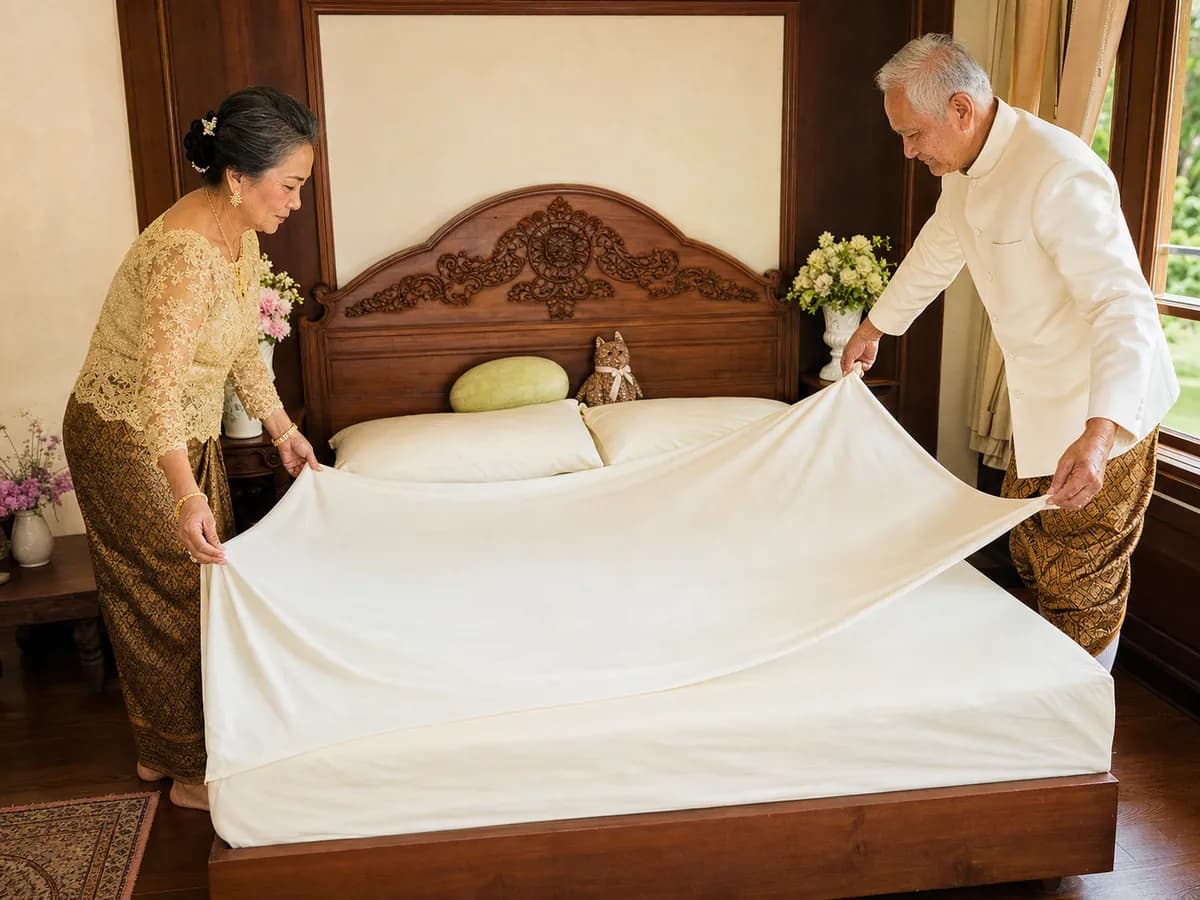
While traditions can vary slightly depending on the region (Northern, Central, Southern Thai), the standard sequence usually follows these steps:
The invited elder couple enters the bridal suite. They arrange the pillows, smooth the bedsheets, and carefully place the auspicious items (the stone, melon, cat doll, etc.) in the center of the bed or on a designated tray.
In a delightful and theatrical moment, the elder couple literally lies down on the bridal bed. They close their eyes for a brief moment as if sleeping peacefully.
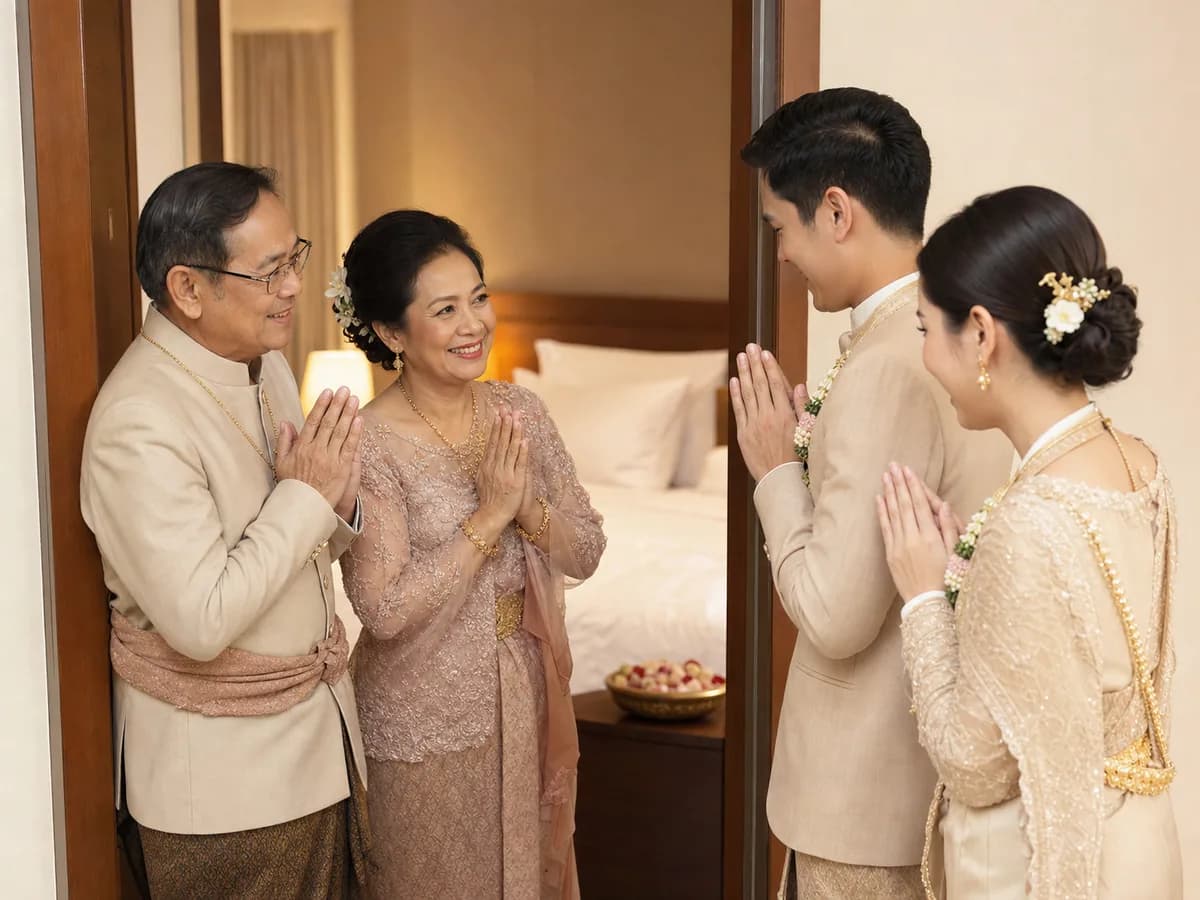
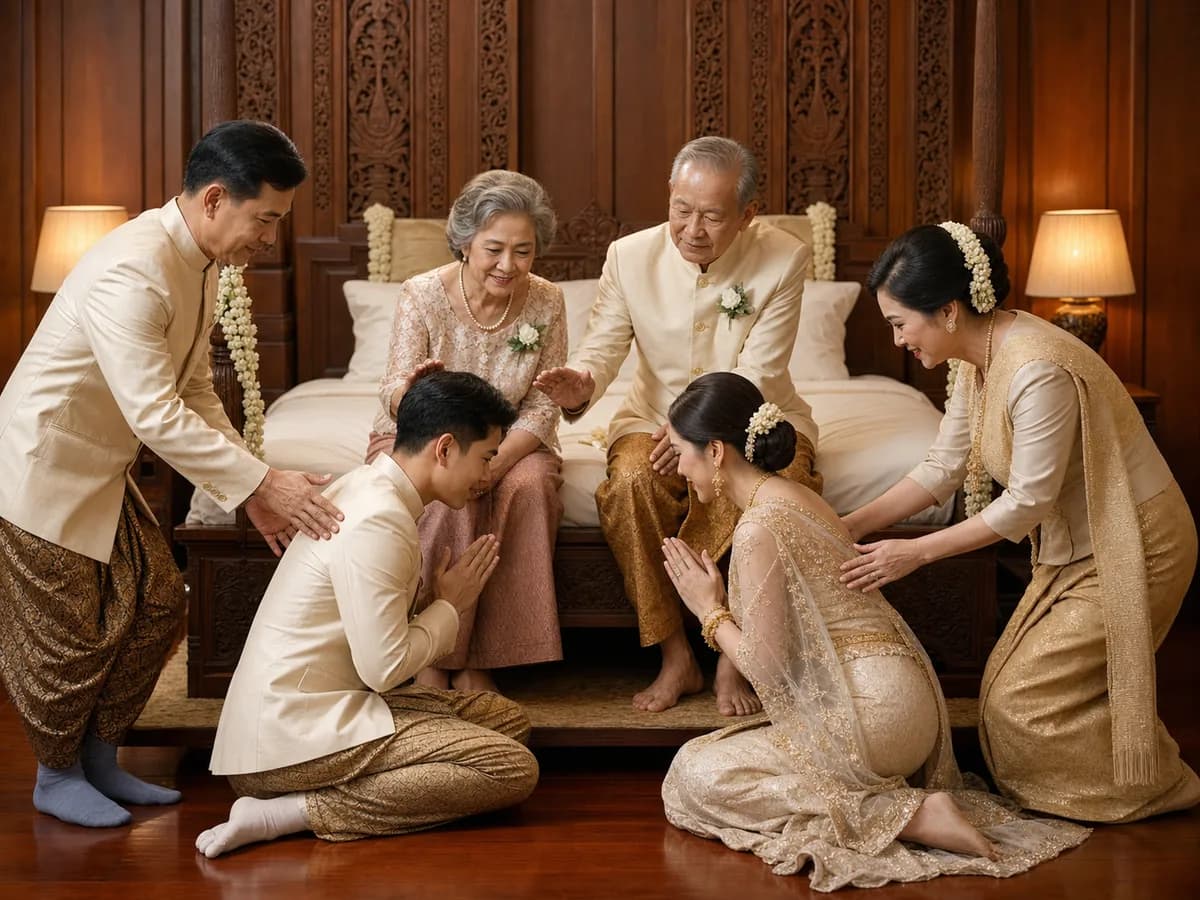
The parents of the bride and groom then bring the newlyweds into the room. The bride and groom will pay their respects (prostrate or bow) to their parents and the elder couple. The elders and parents will offer words of wisdom, sharing secrets to a successful marriage, emphasizing patience, forgiveness, and mutual respect.
The bride and groom are instructed to lie down on the bed together. The elder couple and parents will sprinkle flower petals (like roses or jasmine), sesame seeds, and rice over them. They give their final, heartfelt blessings, officially hand the bride over to the groom, and then leave the room, allowing the couple to finally rest.
Do we have to leave the items on the bed all night? Traditionally, yes! Couples were expected to sleep around the items for at least three nights. However, in modern times, most couples will respectfully move the heavy items (like the stone and melon) to a bedside table before going to sleep to ensure they actually get some rest.
Can we skip this ceremony if we are having a modern wedding? Absolutely. Many couples choose to adapt it or skip it if they are exhausted or if it doesn't align with their beliefs. However, many find it to be a beautiful, private moment to conclude the wedding day with their closest family members.
What time does the ceremony usually happen? It is often the very last event of the wedding day, sometimes happening after the evening reception (e.g., 10:00 PM or 11:00 PM). Alternatively, if the couple only has a morning ceremony ending with the water-pouring blessing, it can happen in the early afternoon following an auspicious time (ฤกษ์ส่งตัว) determined by a monk or astrologer.
The Sending-Off ceremony often happens late at night when everyone is exhausted after a long day of celebrations. The last thing you want is for your VIP guests and elders to be waiting around in the hallway!
If the sending-off falls on an afternoon auspicious hour, work backwards from it with the morning ceremony rundown planner to see when the first ritual has to start. Keep your schedule tight and your bridal party informed using Wedly's Rundown feature. You can easily map out the exact timing for the ceremony, alert your key family members, and ensure your beautiful wedding day concludes seamlessly and peacefully.
A highly respected elder couple who have been happily married for decades, have good children, and have never divorced. They act as role models for the newlyweds.
In the old days, yes! But today, practically everyone uses a ceramic or stuffed cat doll to symbolize domesticity and loving the home.
Ready to start planning your wedding?