

Loading…
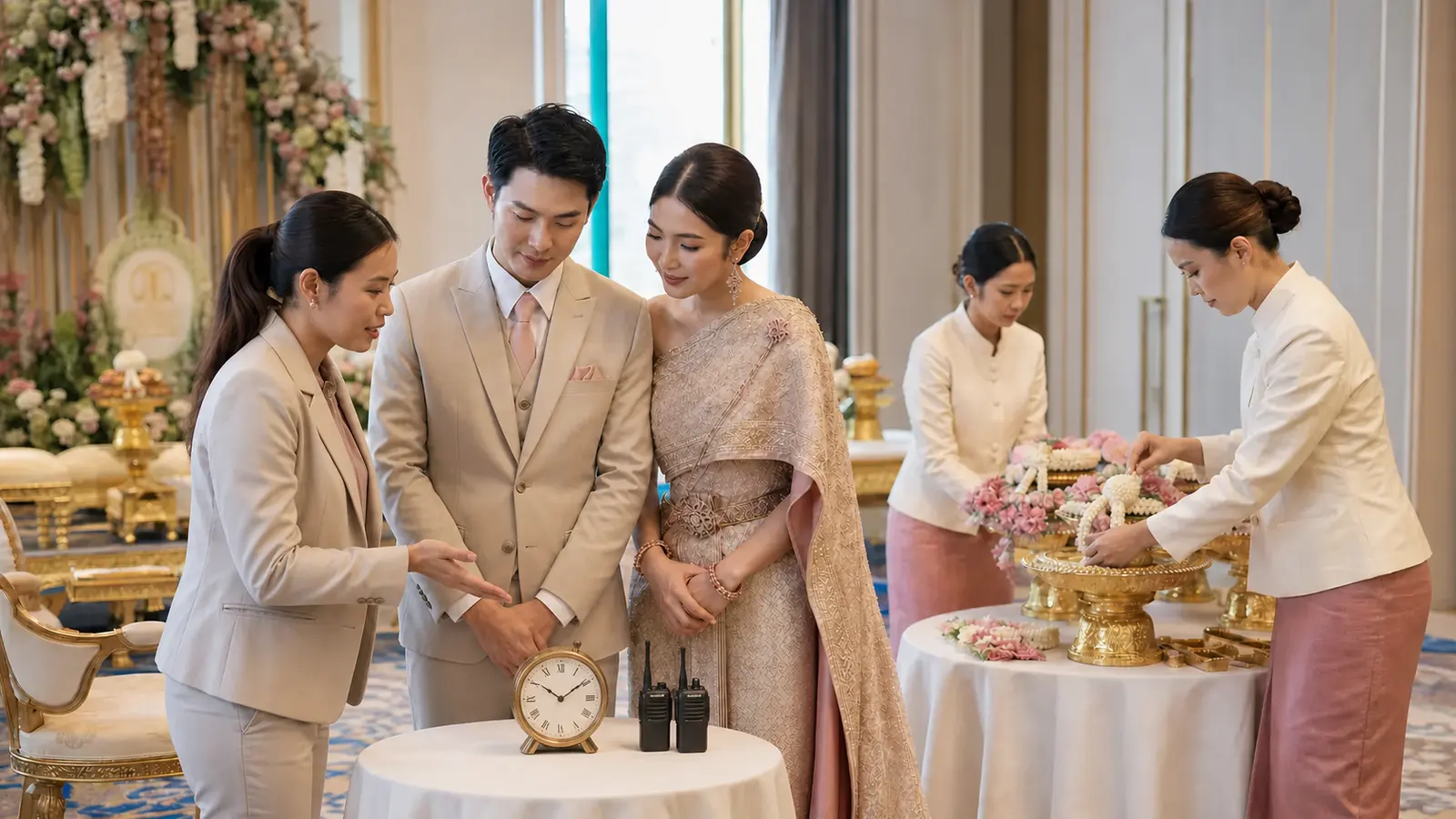
A poorly ordered ceremony makes the whole day run late — guests wait, monks wait, photo slots vanish into thin air. To head that off, here are sample run sheets for a Thai wedding: the engagement, the morning ceremony and the evening reception, with timings you can adapt to your own auspicious time.
All the times below are just samples — the segments tied to the auspicious time (khan maak procession / water-pouring / ring exchange) must follow the time your elders or monk set. Build the other segments around them. See Choosing an Auspicious Date.
The engagement can be held on a separate day or combined with the morning ceremony (common). A separate engagement is usually a smaller family affair. Here's a sample run sheet:
| Time | Activity |
|---|---|
| 08:00 | Groom's side assembles, prepares the engagement khan maak |
| 09:09 (auspicious) | Procession arrives at the bride's home |
| 09:20 | Gate-blocking ceremony (fun and playful) |
| 09:40 | Open the khan maak, count sinsod & gold before the elders |
| 10:00 | Ring exchange |
| 10:20 | Elders give blessings, family photos |
| 11:00 | Meal for guests |
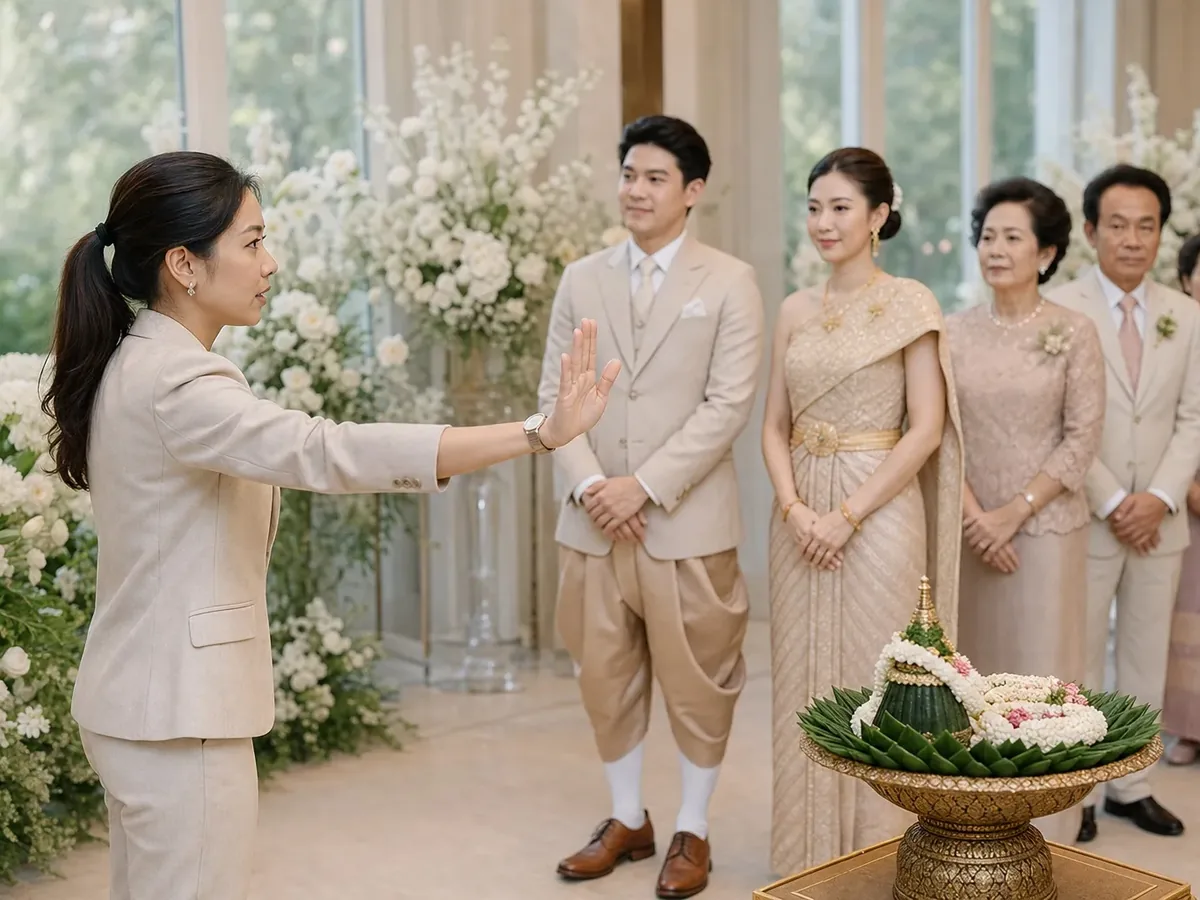
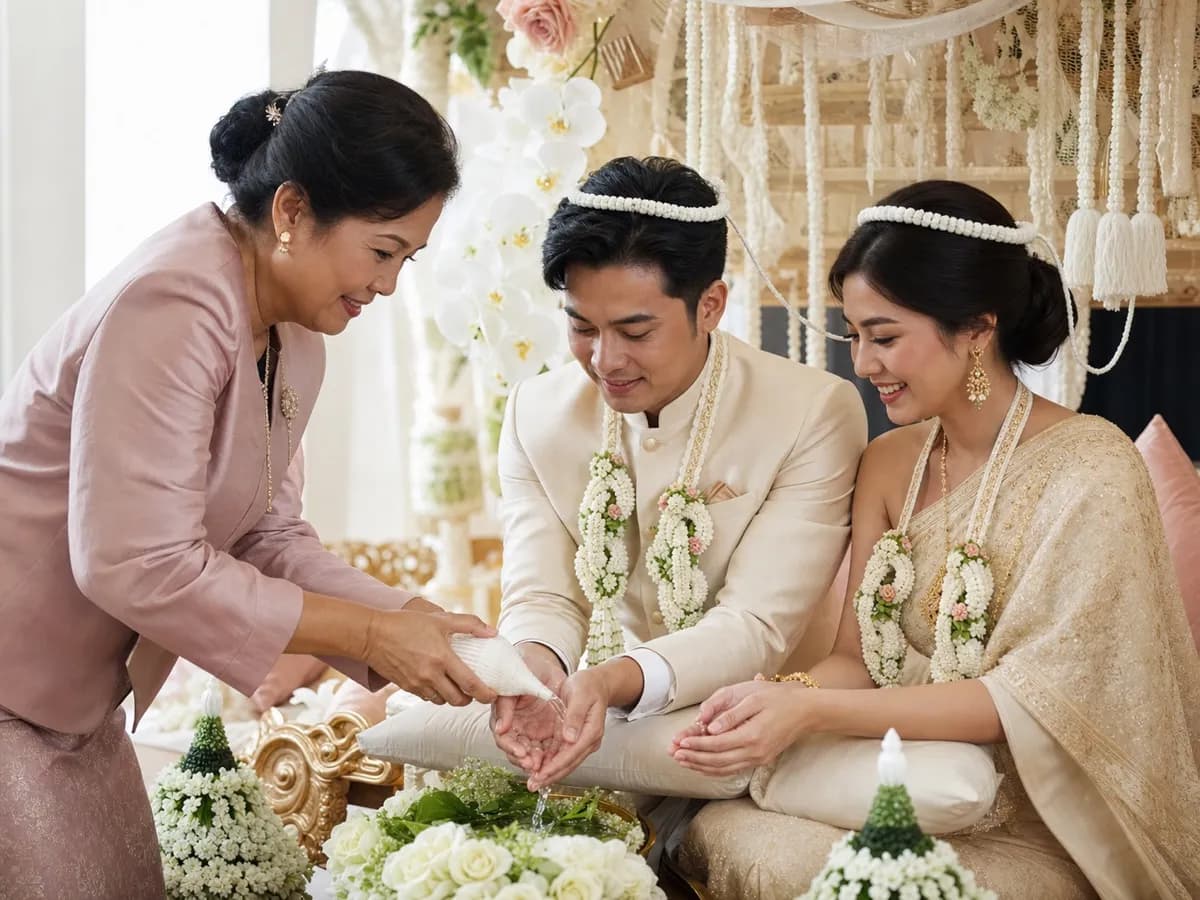
The morning ceremony starts early because it's tied to the auspicious time and must finish before noon. Here's a sample combining the monk rite, khan maak and water-pouring:
| Time | Activity |
|---|---|
| 06:30 | Prepare the venue, couple gets dressed and made up |
| 07:00 | Merit-making / monk ceremony, 9 monks, offer breakfast |
| 08:30 | Groom's side forms the khan maak procession |
| 09:09 (auspicious) | Procession arrives at the bride's home |
| 09:20 | Gate-blocking, then into the ceremony |
| 09:40 | Count sinsod & engagement gold before the elders |
| 10:00 | Engagement / ring exchange (if combined) |
| 10:30 (auspicious) | Water-pouring ceremony — the highlight |
| 11:15 | Group photos with both families |
| 11:45 | Lunch / end of the morning ceremony |
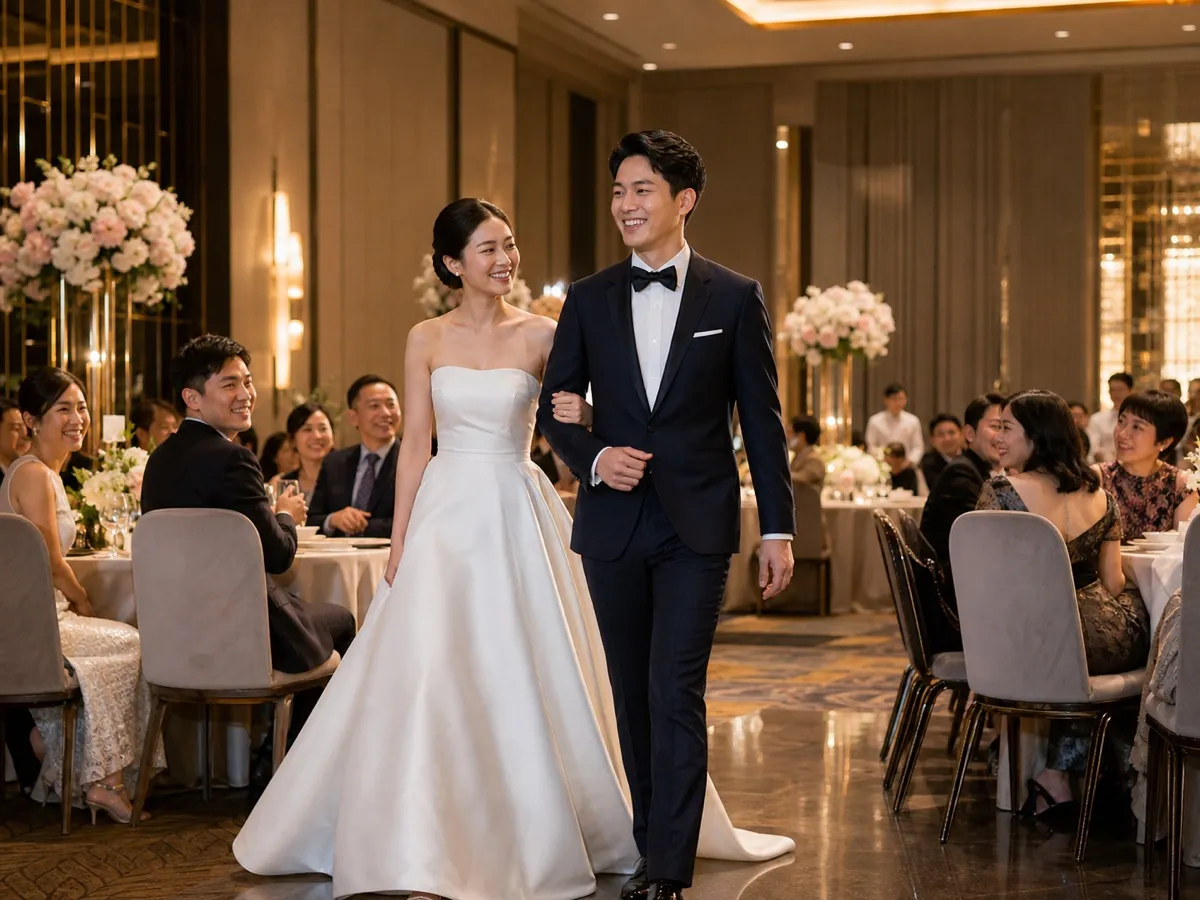
The evening is all about celebration and production — more flexible, but it'll still run late if over-packed. Here's a sample for a Chinese banquet or buffet:
| Time | Activity |
|---|---|
| 17:00 | Guests register, hand in envelopes, welcome drinks |
| 18:00 | MC opens, invites guests to their tables |
| 18:30 | Couple's grand entrance + video presentation |
| 18:45 | Cake cutting, champagne pour, toast |
| 19:00 | Dinner service begins (Chinese banquet courses) |
| 19:45 | Elders' blessing, couple's thank-you speech |
| 20:15 | Live music / party, table photos |
| 21:00 | See guests off, end |
A paper run sheet is a pain to edit and share. Wedly has a run sheet tool where you add the morning and evening cues with times (or start from the web morning ceremony run sheet generator), then share it with your MC, photographer and family in one place — edit a time and it updates instantly, so the day stays on track. See also The Khan Maak Procession.
A good schedule pins the auspicious times first and builds the rest around them, with a buffer in every segment and a coordinator keeping time. Whether it's the engagement, morning ceremony or reception, if everyone shares the same run sheet, the day flows. Plan it alongside your wedding checklist.
Yes, and it's popular. Many couples hold the morning rites at home or a hotel from morning to noon, then the evening reception at the same or a new venue. Allow time to rest and change outfits, though some split the days to avoid exhaustion.
It depends on the family. Many couples combine the engagement and wedding into one morning to save time and money, while some hold a smaller engagement earlier.
Often very early, around 6 to 7 am, because it's tied to the auspicious time and must finish before noon. The exact time depends on the khan maak and water-pouring auspicious times set by elders or a monk.
Mainly from over-packing the schedule and photos taking longer than planned. Build a 10 to 15 minute buffer into every segment and have a coordinator keeping time against the run sheet.
Ready to start planning your wedding?