

Loading…
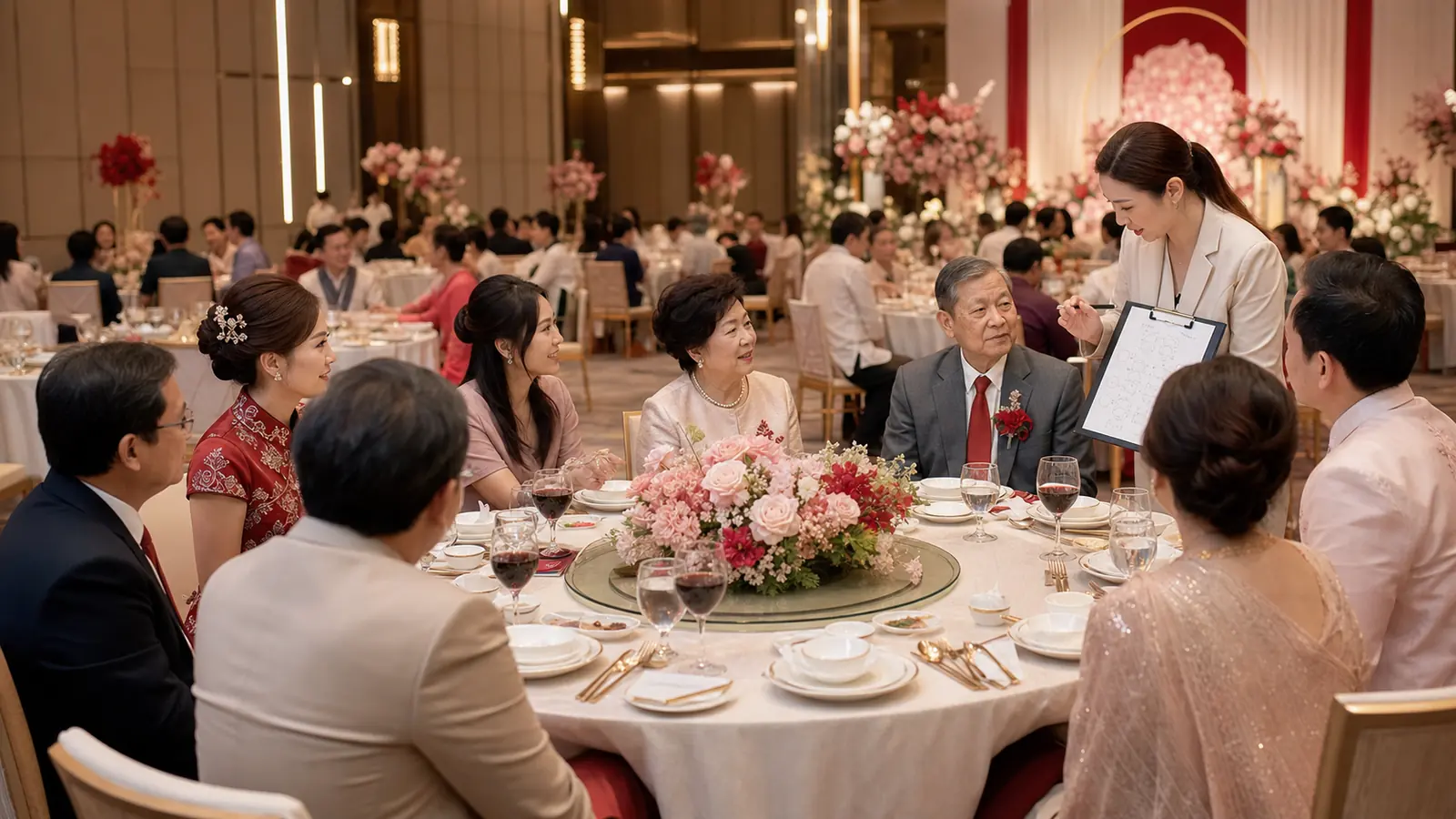
The Chinese banquet is the heart of a Thai-Chinese evening reception (still deciding between banquet, buffet and cocktail? weigh them up in our Thai wedding catering guide first) — and two questions keep hosts up at night: "how many tables?" and "who sits where?" Get it wrong, and the night gets chaotic fast.
Don't worry, we've got you. Here's how to size the tables and lay out the seating so it works beautifully for elders and friends alike. (Want a quick head start? Try the banquet table calculator.)
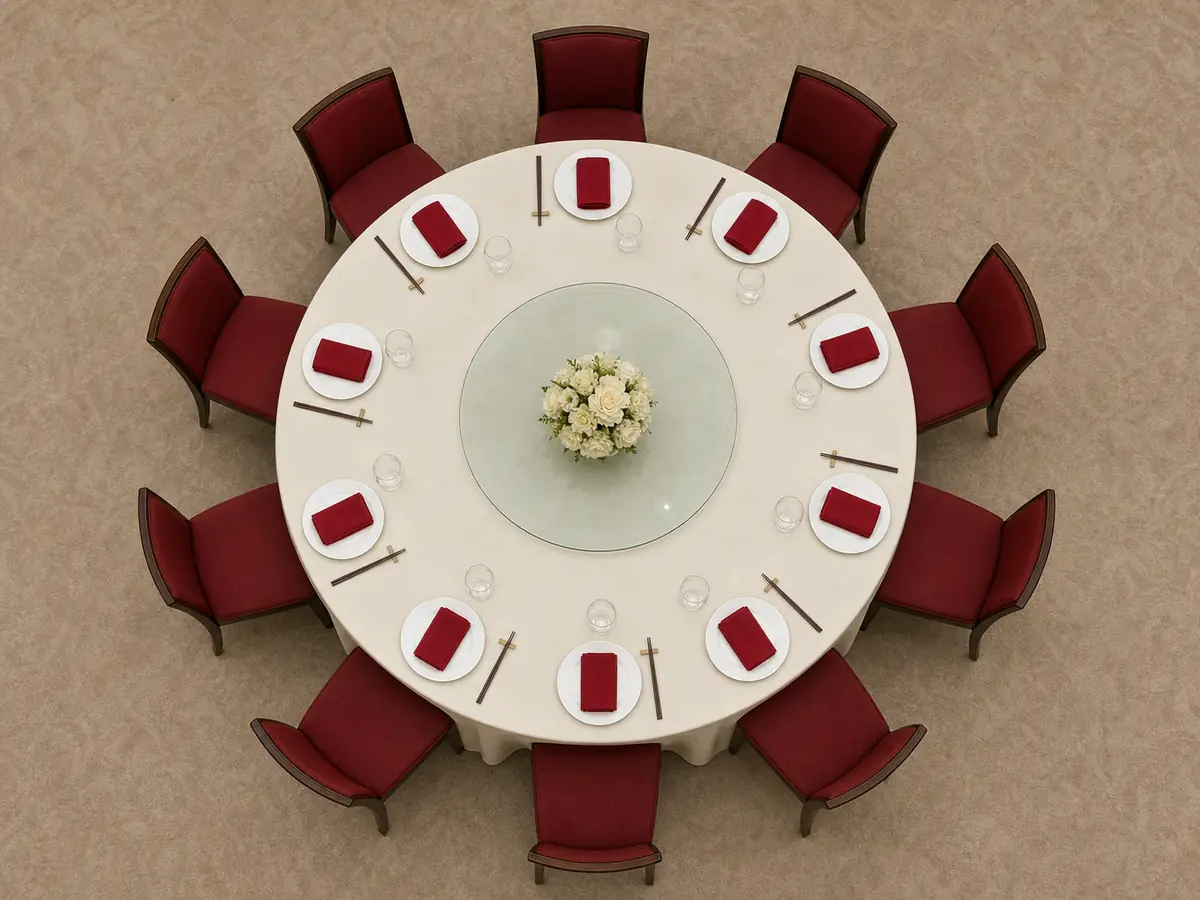
The standard is 10 seats per table. The simple method: divide your confirmed guest count by 10, then keep 1–2 spare tables in your back pocket.
| Guests attending | Tables (10/table) | + spare |
|---|---|---|
| ~100 | 10 | 11–12 |
| ~150 | 15 | 16–17 |
| ~200 | 20 | 21–22 |
| ~300 | 30 | 31–32 |
Key tip: order tables from the actual RSVP count, not the number invited. Invite 100 and rarely does everyone show — but some groups bring extra family — we have tactics for handling uninvited guests if that happens. A spare buffer is safer, and most venues only charge for the tables actually opened anyway.
Really there are just two goals — seat everyone with a group they can chat to, and honour the elders by custom.
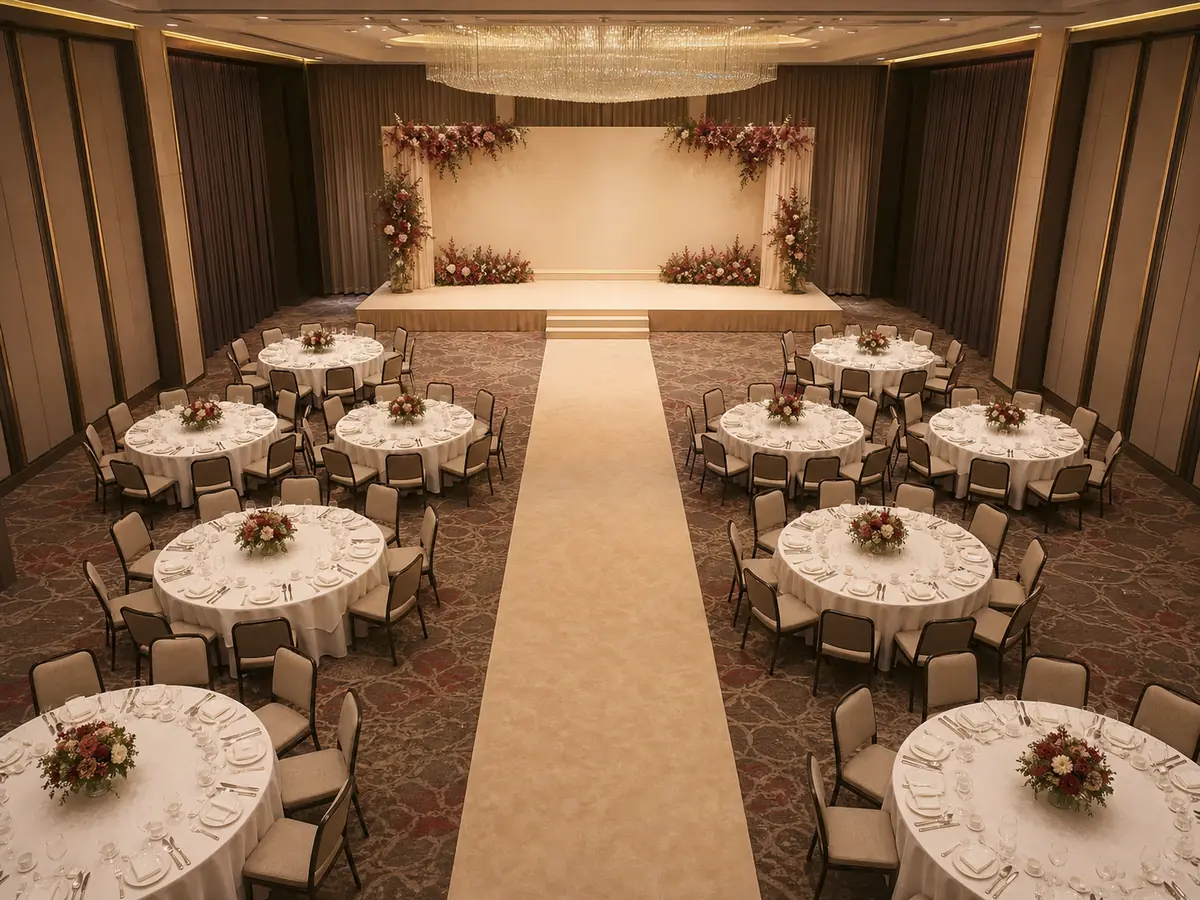
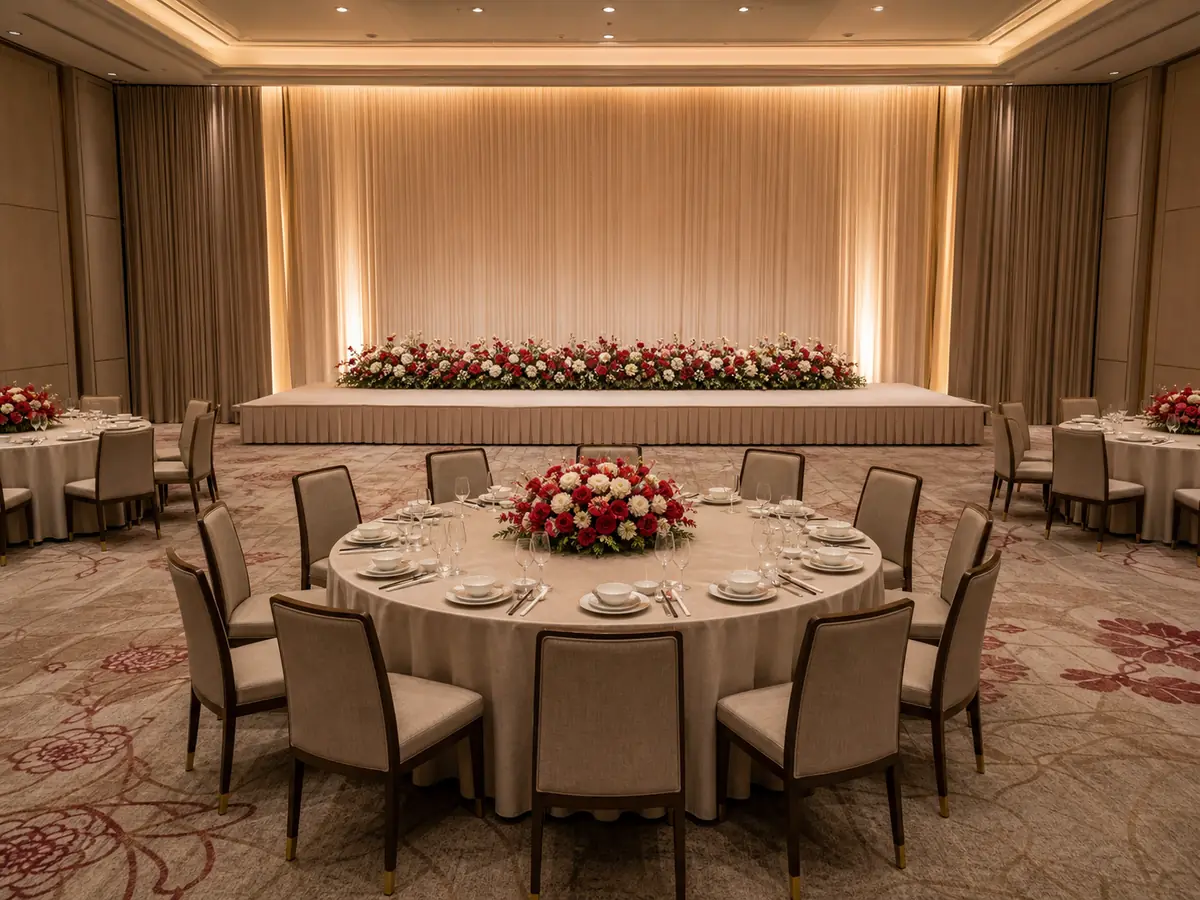
A good seating chart starts with an accurate count — the more you know who's coming, with whom, and how many, the easier it all gets. So close RSVPs and confirm the count before you finalise — an online invitation that tallies RSVPs automatically settles the number far faster (see the one-month stage in the Thai Wedding Checklist).
Instead of shuffling names on paper and redoing it, Wedly has a seating tool wired straight to your guest list and RSVP status — drop guests onto tables, see at a glance which are full or still open, update as the count changes, and split the bride's and groom's sides. Finishing the Chinese banquet seating becomes quick and mistake-free.
Chinese banquet tables are 10 seats each — divide your guest count by ten and keep 1–2 spare. For the chart, honour the elders (front tables near the stage) and group by relationship. Above all, start from an accurate RSVP count, and the reception flows from the moment guests walk in.
The standard is 10 seats per table. Some venues stretch to 11 or 12 but it gets tight, so calculate the number of tables by dividing your guest count by ten.
Always keep 1 to 2 spare tables in case guests exceed the confirmed count or arrive as larger families. Most venues charge for the tables actually opened.
Near the stage or at the front where the ceremony is clearly visible and the restroom is convenient, as it's the most honoured table — usually parents, grandparents and senior relatives from both sides.
You can draft it 2 to 3 months out, but finalise it after RSVPs close and you know the real count, since the number of seats changes with who confirms.
Ready to start planning your wedding?