

Loading…
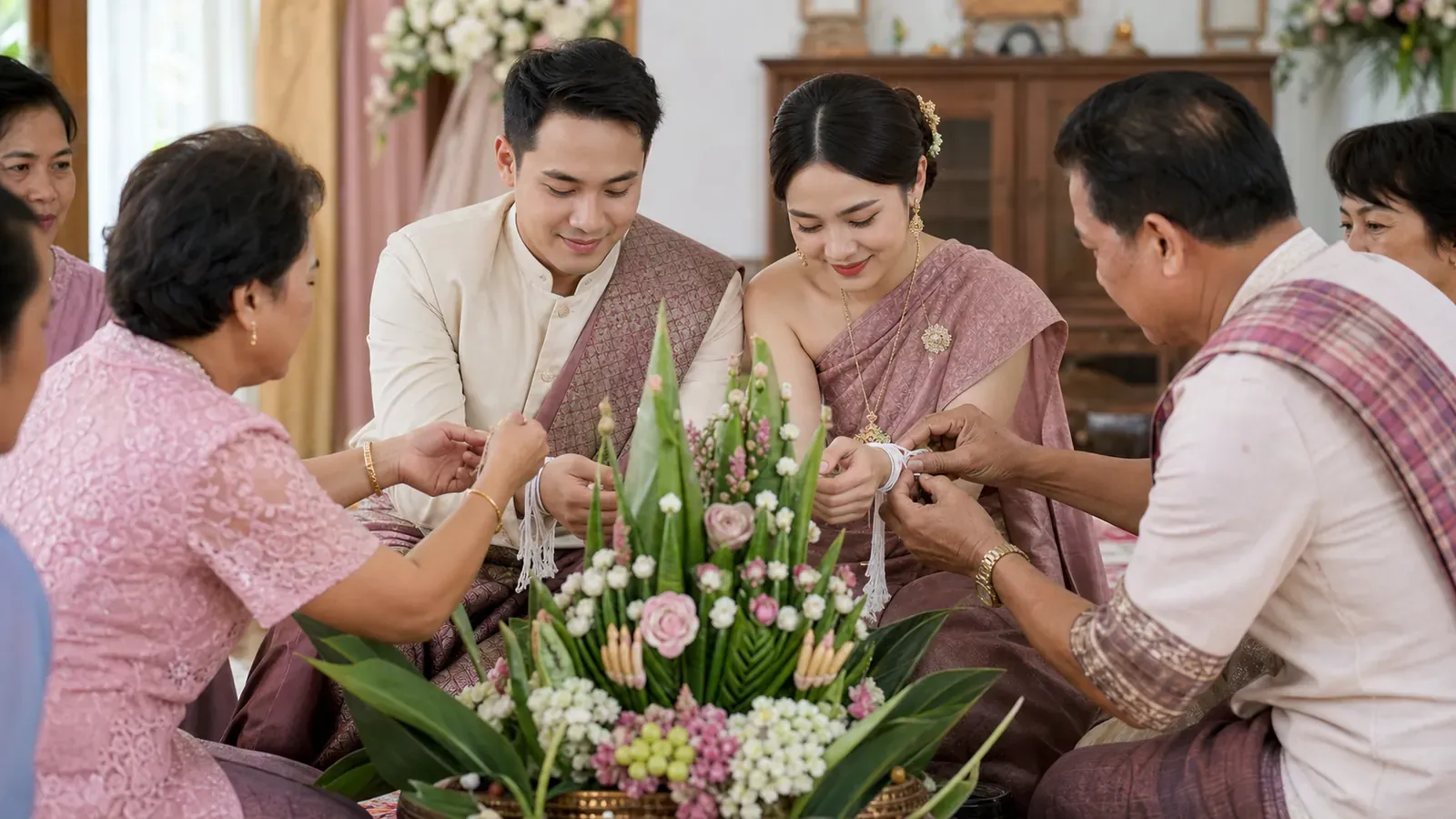
If you've ever been to an Isan wedding, one image sticks with you — everyone lining up to tie a white cotton thread around the couple's wrists, one by one, blessing them up close. That's the charm you won't find anywhere else. While Central Thai weddings centre around the Water-Pouring Ceremony (Rod Nam Sang), the heart of an Isan (Northeastern Thai) wedding is the Baisri Su Kwan (calling of the soul) and the Pook Ken (tying of the wrists).
Thailand's Northeastern region has a distinct, vibrant culture, and its weddings reflect that: deeply spiritual, joyously musical, and incredibly hospitable. Whether you have been invited to your first Isan wedding, or you are planning one yourself to honour your heritage, here is a complete guide to understanding the rituals, what to prepare, the timeline, the food, and the music that make an Isan wedding so special.
In Isan and Lao culture, there is a deep belief in the Khwan — the vital spirit, life force, or soul that resides within a person. It is believed that major life transitions, whether good (like a wedding) or bad (like a long journey or an illness), can cause the Khwan to wander away from the body.
The Baisri Su Kwan ceremony is performed to call the Khwan back, ensuring the couple is whole, spiritually grounded, and ready to start their new married life together.
At the centre of the ceremony is the Baisri (often called the Pha Khwan tray). It is an intricately folded, cone-shaped tower made of banana leaves, decorated with marigolds, jasmine, and white cotton threads.
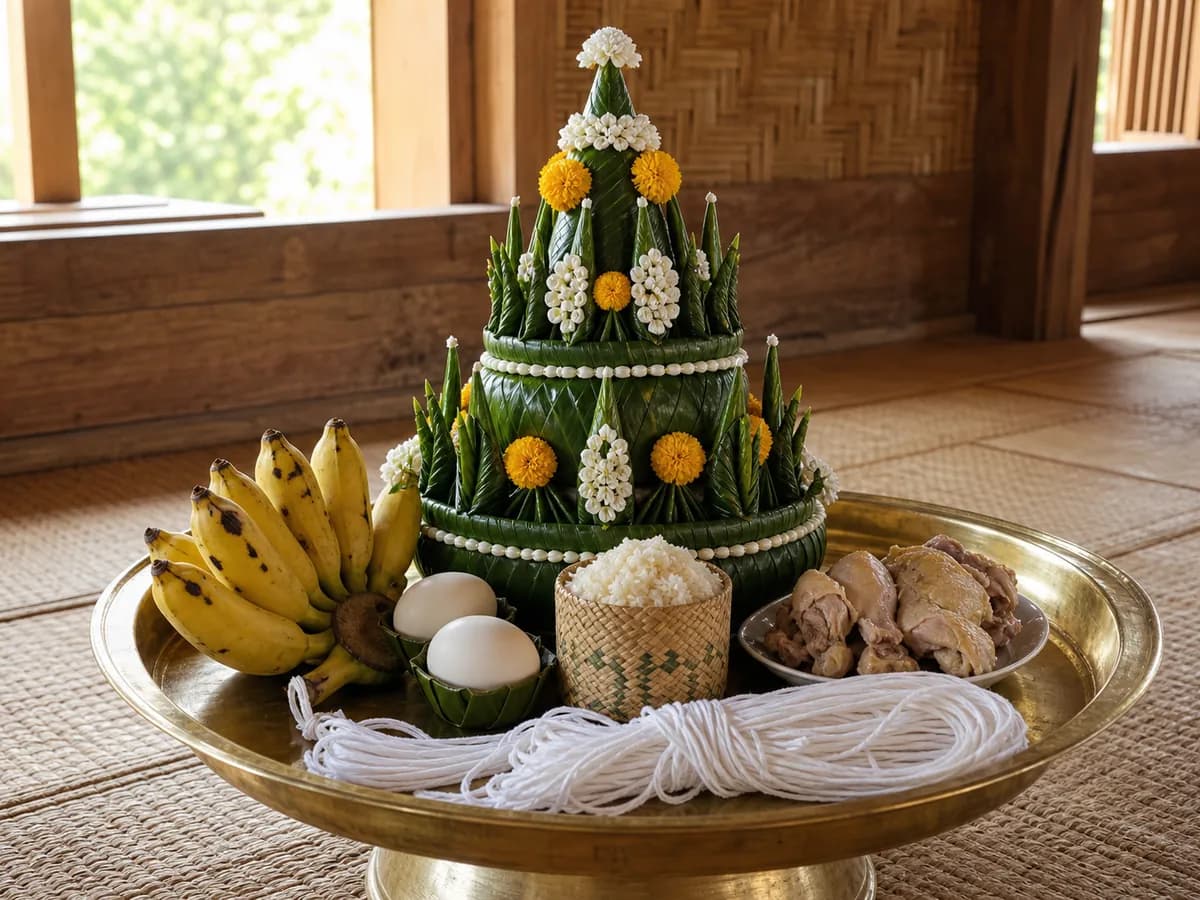
| Item on the Tray | Spiritual Meaning |
|---|---|
| Bai sri cone (Banana leaves) | Represents the sacred mountain (Mount Meru) |
| Boiled chicken & egg | Offerings of sustenance to attract the wandering spirit |
| Sticky rice & bananas | Symbols of sweetness and abundance |
| White cotton threads | Pure, holy threads used to bind the blessing |
| Liquor, incense & candles | Traditional ceremonial offerings to the ancestors |
Note: The exact items and the height of the Baisri tower vary by province and family. The surest bet is to have the local village elders or a professional Mor Kwan arrange it.
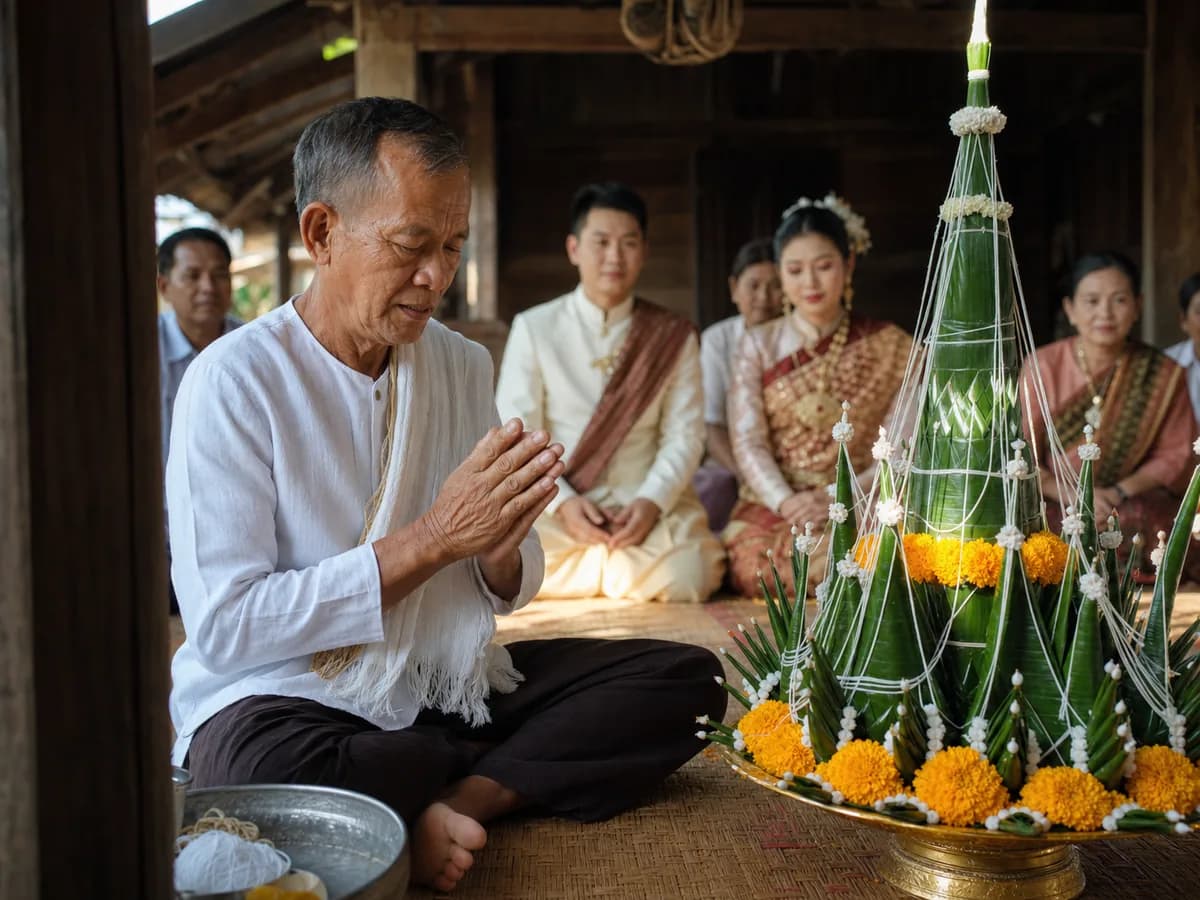
The ceremony is led by a respected elder known as a Mor Kwan or Mor Sut. He is not a Buddhist monk, but rather a folk shaman-like officiant. He chants in the local Isan dialect—a hypnotic, melodic prayer that invites the spirits to return and bless the couple with fertility, wealth, and harmony.
Immediately following the chanting is the Pook Ken (tying of the wrists). This is the most interactive and emotional part of the day.
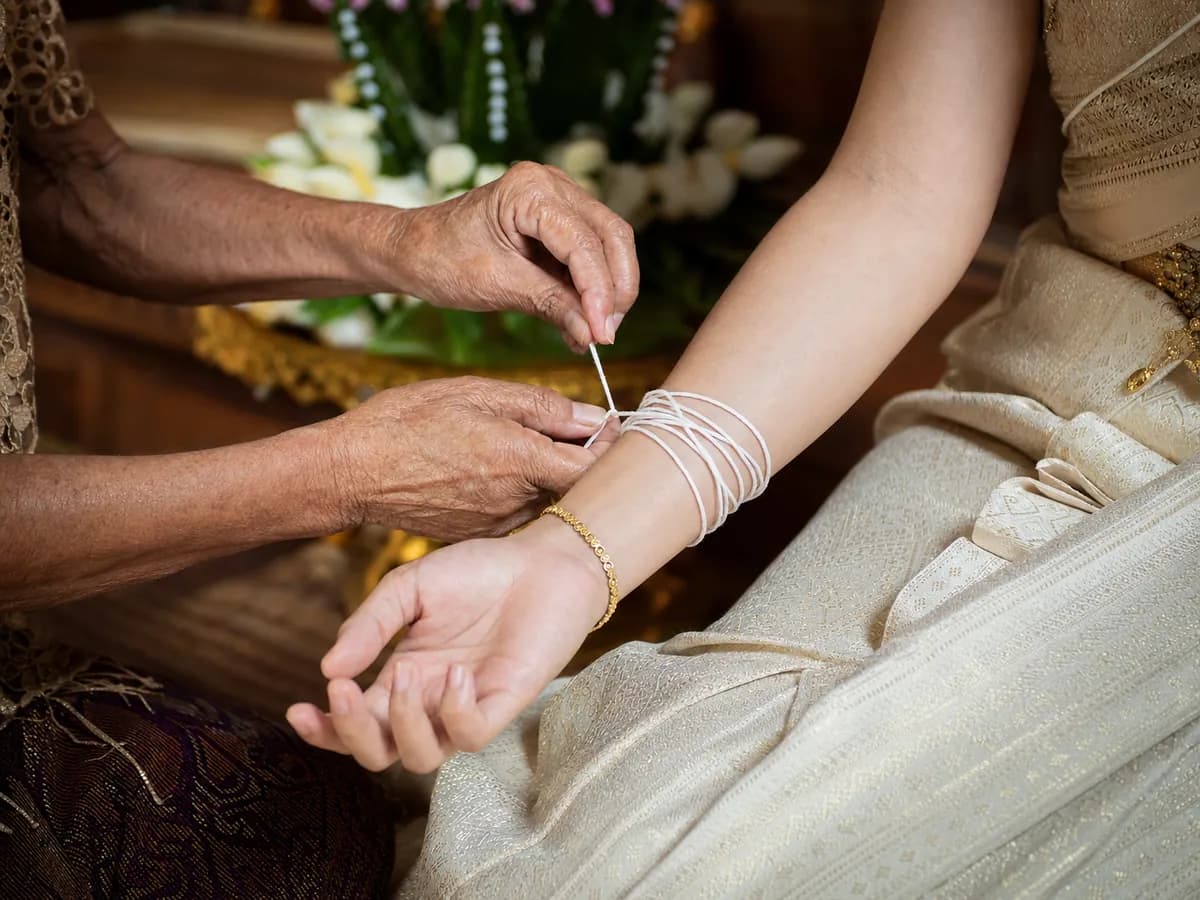
Guest Etiquette: If you tie a thread, stroke the thread over the couple's wrist towards their hand first to sweep away bad luck, then tie it securely while offering a short, heartfelt congratulations. It is tradition for the couple to keep these threads on for at least three days. When removing them, try to untie them rather than cutting them with scissors!
An Isan wedding usually takes place at the bride's family home and often wraps up in a single day. The atmosphere is less formal than a Bangkok hotel wedding and focuses heavily on community celebration.
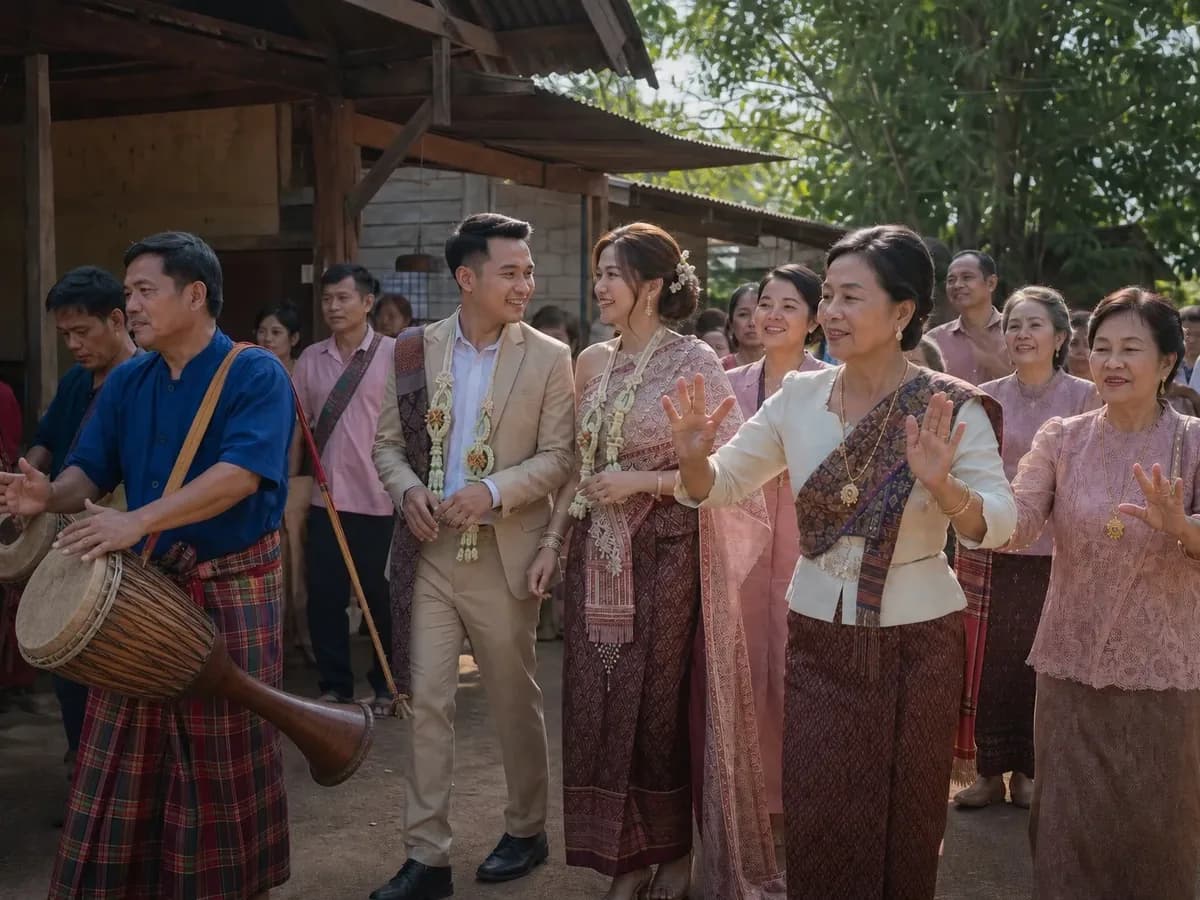
You cannot talk about Isan without talking about the vibrancy of the food, music, and textiles.

Planning a traditional Isan wedding requires coordinating the Baisri maker, the Mor Kwan, the local catering, and hundreds of village guests. It can get chaotic.
Use Wedly to build a clear, digital run sheet for the day. You can list out the exact timings for the monk ceremony, the Khan Maak, and the Baisri Su Kwan, ensuring your family members and the MC know exactly what is happening next.
Furthermore, the money guests give during the thread-tying (ngoen phuk khaen) is worth recording too, so you can reciprocate later. Use the Gift-Money Tracker to log who gave how much, so you know exactly who to reciprocate to when the village has its next wedding!
An Isan wedding shines in the Baisri Su Kwan and thread-tying, allowing everyone in the community to bless the couple up close and warmly. Prepare the pha khwan tray and sacred threads, arrange the order of elders to ensure smooth flow, and follow your province's custom. Dress comfortably, prepare your stomach for spicy food, get ready to dance to the khaen, and you'll experience a wedding brimming with deep meaning and undeniable Isan charm.
It is the Isan soul-calling and blessing ceremony. A tiered banana-leaf tray (the pha khwan) sits at the centre, a mo sut (ritual leader) chants to call the couple's "khwan" (spirit) back so they live happily, and then the elders tie holy cotton threads around their wrists while giving their blessings.
The elders and guests come up one by one to tie a blessed white cotton thread around each of the couple's wrists, speaking a short blessing as they do. Some tuck in a little money or a small gift too — it is a warm, up-close way for everyone to wish the couple well.
The signature difference is the Baisri Su Kwan and the wrist-tying, which replace or sit alongside the Central-Thai rituals, led by a mo sut. The proposal, the sinsod (dowry), and the merit-making are still there — each family adapts the details to suit them.
A traditional Baisri Su Kwan usually needs a mo sut (a folk brahmin) to lead the soul-calling chant, but it depends on how traditional your area and family are. Ask the elders in advance so you can arrange one if needed.
Ready to start planning your wedding?