

Loading…
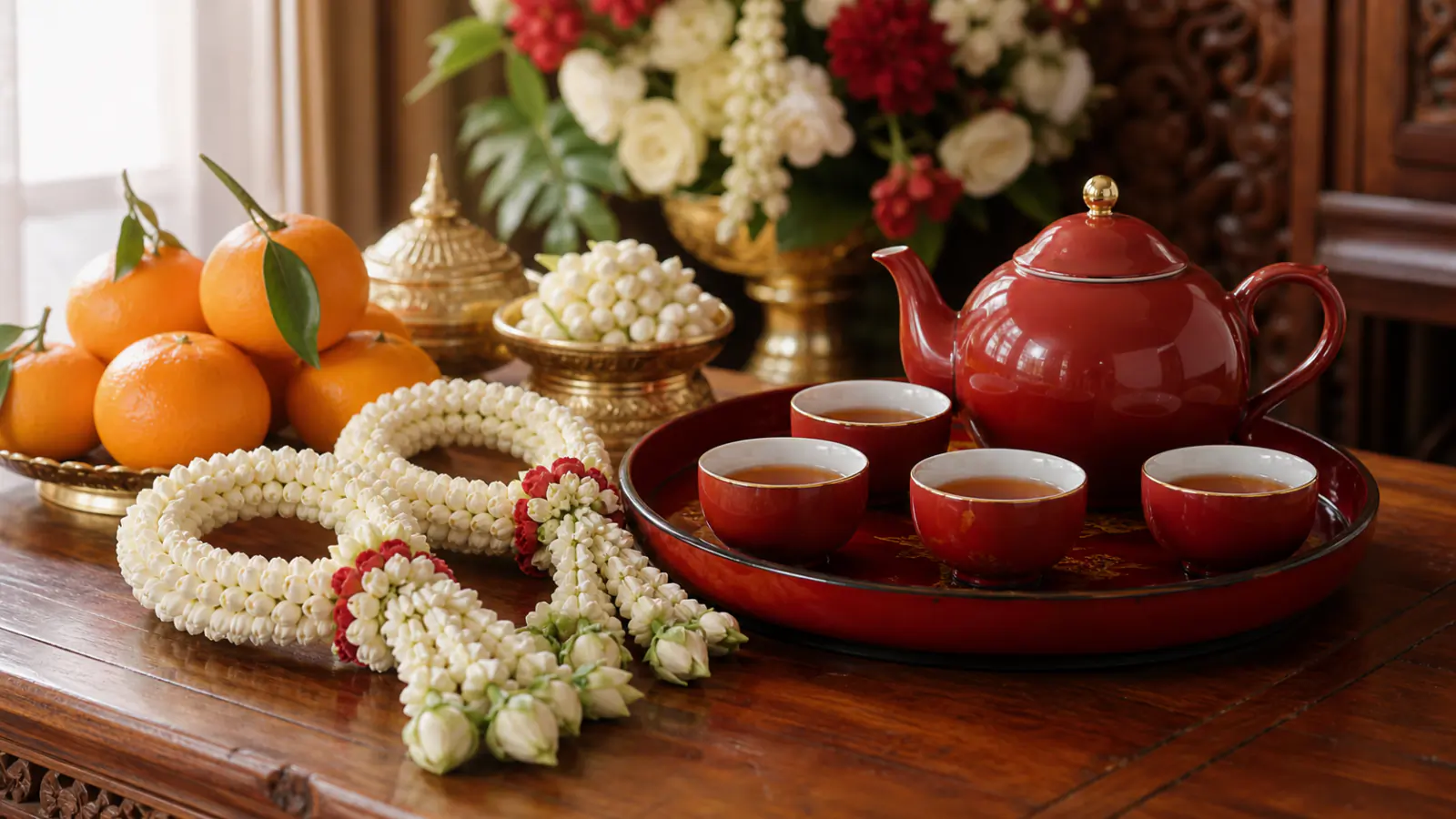
The blending of Thai elegance and profound Chinese symbolism makes the "Thai-Chinese Wedding" one of the most popular and meaningful wedding styles today.
For many couples preparing for a Thai-Chinese wedding, the specific customs and steps can seem daunting. Today, we’re breaking it down simply: what you need to prepare and the key traditions you should know.
A Thai-Chinese wedding often emphasizes simplicity while incorporating auspicious meanings into every step. The most prominent feature is the "Tea Ceremony" (known as "Phang Te" in Teochew), a profound gesture of respect and gratitude towards the elders of both families. If you're wondering whether it replaces or sits alongside the Thai Rub Wai, we compare them in Rub Wai vs the tea ceremony.
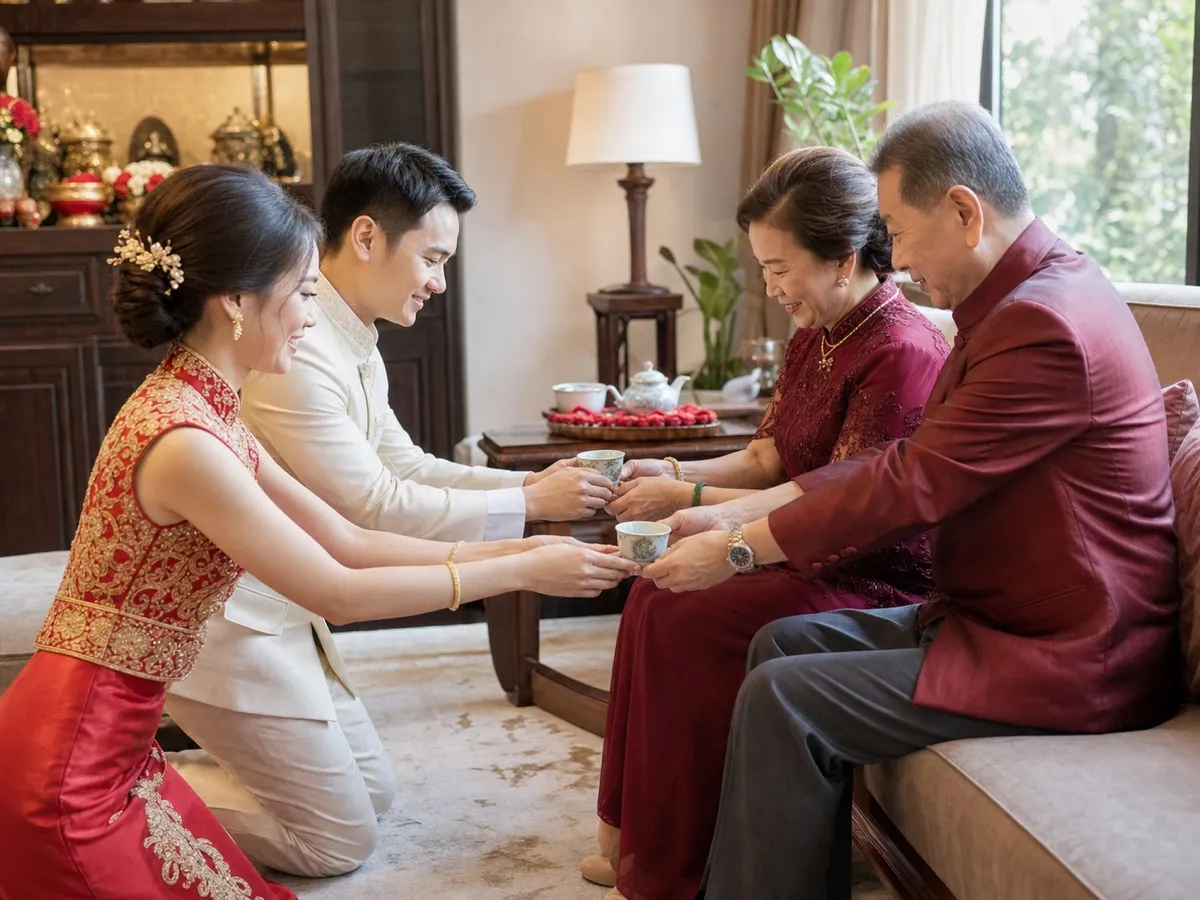
Modern Thai-Chinese weddings are usually streamlined to fit contemporary lifestyles, typically following this sequence:
Preparing for the Tea Ceremony is easier than you might think. Here are the essentials:
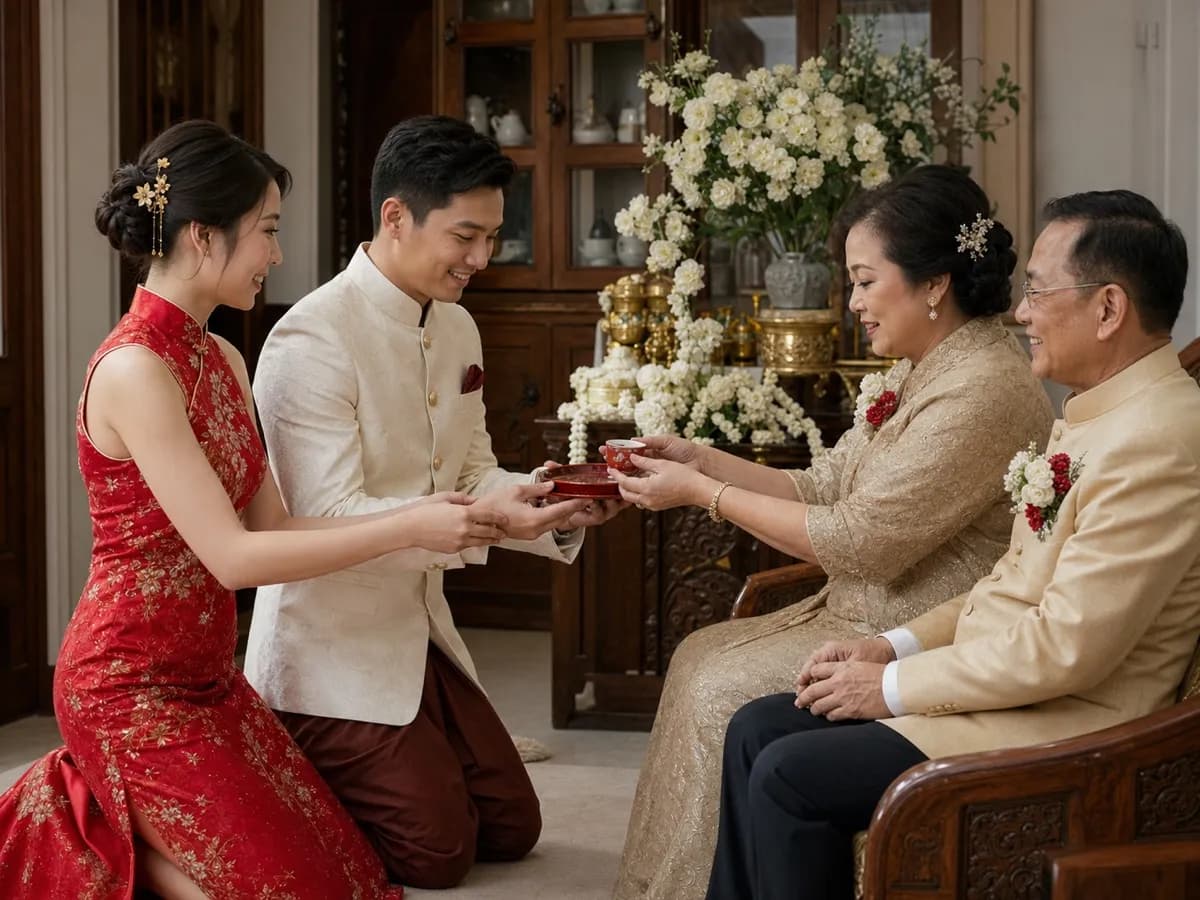
In a Chinese wedding, handing over a red envelope isn't just about the money; it symbolizes the passing of good luck and blessings to the newlyweds. The amount usually ends in auspicious numbers, such as 8, or even numbers. Guests unsure what to put in can check typical bands by relationship with the cash gift calculator.
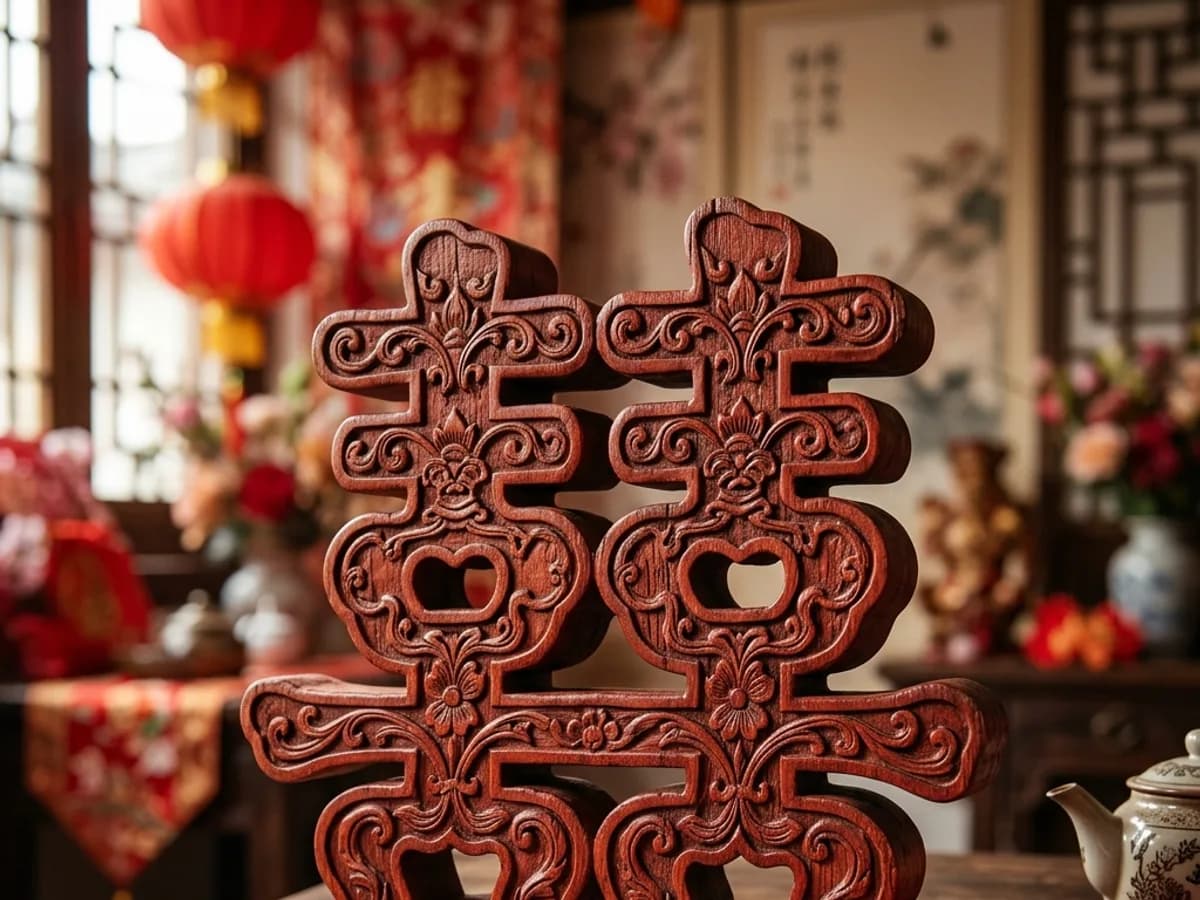
💡 Wedly's Tip: The most important aspect of planning a Thai-Chinese wedding is communication between the two families. Every family might have slight variations in their traditions. Discussing expectations early on ensures a smooth and joyous celebration.
Preparing all the auspicious items and having a clear list of elders for the tea ceremony in advance will help the event run seamlessly.
Organizing a wedding involves many moving parts. Using a dedicated tool can make managing these details effortless. Try Wedly to help organize your schedule, manage your budget, and keep everything in one place for your big day.
A Thai-Chinese wedding beautifully preserves meaningful traditions. Whether you opt for a full traditional affair or a modern, condensed version, the core remains the love and respect shared between the families. Enjoy the planning process and your beautiful wedding day!
The Tea Ceremony (Phang Te) is a crucial part of a Chinese wedding where the bride and groom serve tea to their elders as a sign of respect. In return, the elders give them red envelopes (Ang Pao) or gold and offer their blessings.
Typically, you start with the groom's parents, then the bride's parents, followed by older relatives from both sides in order of seniority.
Essential items often include auspicious oranges, traditional Chinese sweets (Khanom Chan-ap), a tea set, and red envelopes. Specific items can vary based on family traditions.
Ready to start planning your wedding?