

Loading…
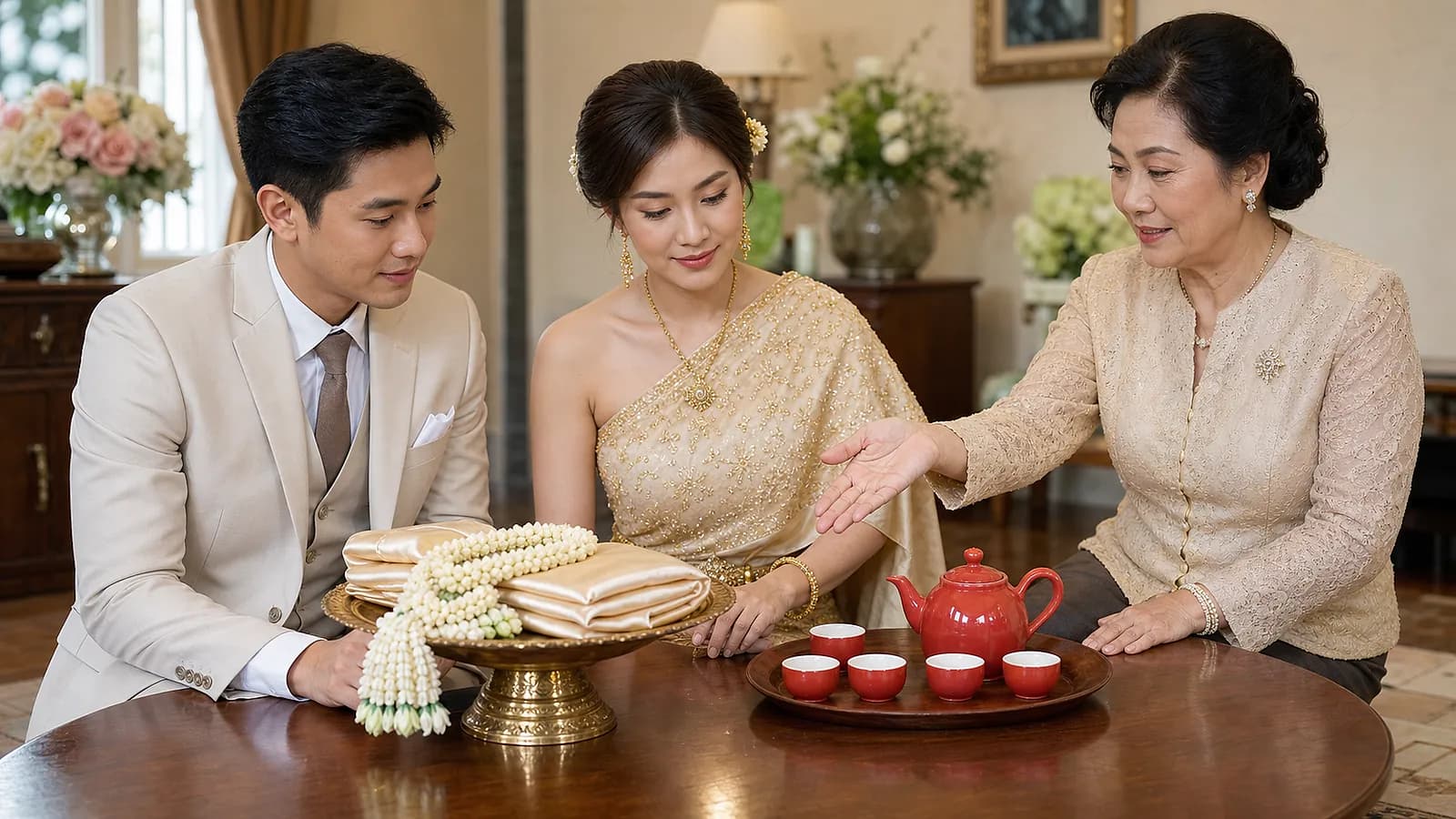
For couples coming from mixed Thai and Chinese heritage, the morning rituals can get confusing. Do you perform the Thai "Rub Wai" (Paying Respect/Receiving Gifts) or the Chinese Tea Ceremony? Here is a detailed breakdown of the differences, the cultural significance of each, and how to seamlessly honor both traditions without doubling your timeline or stressing out your families.
The Thai "Rub Wai" (sometimes referred to as Phiti Rap Wai) is a deeply emotional and significant part of a traditional Thai wedding. It serves as the formal introduction of the new spouse to the elders of the family and a way to receive their blessings.
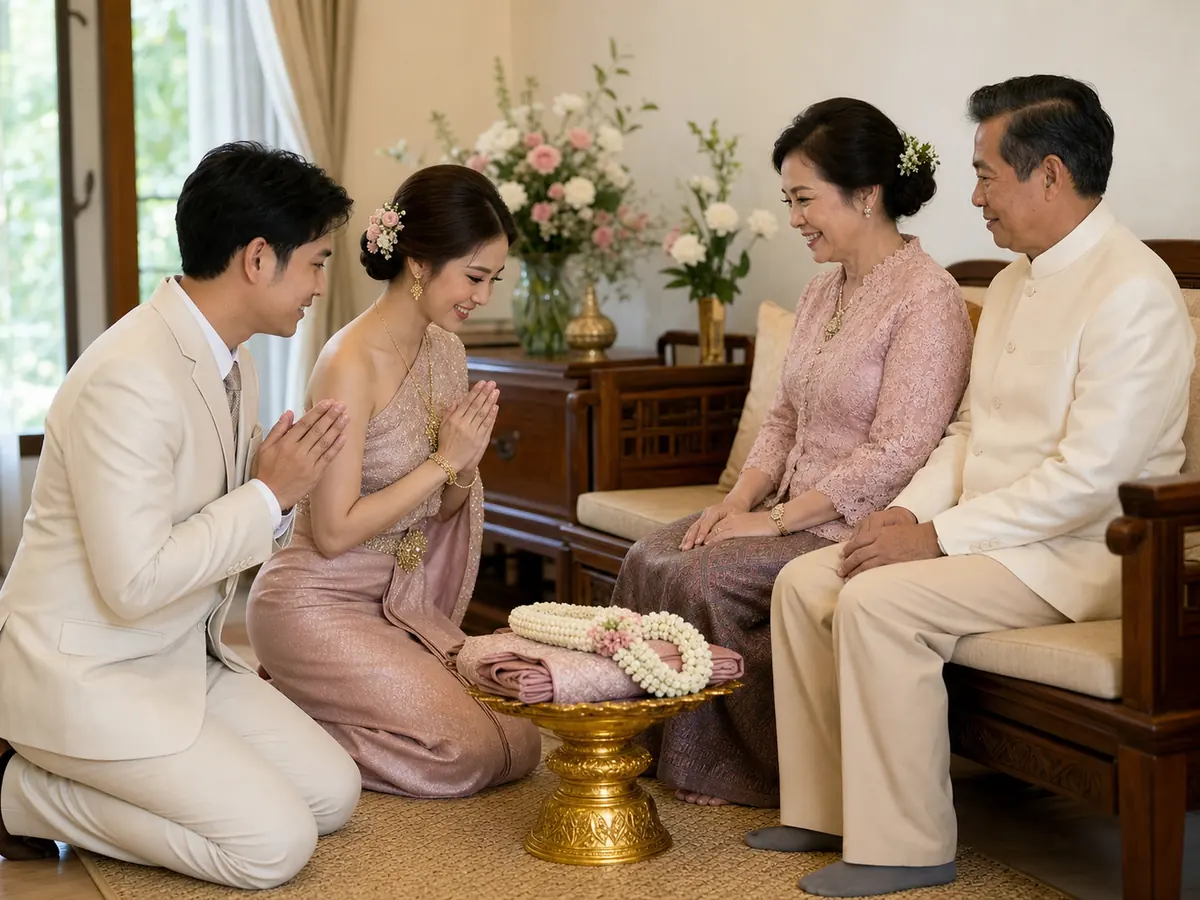
In Thai culture, respect for elders is paramount. The Rub Wai ceremony is a physical and spiritual manifestation of this respect. It signifies the merging of two families and the elders' acceptance of the new son- or daughter-in-law.
The Chinese tea ceremony is arguably the most fundamental and universally recognised Chinese wedding tradition. It is a beautiful ritual showing immense respect and officially welcoming the new spouse into the family hierarchy.
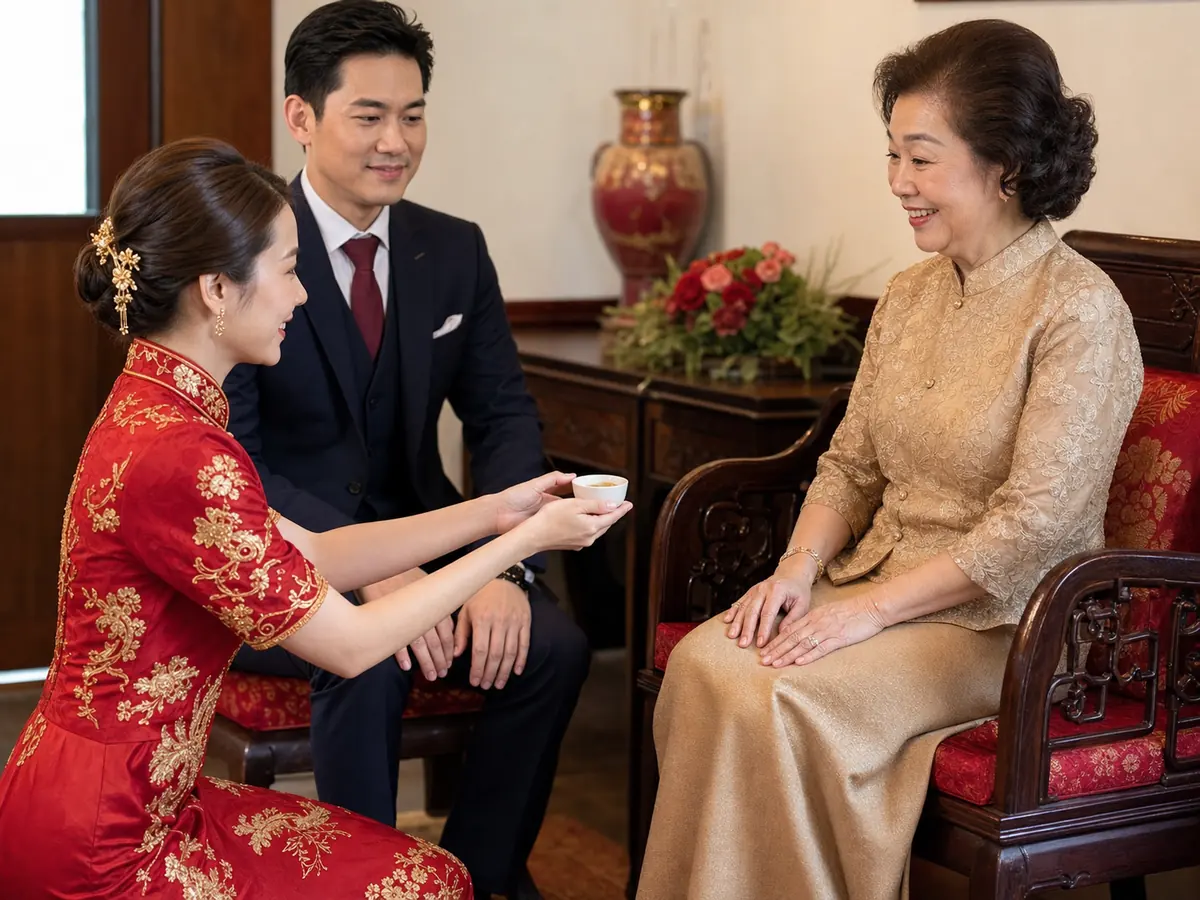
Tea symbolizes purity, stability, and fertility in Chinese culture. Serving tea is a profound act of filial piety. It is the moment the bride and groom officially address their new in-laws as "Mother" and "Father."
To make it easier to digest, here is a quick comparison of the two ceremonies:
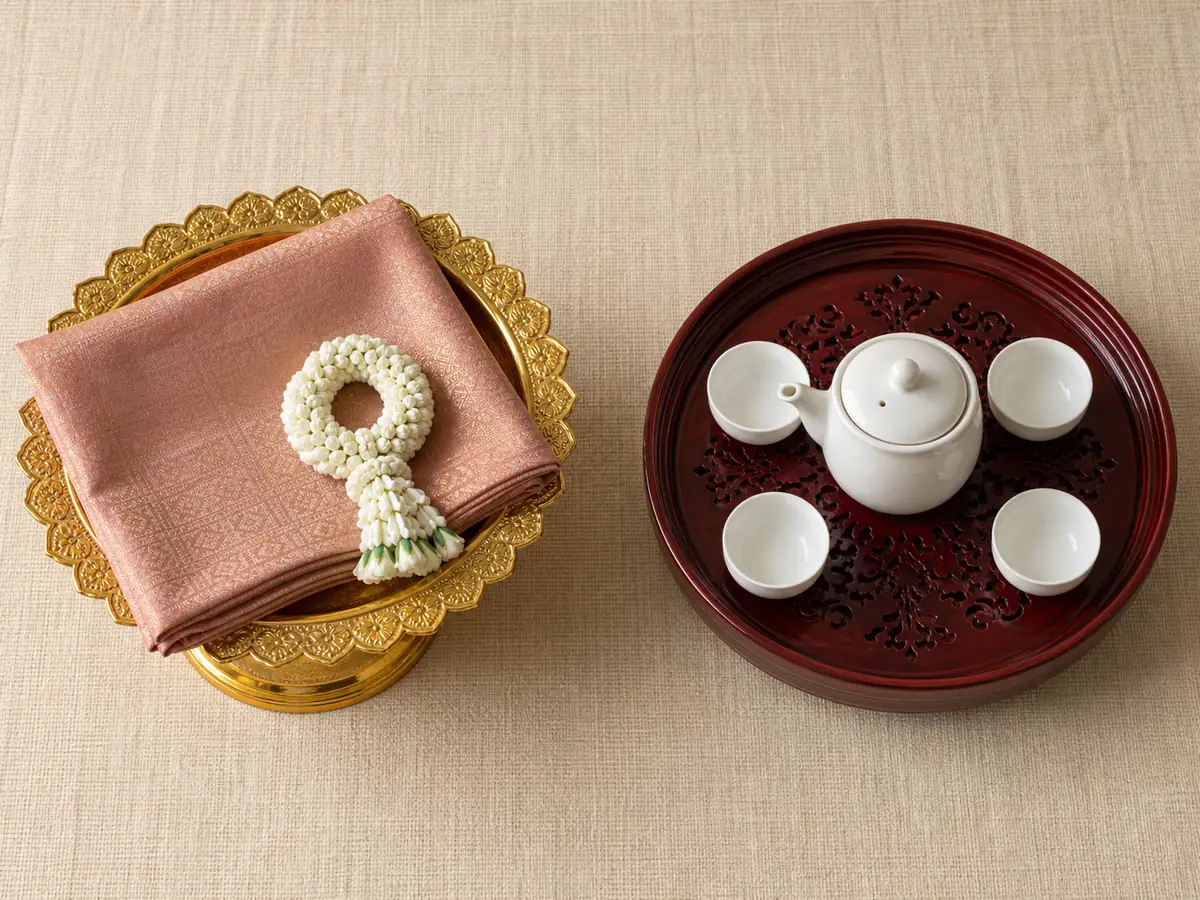
| Feature | Thai "Rub Wai" | Chinese Tea Ceremony |
|---|---|---|
| Primary Symbol | Holy Thread (Sai Sin) & Gifts | Sweet Tea & Red Cups |
| Couple's Posture | Sitting on floor (tucked legs) | Kneeling on cushions |
| Couple Gives | Premium Gifts (Silk, Towels) | Sweet Tea |
| Elders Give | Wrist tying, Blessings, Cash | Red Envelopes (Ang Pao), Gold |
| Core Meaning | Seeking blessings, respect | Purity, fertility, filial piety |
If your families expect both ceremonies, you might be worried about a bloated wedding timeline. Don't worry! You don't need to host two completely separate, lengthy sessions. Modern Thai-Chinese weddings have mastered the art of combining these rituals efficiently.
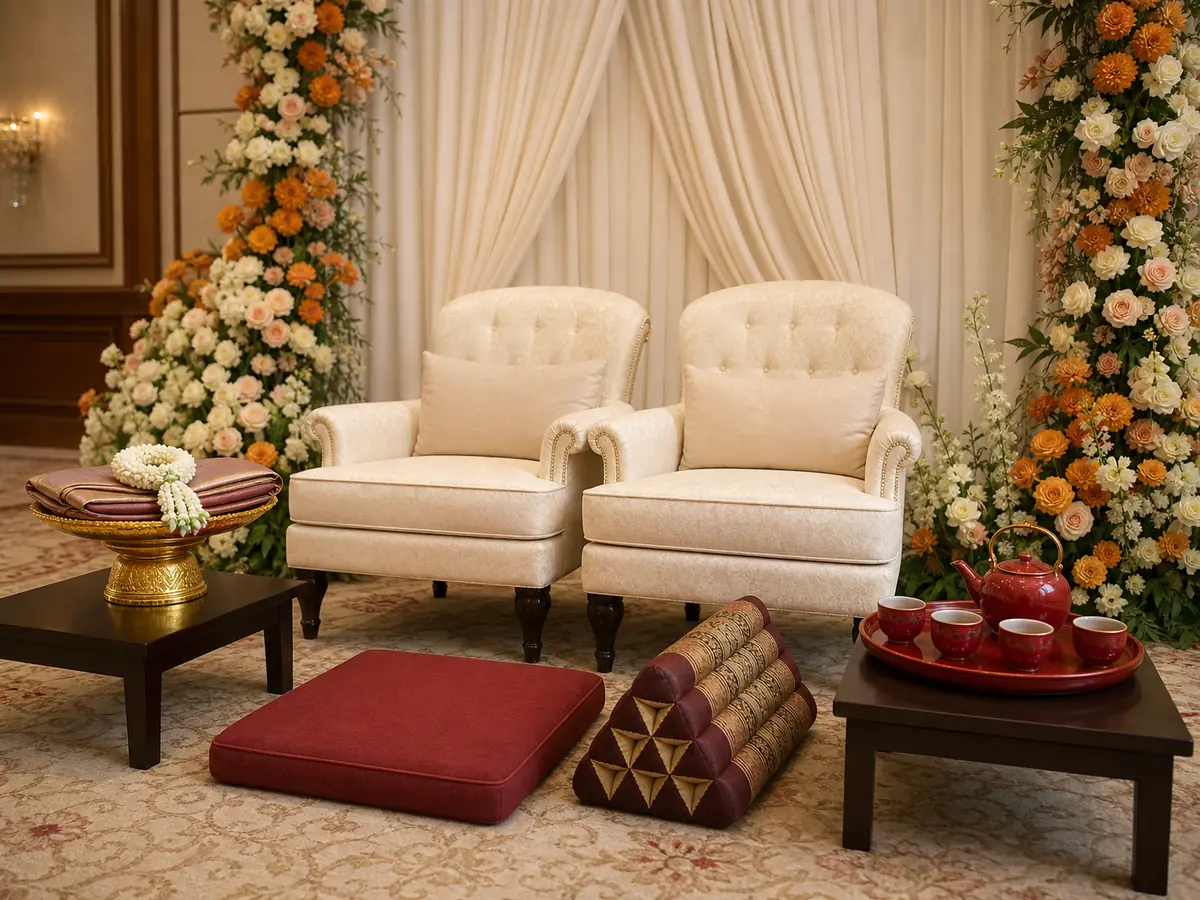
Use the same beautiful staging area for everyone.
This is for families who are fully integrated and want to merge the rituals into a single fluid action for every elder.
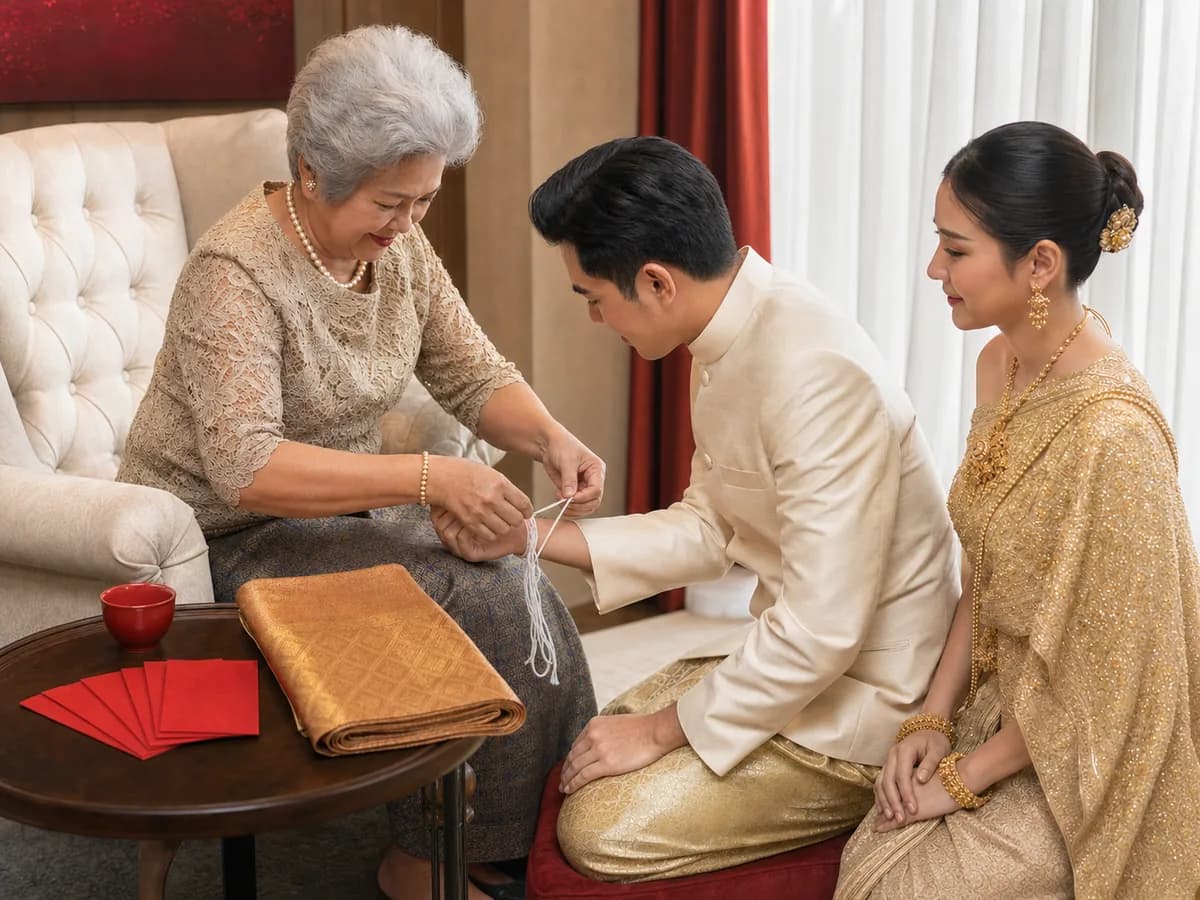
If families are strictly traditional and prefer unmixed rituals, you can separate them by time. For example, perform the Tea Ceremony immediately after the Chinese door games in the early morning, and save the Rub Wai for the late morning after the Thai water-pouring ceremony.
Calling up the elders in the correct hierarchical order (grandparents first, then parents, then aunts/uncles, then older siblings) is absolutely critical in both Thai and Chinese cultures. A mix-up here can cause serious family drama!
Use Wedly's Checklist to create a master list of all elders from both sides. Categorize them by title and cultural preference, ensuring your MC calls them up perfectly and the right props (tea or gifts) are ready. Let Wedly handle the complex logistics so you can focus on the beautiful moments.
It is a Thai tradition where the couple pays respect to the elders by offering a gift (usually a silk cloth or pillow), and the elders tie holy thread around their wrists and give them cash gifts in return.
Yes! Most modern Thai-Chinese weddings combine them. The couple will offer gifts to the Thai relatives, and serve tea to the Chinese relatives, back-to-back.
Ready to start planning your wedding?