

Loading…
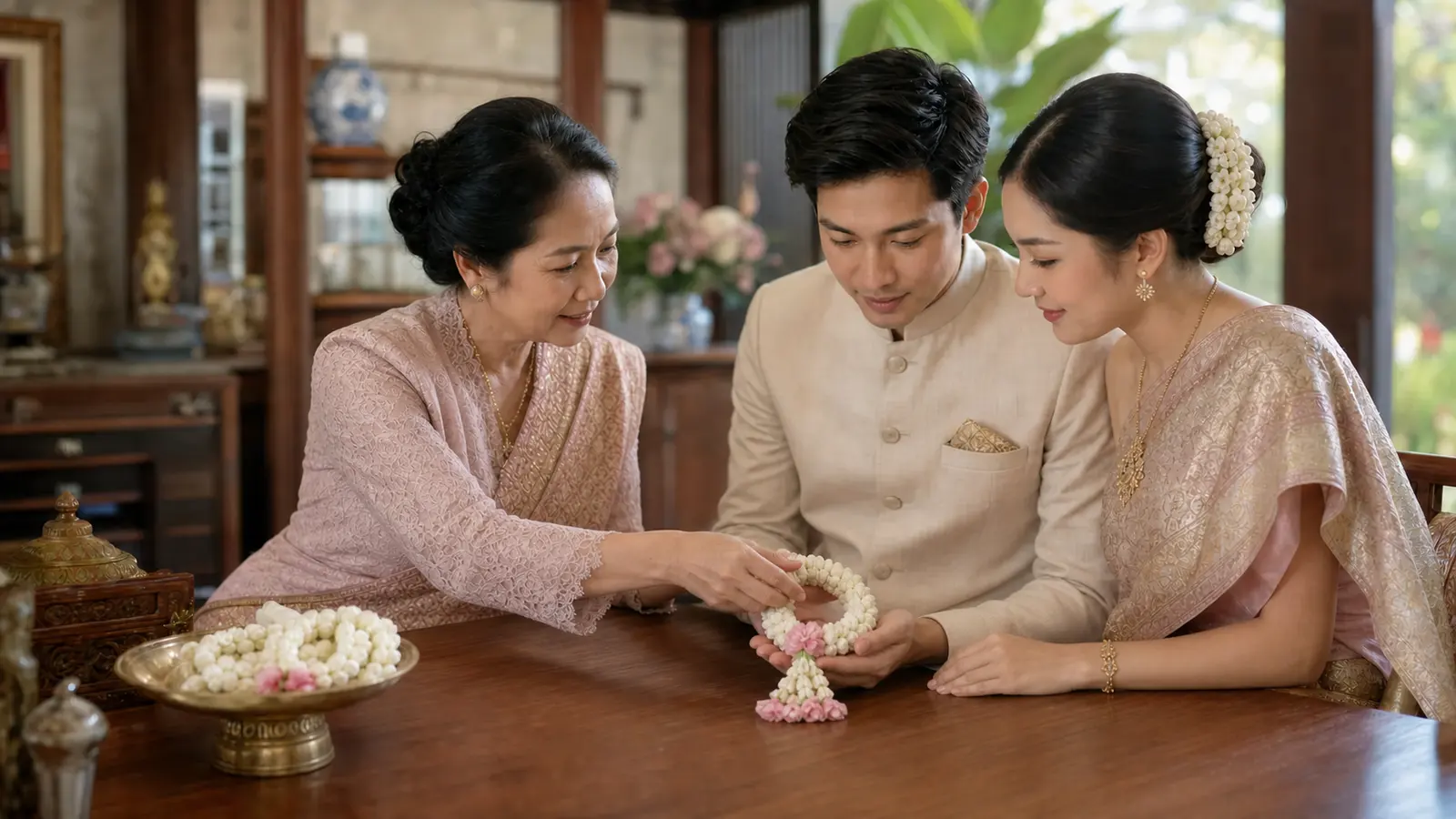
Once you've decided to marry, the first question from the elders is almost always, "Have you got your date yet?" And the question that follows in your own head is usually: right, but who do we actually ask, and what do we need to bring them?
So this piece stays on that one job — commissioning the reuk. Who calculates it, what birth details you need in hand, what to tell them up front, and which ceremony timings to walk away with, so one visit is enough.
If you're still at the earlier question — what a reuk is based on, which months are favoured or avoided, and how to make the date fit your bookings — that groundwork lives in our guide to choosing a good wedding date.
There are three common routes in Thailand, and which one you take usually depends on what your family already trusts.
Many families take the couple's birth details to a senior monk or abbot they hold in high regard. The upside is that the elders are usually happiest with this route, because it's someone the household already trusts. Just book well ahead — respected monks have very full calendars.
For Thai-Chinese families, consulting a sinsae (Chinese metaphysics master) is completely normal. They'll use Chinese astrology such as Bazi to do the calculation, while a Thai astrologer will chart traditional Thai horoscopes instead. Either way you'll usually come away with a fuller set of sub-timings, and it's easier to go back and forth with follow-up questions.
Good for a quick overview before you involve anyone else. You can look up "Thong Chai" (Victory) days and other widely accepted good days — our list of auspicious dates is a fast way to see the shape of the year before you raise it with the family. Just know its limit: an almanac gives you generalised good days, not a reading tailored to your two charts. Use it to start the conversation, not to replace a proper calculation if your family takes this seriously.
If the two families trust different traditions — one wants a monk, the other a sinsae — agree which one you're going with before anyone books an appointment. Two readings that disagree is a much harder conversation than one you chose together.
This is the part couples underestimate. Turn up short of any of it and you'll either get sent home or get a rougher reading than you could have had.
Tip: keep all of it in a note on your phone. When an elder or the sinsae asks, you can answer on the spot instead of ringing home.
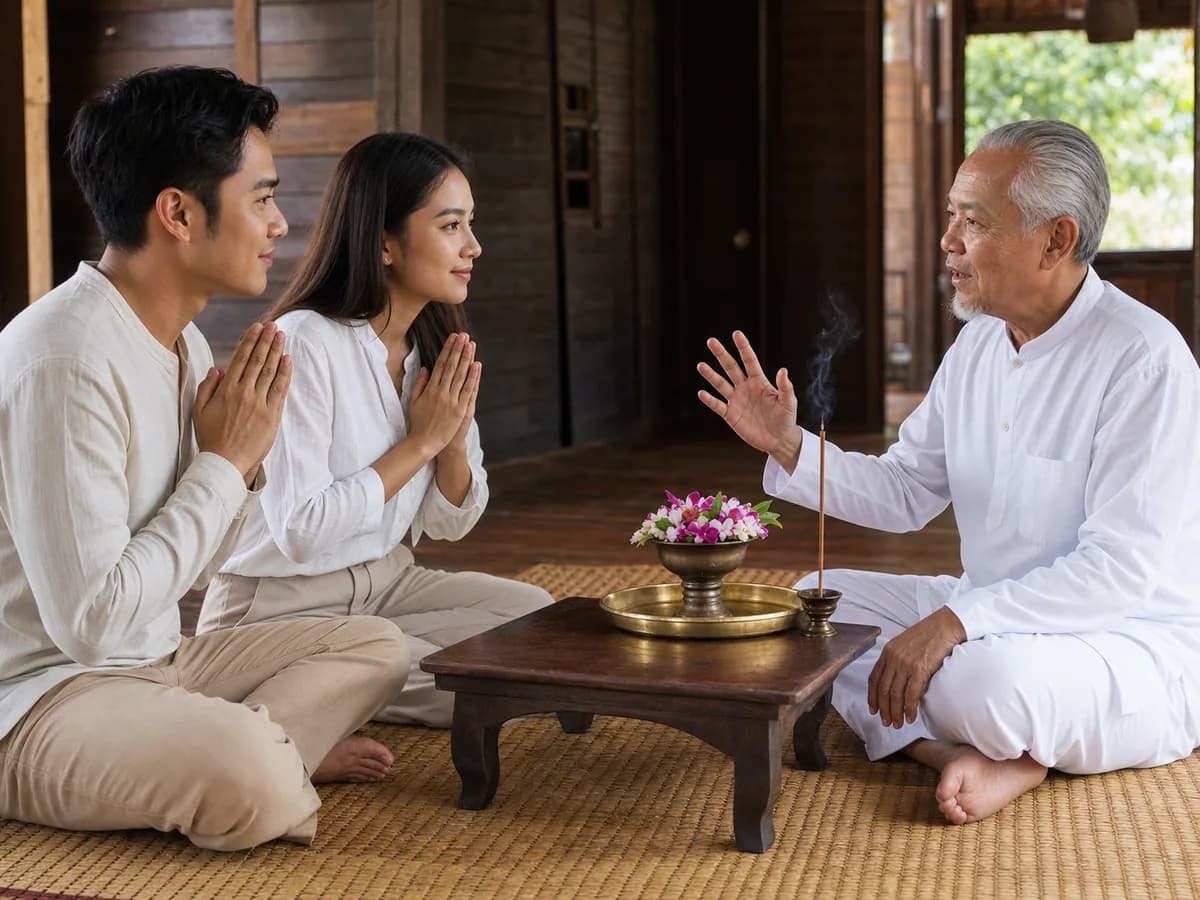
The birth details are the raw material. These three requests are what turn the result into a date you can actually build a wedding around.
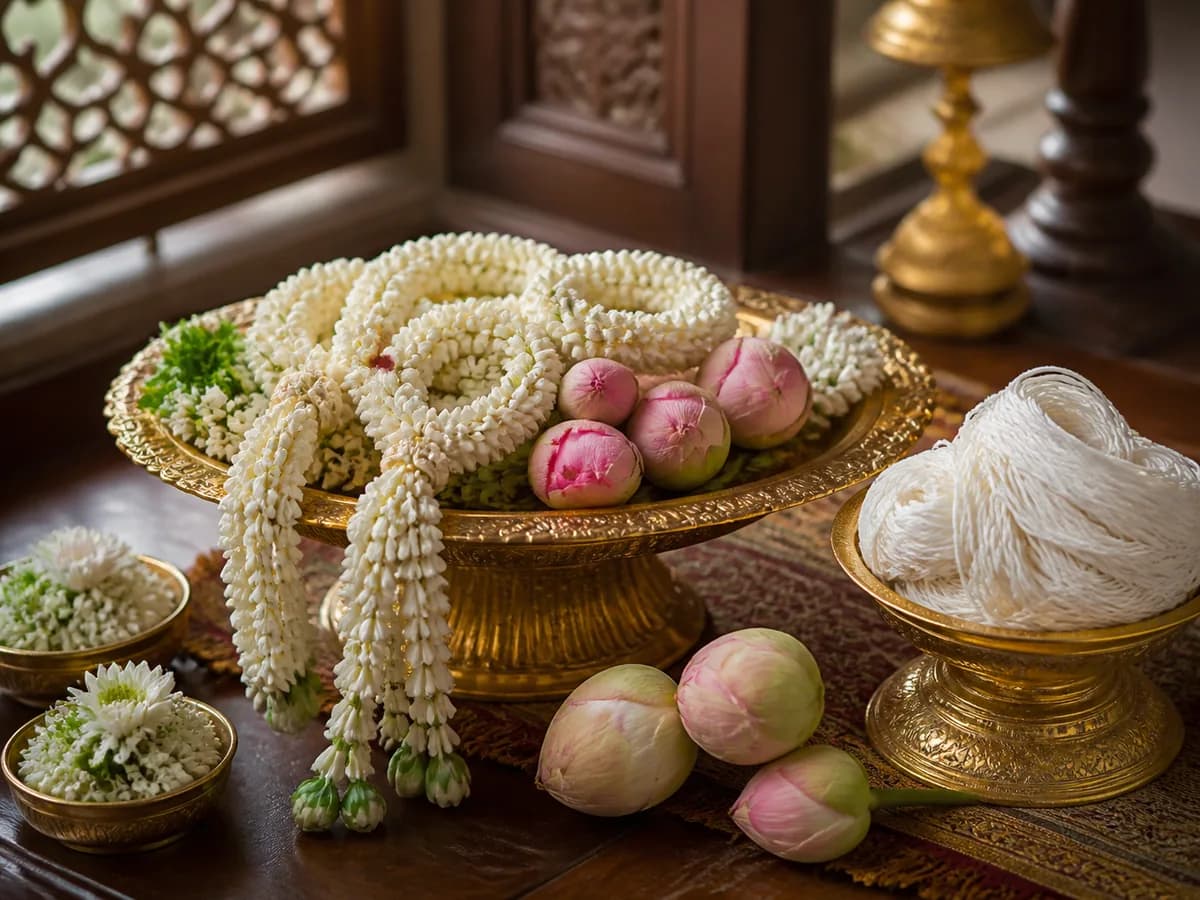
A Thai wedding day isn't one start time; it's a series of small auspicious moments. Ask for the full set while you're there.
One thing worth planning for: once you have the ring-exchange timing, build in a buffer for everything before it — the procession and the door games almost always run longer than couples expect. The aim is to arrive right on the timing, not to stand at the gate for half an hour waiting for it.
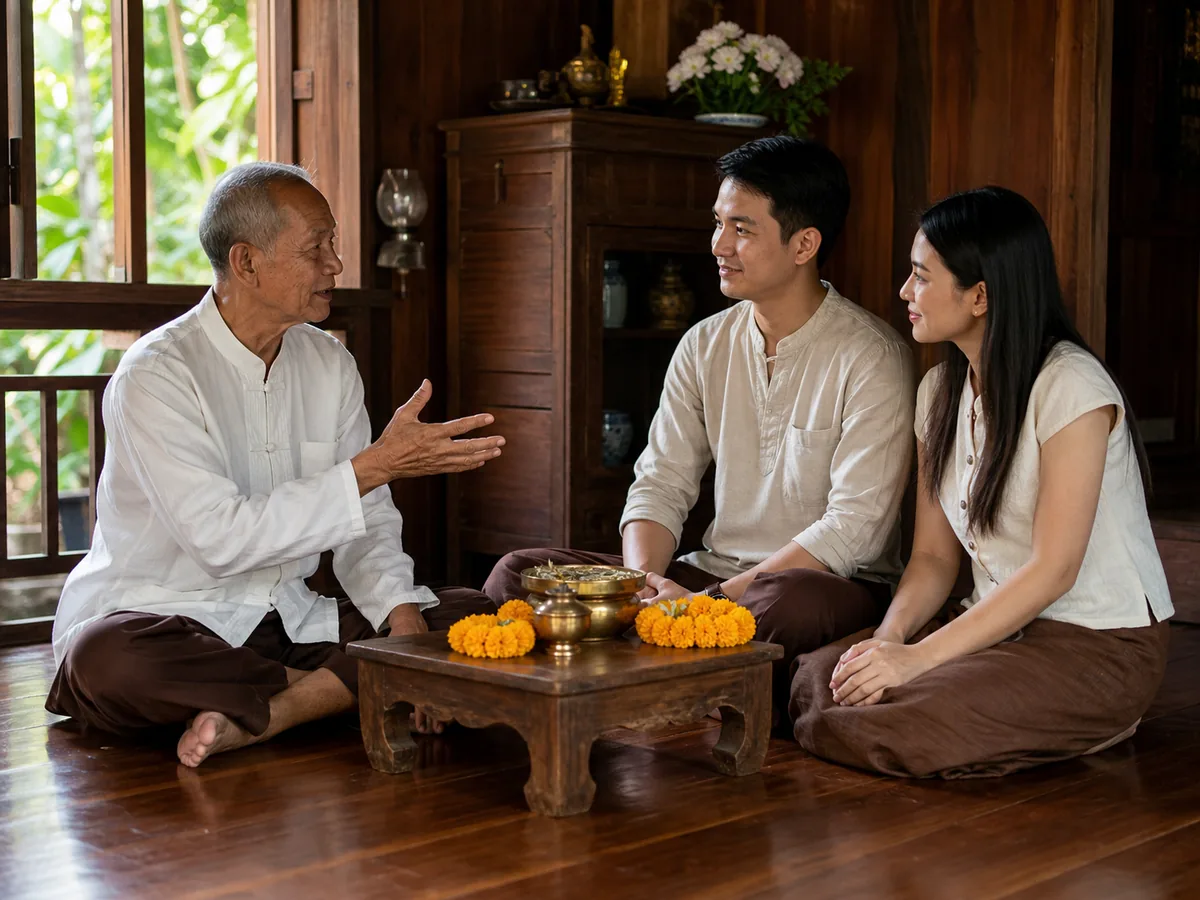
With the dates in hand, the job becomes fitting them onto a real calendar.
Commissioning a reuk is straightforward once you know what it needs: both birth dates and birth times, both sets of parents' zodiac years, and the window you want to marry in. Ask for two or three options, and name the ceremonies you want timings for.
Everything after that is down to the two of you. Whichever day you land on, if you're holding hands and ready to walk into it together, it's a good one.
The date, month, year, and exact time of birth for both of you, the zodiac years of both sets of parents, and the rough window you want to marry in so the search stays inside your plans.
A common fix is to hold the ceremony itself on the auspicious morning with close family only, then move the reception to the following weekend when most guests can actually travel.
Two or three. Venues, photographers, and makeup artists book up fast, and couples holding a single date often end up compromising on the team just to keep it.
Ready to start planning your wedding?