The Thai Monk Blessing Ceremony - Steps and What to Prepare
The Monk Blessing Ceremony (พิธีสงฆ์) is typically the very first and most serene event of a traditional Thai wedding day, starting at 7am or 9am depending on the couple's auspicious hour. Deeply rooted in Buddhist traditions, this ceremony is not a legal marriage registration, but rather a spiritual foundation. The core purpose is "making merit" (Tham Boon) to ensure a blessed, peaceful, and prosperous married life together.
For foreign couples, or modern Thai couples unfamiliar with complex Buddhist rituals, the chanting and specific protocols can seem intimidating. Here is a comprehensive, simplified guide to help you understand the flow and prepare flawlessly.
How Many Monks Should You Invite?
It is a strict tradition in Thailand to invite exactly 9 monks to conduct a wedding blessing. In Thai culture, odd numbers are generally considered auspicious for joyous occasions, and the number 9 (pronounced "Kao") is the most auspicious of all. It sounds identical to the Thai word for "progress," "stepping forward," or "advancing" (ก้าว). Therefore, having 9 monks symbolizes the couple stepping forward together into a prosperous future.
Essential Items to Prepare
Most professional wedding venues and hotels in Thailand will provide these items as part of their "Engagement Package." However, if you are organising this at home or at a DIY venue, you must prepare the following:
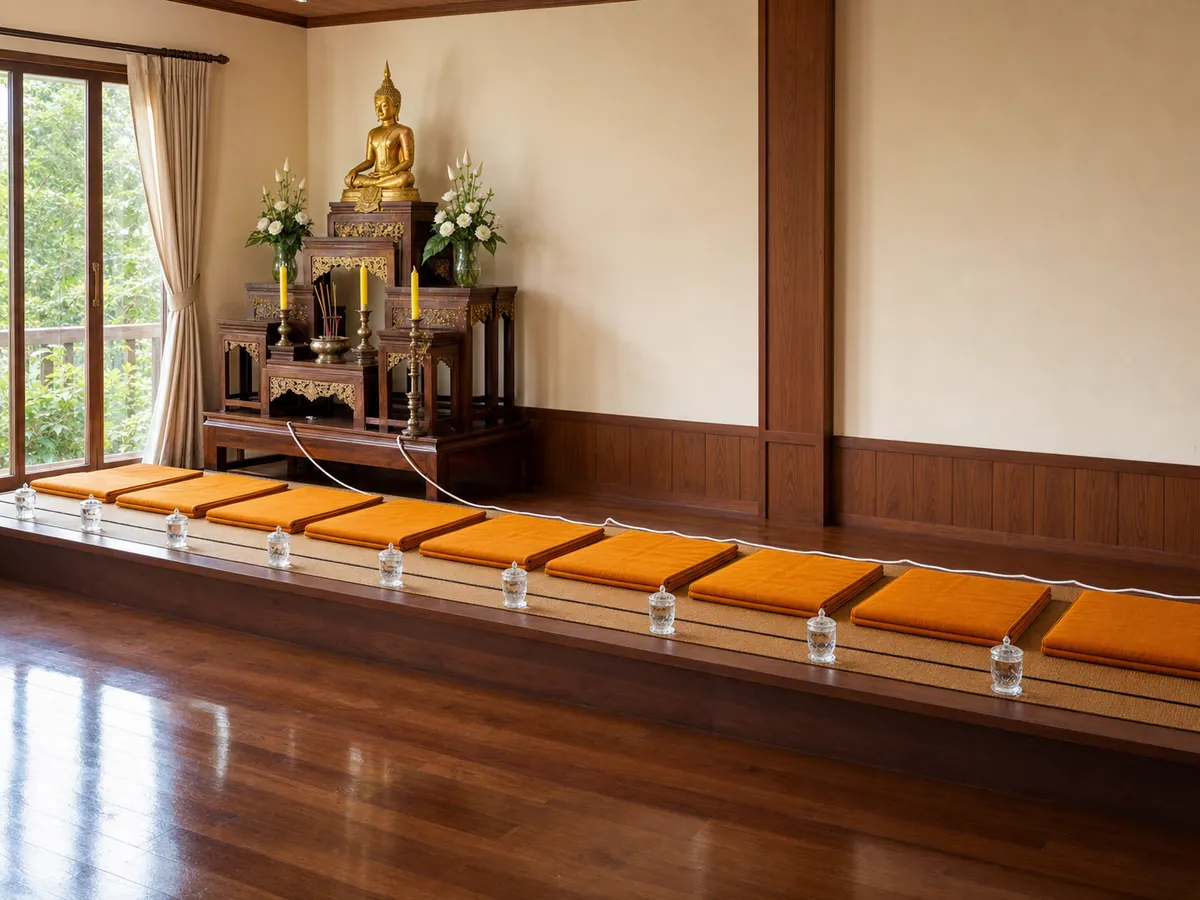
The Main Altar Set (Mu Bucha): A central table featuring a Buddha statue (facing East or North), two candles, and three incense sticks.
Seating for 9 Monks: Monks must sit on a raised platform (Asana) or specific mats, slightly higher than the laypeople. Each seat must be equipped with a spittoon, a glass of water, tissues, and sometimes a small fan.
The Holy Thread (Sai Sin): A continuous spool of unspun white cotton thread. It is wrapped around the Buddha statue, connected to the Holy Water bowl, and then passed along the hands of all 9 monks. It acts as a spiritual conduit for the chanting.
Holy Water Bowl (Nam Mon): A metallic bowl filled with clean water, a wax candle, and sometimes auspicious leaves. The lead monk will use this to bless the couple later.
Sangkhatan & Envelopes: 9 sets of monk offerings (alms). These usually contain basic necessities like soap, herbal medicines, tea, and flashlights. You will also need 9 white envelopes containing cash donations for the temple.
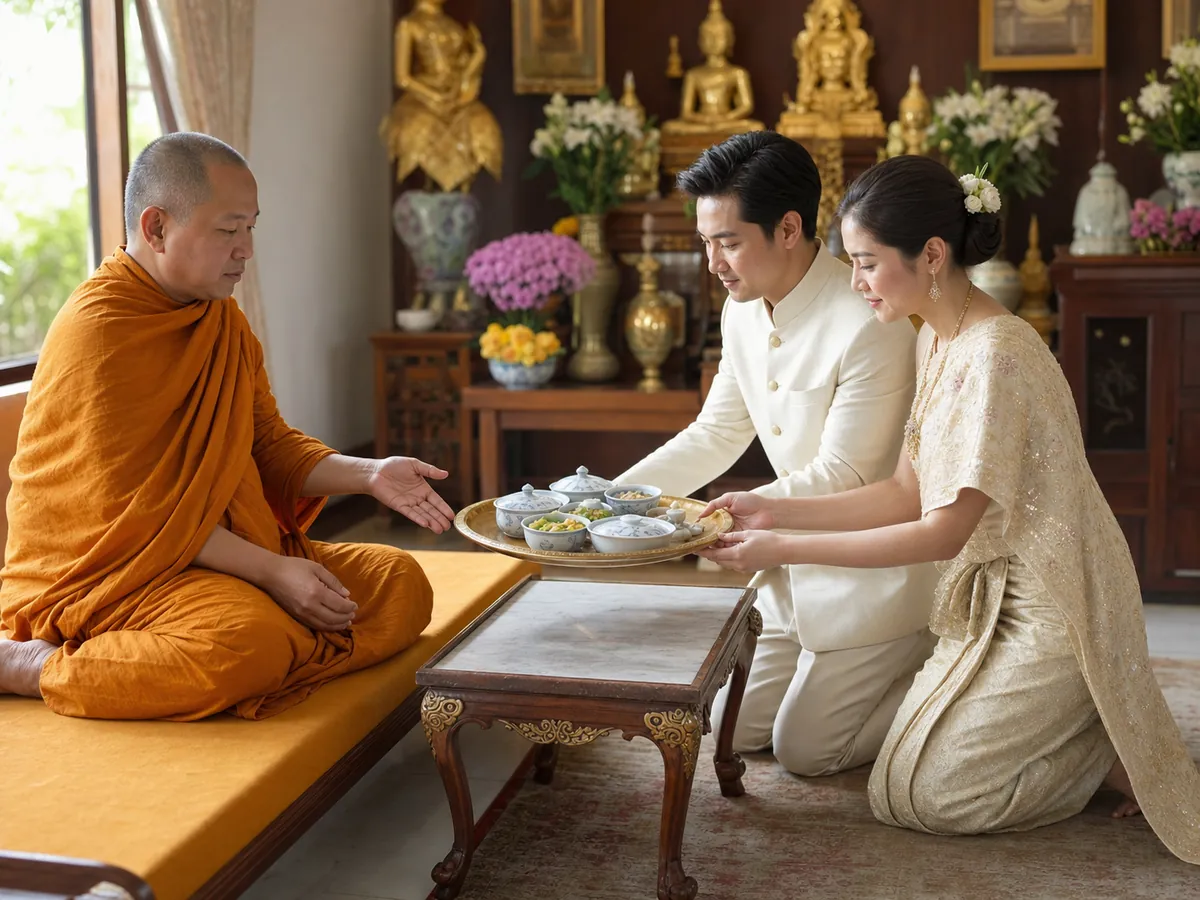
The Meal Offering: Food prepared exclusively for the monks. This is usually served in individual sets (Toh Jeen style) or beautifully arranged on small low tables.
The Ceremony Sequence (Step-by-Step)
The ceremony usually lasts about 45 minutes to an hour — drop it into the morning ceremony rundown planner to see how early the monks need to arrive for everything after it to still fit.
Lighting the Altar: The groom and bride, holding hands or supporting each other's elbows, jointly light the two candles and three incense sticks at the main Buddha altar. This officially begins the ceremony.
Requesting the Precepts (Sin Haa): The MC (often an elder layman familiar with Buddhist rituals, called a Makkathayok) will lead the congregation in requesting the Five Precepts from the monks in the Pali language.
Monks Chanting (Suat Mon): The monks will chant a series of auspicious sutras. During a specific chant, the lead monk will light a holy wax candle and slowly drip the melting wax into the Holy Water Bowl to consecrate the water.
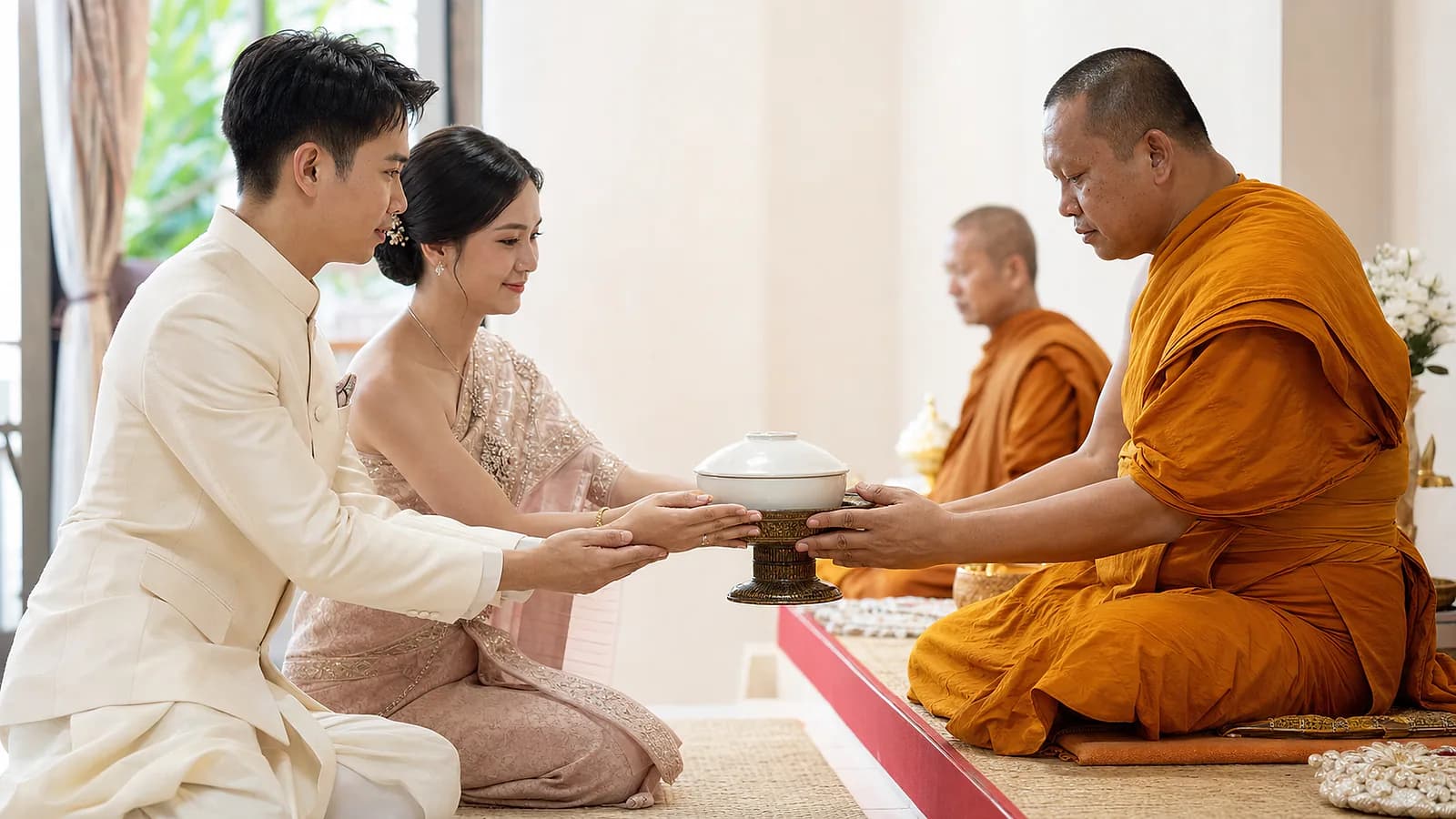
The Meal Offering: By Buddhist rule, monks cannot eat after midday. Thus, the couple and their parents will respectfully present the prepared food to the monks (either early morning breakfast or just before noon lunch).
Offering Alms (Sangkhatan): After the monks finish their meal, the couple will present the 9 gift sets (Sangkhatan) and the donation envelopes to the monks.
Water Pouring (Kruad Nam): This is a deeply symbolic moment. As the monks begin their final blessing chant, the couple holds a small brass vessel. The groom pours the water continuously into a bowl, while the bride touches his elbow or the vessel to connect their intentions. This act transfers the merit they just made to their ancestors and guardian spirits.
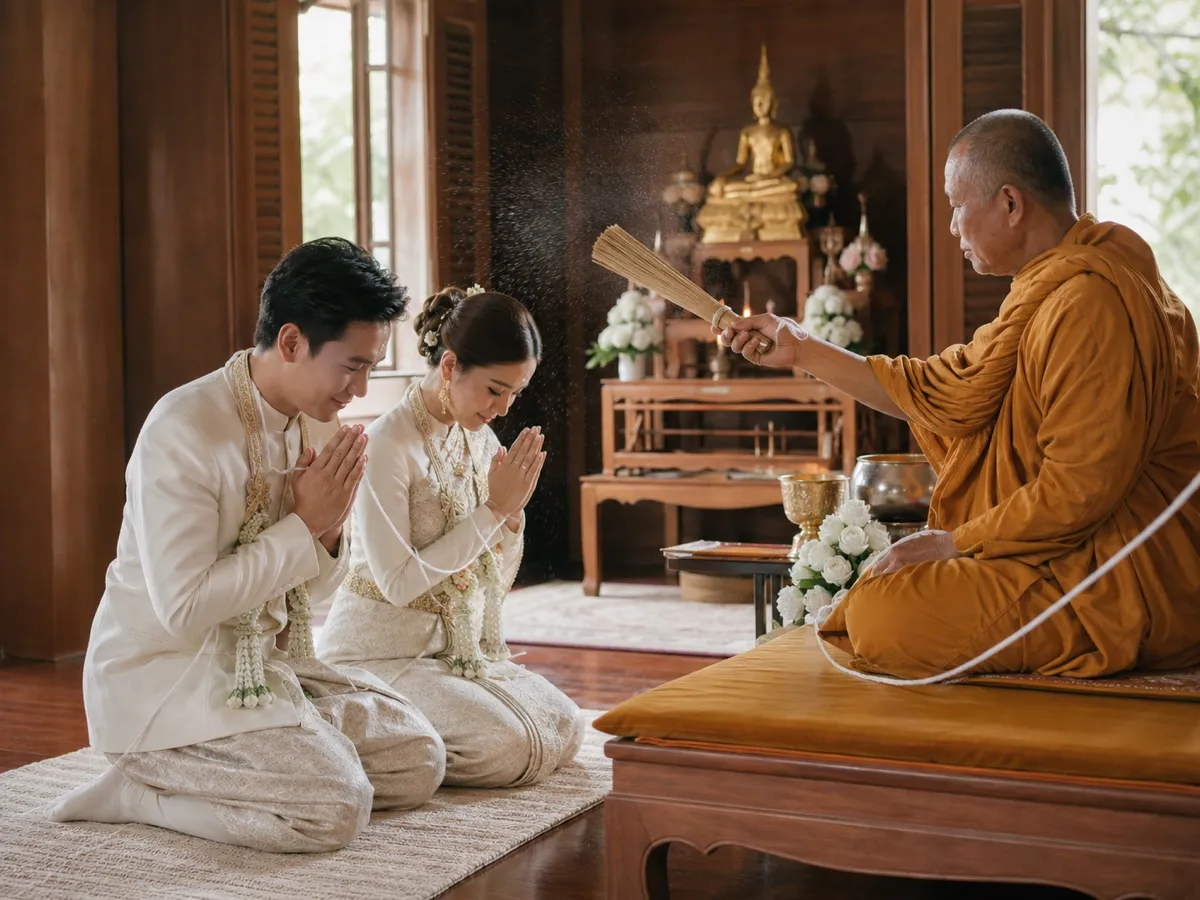
The Holy Blessing: To conclude the ceremony, the lead monk will use a small bundle of leaves to vigorously sprinkle the Holy Water over the couple and the guests, washing away bad luck. Finally, the lead monk will use a white holy powder paste to mark three dots on the foreheads of the bride and groom for ultimate protection and prosperity.
The Monk Ceremony requires a tremendous amount of highly specific items—from the Holy Thread to exactly 9 donation envelopes and the Kruad Nam brass vessel. Missing even one item can disrupt the ceremony.
Keep track of every single religious item using Wedly'sChecklist feature. You can easily create a dedicated "Monk Ceremony" list and share it directly with your parents or wedding planner to ensure nothing is forgotten on the morning of your big day!
Frequently asked questions
How many monks should be invited?
It is traditional to invite exactly 9 monks. The number 9 ("Kao") sounds like the Thai word for progress or moving forward, making it a highly auspicious number.
Do we need to feed the monks?
Yes, offering a meal to the monks is a crucial part of the merit-making process, usually done either early morning (breakfast) or just before noon (lunch).