

Loading…
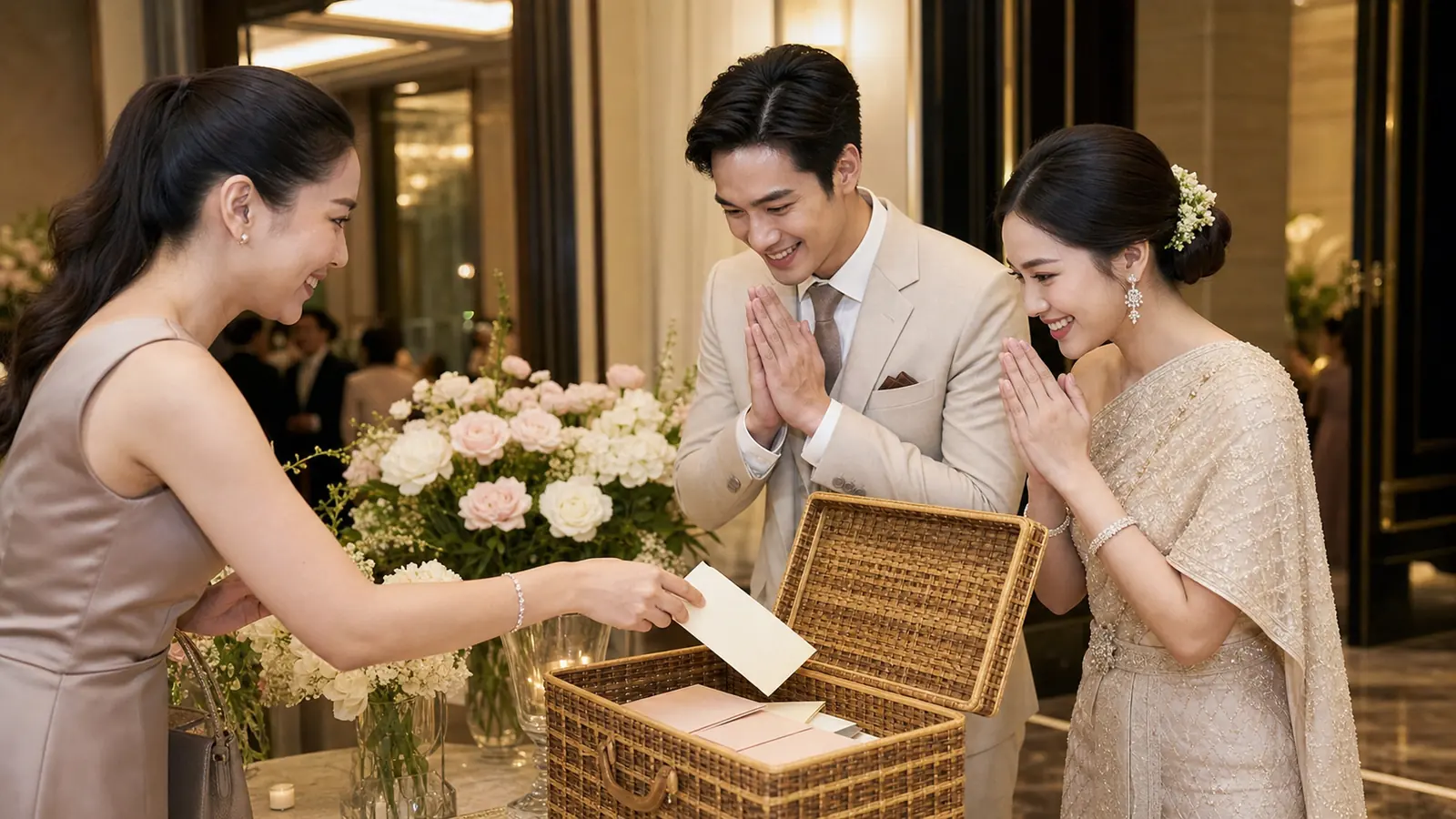
"How much cash should I put in the envelope?" is a question on almost every guest's mind before a Thai wedding. Unlike Western weddings where a registry of blenders and bedsheets is standard, Thai weddings operate almost exclusively on a cash-gift basis.
It can be a source of anxiety. Give too little, and you might feel awkward or look ungenerous. Give too much, and you strain your wallet. Here is a comprehensive guide to the common amounts based on relationship, plus the etiquette, auspicious numbers, and modern rules, so you can give with peace of mind and stop second-guessing yourself.
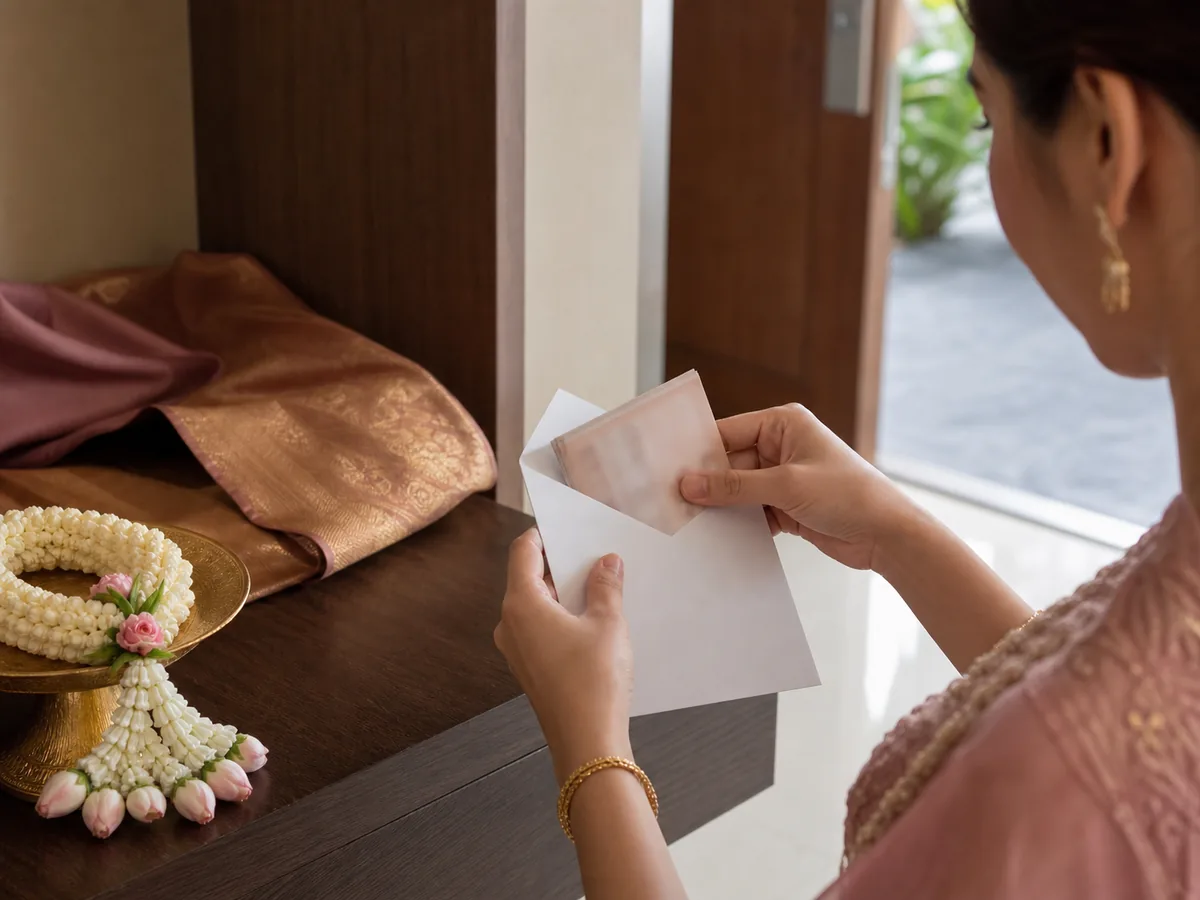
In Thailand, there is no strict, legally binding rule on how much to give. However, society follows three unspoken guidelines:
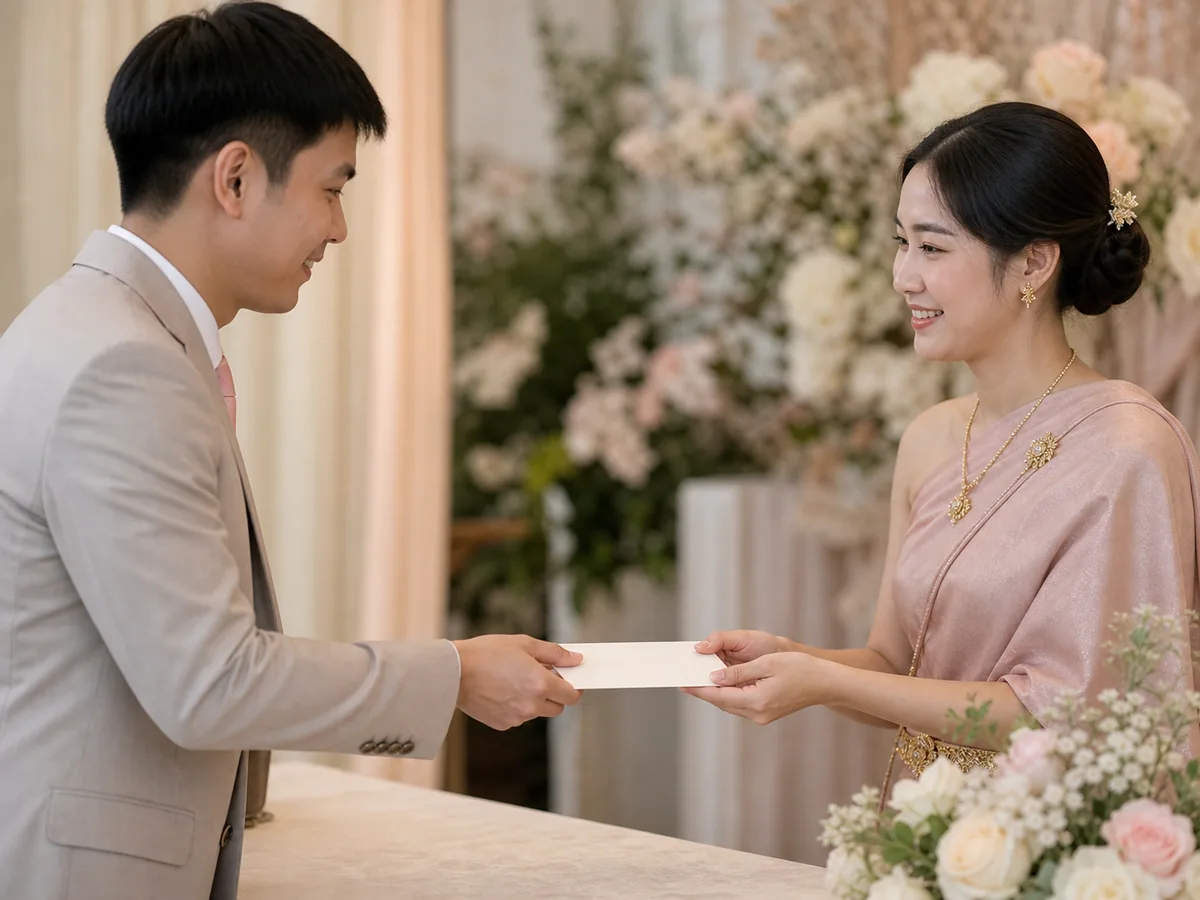
The figures below are just common ranges as a guide, not a strict rule. Always adjust to your personal budget and relationship. It is better to give what you can afford than to go into debt for a wedding gift.
| Relationship | Common Range (Solo) | Notes |
|---|---|---|
| Acquaintance / Distant Colleague | 500–1,000 THB | Usually sufficient for a standard hotel or hall reception if you aren't close. |
| Friend / Close Colleague | 1,000–2,000 THB | The standard "safe" zone for most young professionals attending a peer's wedding. |
| Relative / Very Close Friend | 2,000–3,000+ THB | Best friends and close aunts/uncles will often give much more as a blessing. |
| Upscale Hotel / Premium Banquet | 1,500–2,000+ THB | If the venue is luxurious, try to give at least 1,500 to help offset their costs. |
A simple rule of thumb: think of "the host's cost per head" and try to give at least that if you can, especially at a hotel. But ultimately, give what's comfortable and doesn't strain you — the couple invited you because they want you there, not to make a profit.
Because the host pays per table or per head, more people means you should give more. It doesn't have to be exactly double (e.g., if you'd give 1,000 solo, you don't have to give 2,000 as a couple), but it should be noticeably higher.
For example, if you and your spouse attend a close friend's wedding, a common envelope might contain 2,000 to 3,000 THB total. If you bring two children, consider adding another 500 to 1,000 THB.
Giving cash in Thailand has its own set of cultural nuances:
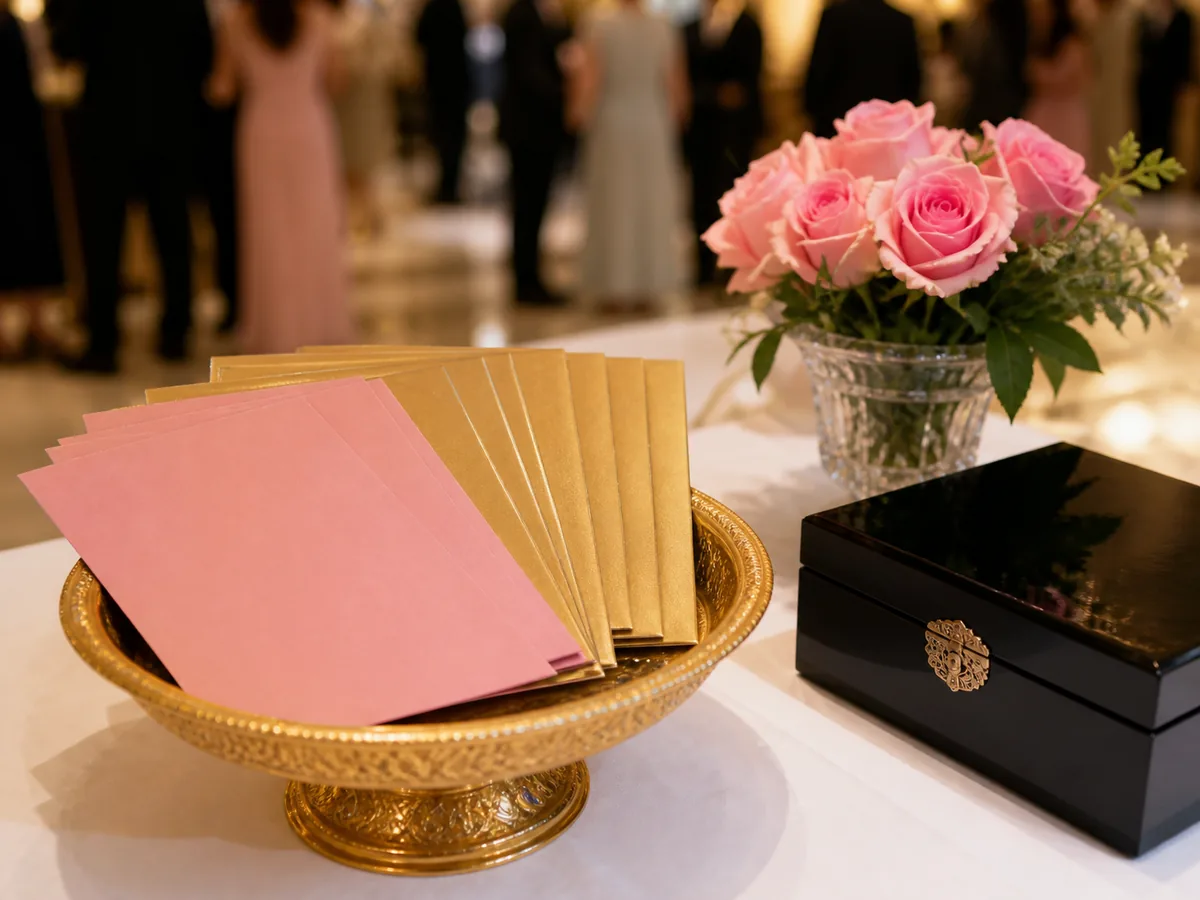
If you are invited but cannot go, do you still have to give a gift? If you are merely an acquaintance, a polite decline is enough. However, if you are a close friend or relative, it is customary to still give an envelope to share in their joy. You can hand it to a mutual friend who is attending, or in modern times, simply transfer the money directly to the couple's bank account via an app with a nice message.
If you are the ones getting married, listen up! The Thai custom dictates that you are expected to remember who gave how much, so you can reciprocate when it is their turn to get married (or host a major event like an ordination).
Without recording it, you cannot reciprocate correctly — and giving less than someone gave you is considered a genuine faux pas. On the flip side, the envelope money is also income that offsets your overall wedding budget — it is highly recommended to log this against what you actually spent.
On the wedding night, after the guests have gone home, you will have hundreds of envelopes to open. Writing all these names and amounts down in a notebook or an Excel sheet is tedious and prone to being lost.
Wedly has a dedicated gift-money tracking feature. As you open envelopes, simply log who gave how much into the app. It totals it automatically against your budget, and most importantly, it keeps a permanent, searchable record for reference when you need to reciprocate at their weddings years later. No forgetting, no missed entries. (See also Wedding Wishes for what to write on your thank-you notes).
There's no fixed amount at a Thai wedding — weigh up your closeness to the couple, the level of the event venue, and how many people you are bringing, then give what's comfortable. Use crisp new banknotes, consider amounts ending in 9, and always write your name clearly on the envelope.
For the couples hosting: record every single envelope to reciprocate later. That is what completes both the goodwill of the day and the long-standing cultural etiquette.
It depends mainly on closeness and the level of the event. Acquaintances or colleagues commonly give from several hundred to low thousands of baht, close friends and relatives from a thousand up. At a hotel or Chinese banquet with a high cost per head, people tend to give more.
Increase it with the number of people attending, since the host pays per head or per table. Going as two should be more than going solo — not exactly double, but reasonably higher.
Thais favour amounts ending in the digit 9, and often use new banknotes. Some avoid amounts that sound inauspicious by personal belief, but there's no fixed rule.
If you're close and want to share the joy, you can send an envelope with someone attending, or transfer with a message. It's not required, but a thoughtful gesture the couple appreciates.
Ready to start planning your wedding?