

Loading…
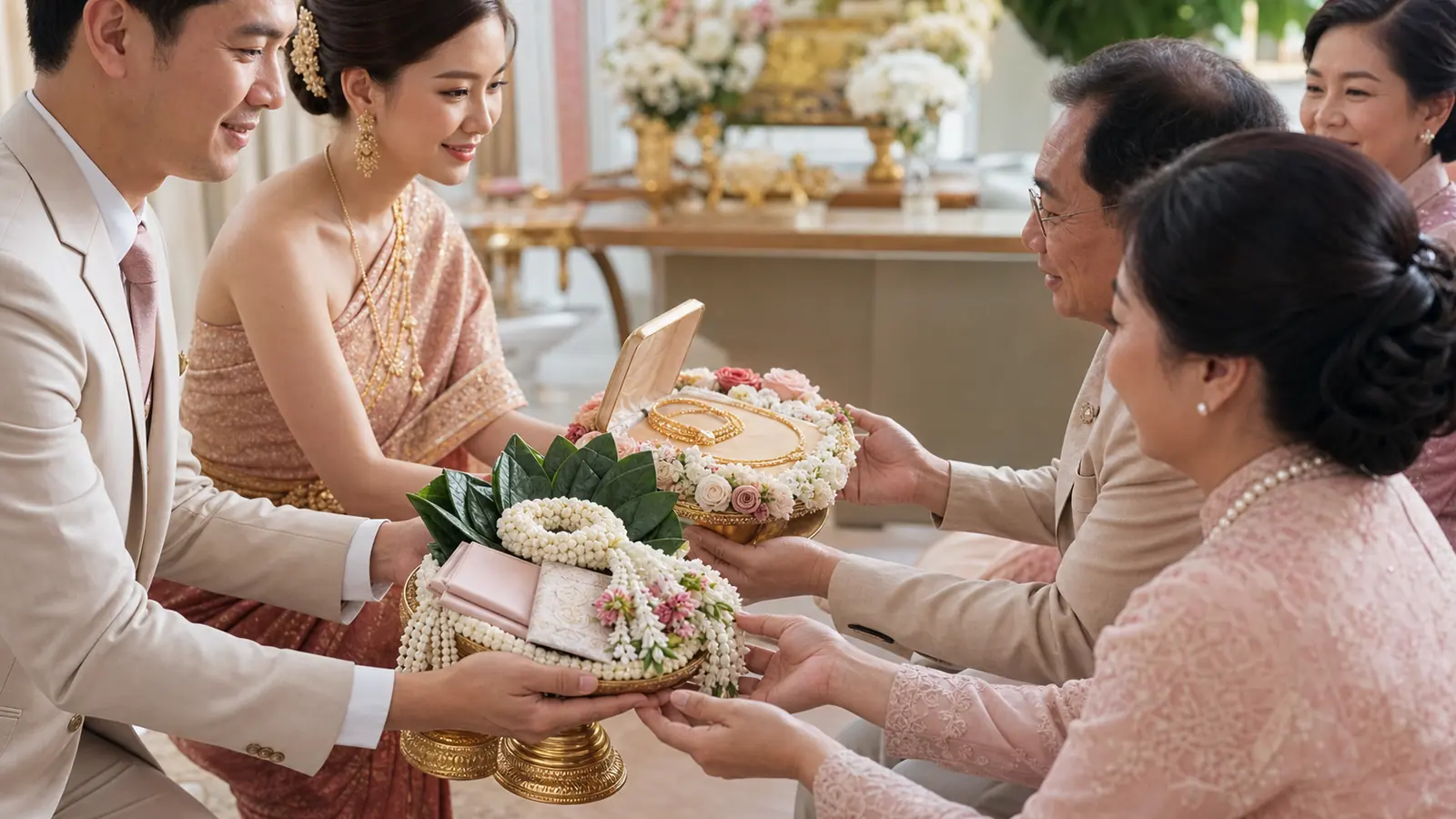
"How much sinsod is enough?" is one of the very first questions almost every couple runs into when planning a Thai wedding. The honest answer? There's no fixed number. But here's the good news: there's a way of thinking about it that helps two families land on a figure everyone's genuinely comfortable with.
Let's look at where the common ranges sit, what pushes the amount up or down, and how to work it out without guessing. Want a quick starting figure? Try the sinsod calculator — pop in your income and a few factors and it estimates a range that fits you.
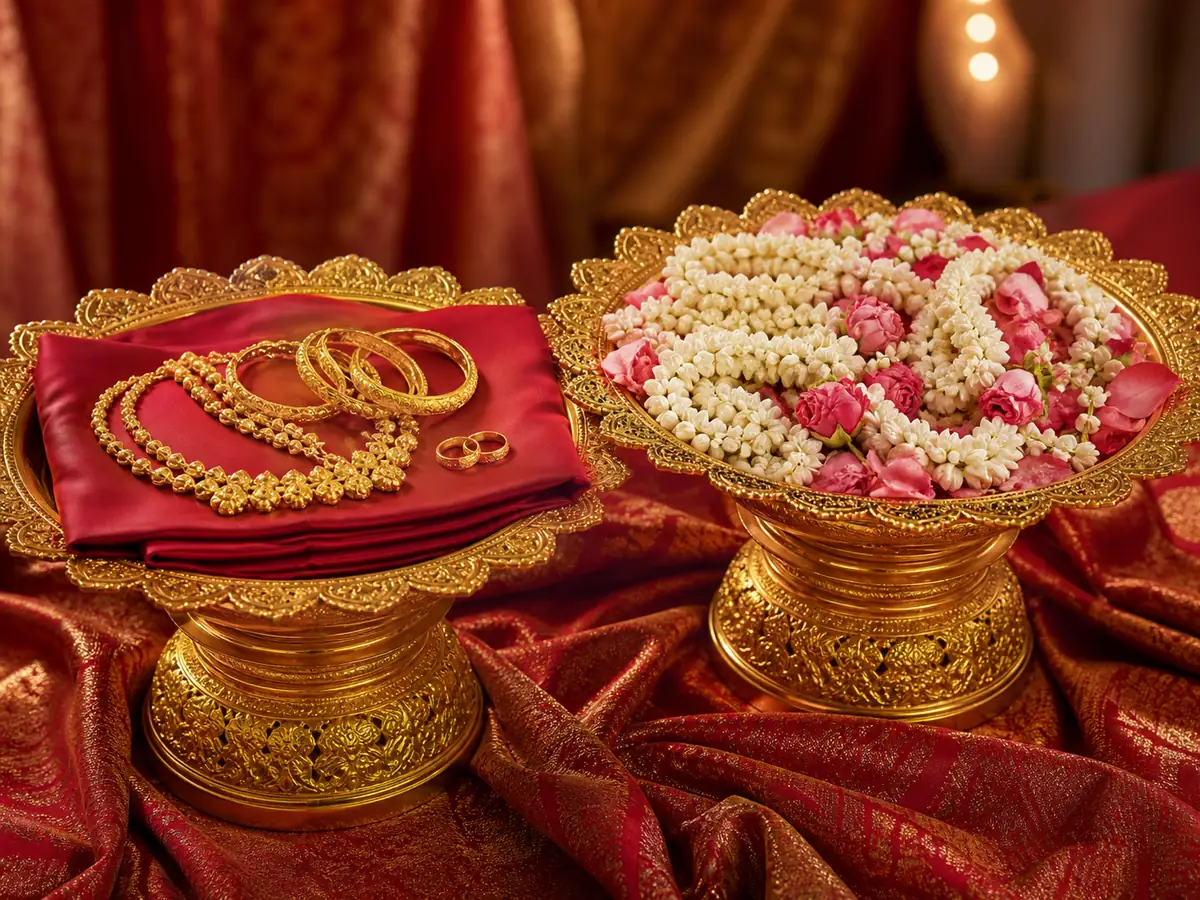
Sinsod is money or assets the groom's family gives to the bride's family as a gesture of thanks for raising their daughter. In Thai tradition it usually goes hand in hand with khong man (engagement gold) given directly to the bride.
Get this clear from the start: sinsod is not a "price" for a person, and it's not a competition with anyone. A good figure is one both families can accept without going into debt or feeling slighted later.
The figures below are just common ranges to start a conversation — not a fixed standard. Real amounts vary widely by family and region.
| Level | Common range | Often seen when |
|---|---|---|
| Simple | 50,000 – 200,000 THB | Family-only ceremony, tight budget |
| Moderate | 200,000 – 500,000 THB | Typical middle-income families |
| High | 500,000 – 1,000,000 THB | Well-off families or dowry-focused local custom |
| Very high | 1,000,000+ THB | High-status or well-known families |
A little detail: these figures often end in the auspicious digit 9 (like 199,000 or 599,000 THB), and the "cash sinsod" is usually discussed separately from the engagement gold.

Tip: keep everything — cash sinsod, engagement gold and other wedding costs — in one place. You'll see the whole picture and decide far more easily than juggling the sinsod separately from the total budget.
A common mistake is agreeing the sinsod first, then getting a shock when other costs balloon. Plan the whole budget alongside it. In Wedly you set a total budget, then break out categories for sinsod, engagement gold, venue and catering in one place — so you can adjust the sinsod to fit the real budget instead of guessing.
A "right" sinsod isn't the biggest number — it's the figure two families agree on comfortably, without overreaching. Start from the total budget, talk to the elders early, separate the display amount from what's actually spent, and you'll reach a number that makes everyone smile.
There is no fixed amount. It commonly ranges from the low hundreds of thousands to the millions of baht, depending on both families' status, the region, education and what is agreed. What matters more than the number is that both sides feel comfortable.
Sinsod is money or assets the groom's side gives to the bride's family in appreciation for raising her. Khong man (engagement gold) is gold or jewellery given directly to the bride. They are counted separately but usually displayed together in the ceremony.
It depends on the family and the agreement. Some families return the sinsod to the couple to start their life together, others keep it. Discuss this clearly before the day to avoid misunderstanding.
Talk openly between both families. Many couples lower the figure to something reasonable, pay part of it, or use a display sinsod that the bride's family returns to the couple. Communication matters more than borrowing to pay.
Ready to start planning your wedding?