Everyone knows a rainy-season wedding needs a Plan B. But a Plan B written into a document and a Plan B that works when the sky opens at three in the afternoon are two very different things. The difference comes down to three details: can the venue genuinely take it, who makes the call, and at what time.
So this piece stays on the move itself. For everything else about marrying in the wet season — the umbrella escorts, rain-proof favours, traffic buffers, and getting your dress and makeup to survive the humidity — that's all in our guide to riding out a rainy-season wedding.
1. Pick a venue with a real Plan B
Rainy season is low season, which is why the promotions are good. But a discount only means something if the venue can actually absorb a move. On the site visit, get three answers.
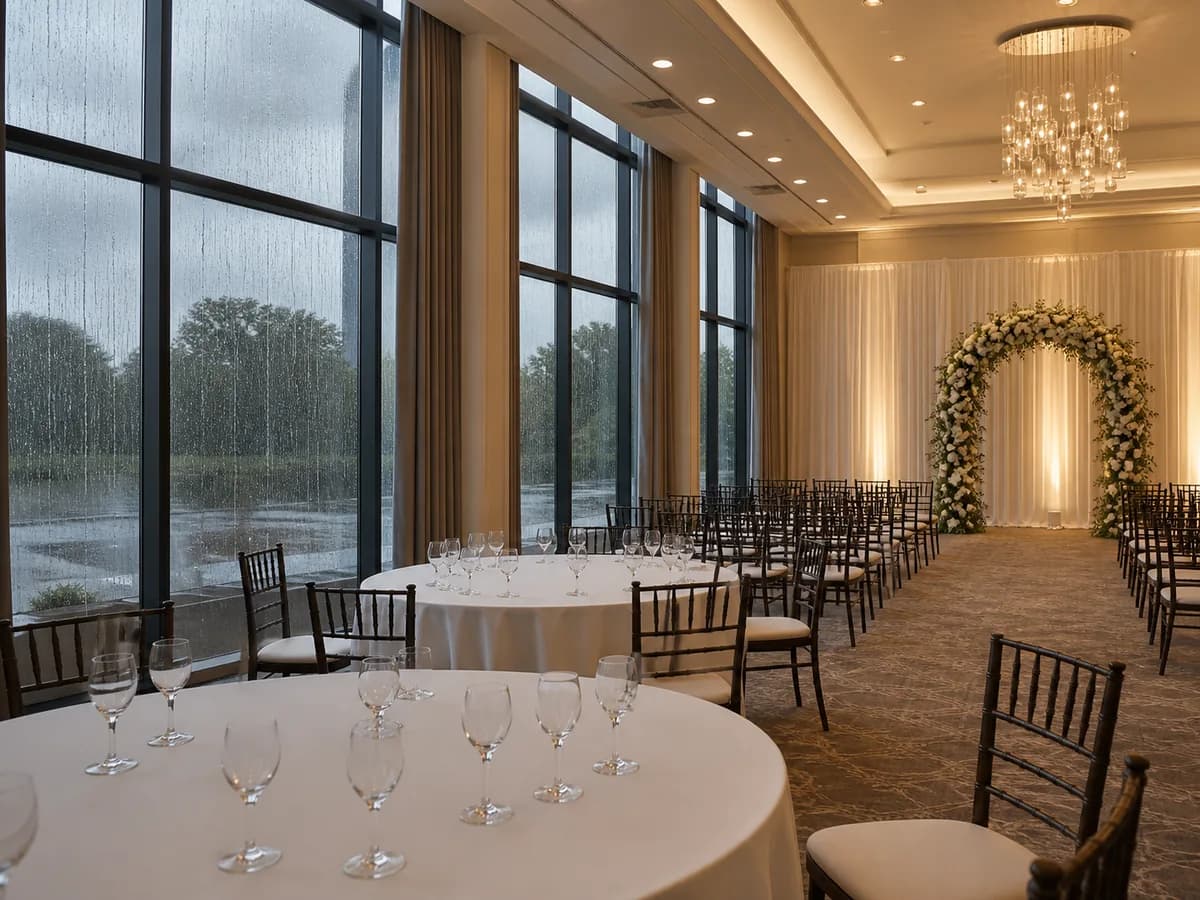
- Is the backup room big enough? Will the indoor space they're offering hold every guest, or only half of them — and can it be dressed to stand in for the outdoor setting?
- Is that room genuinely held for you? Plenty of venues have a backup room and have already sold it to another event that day. Get it written into the contract that the room is reserved, and that a weather move costs you nothing extra.
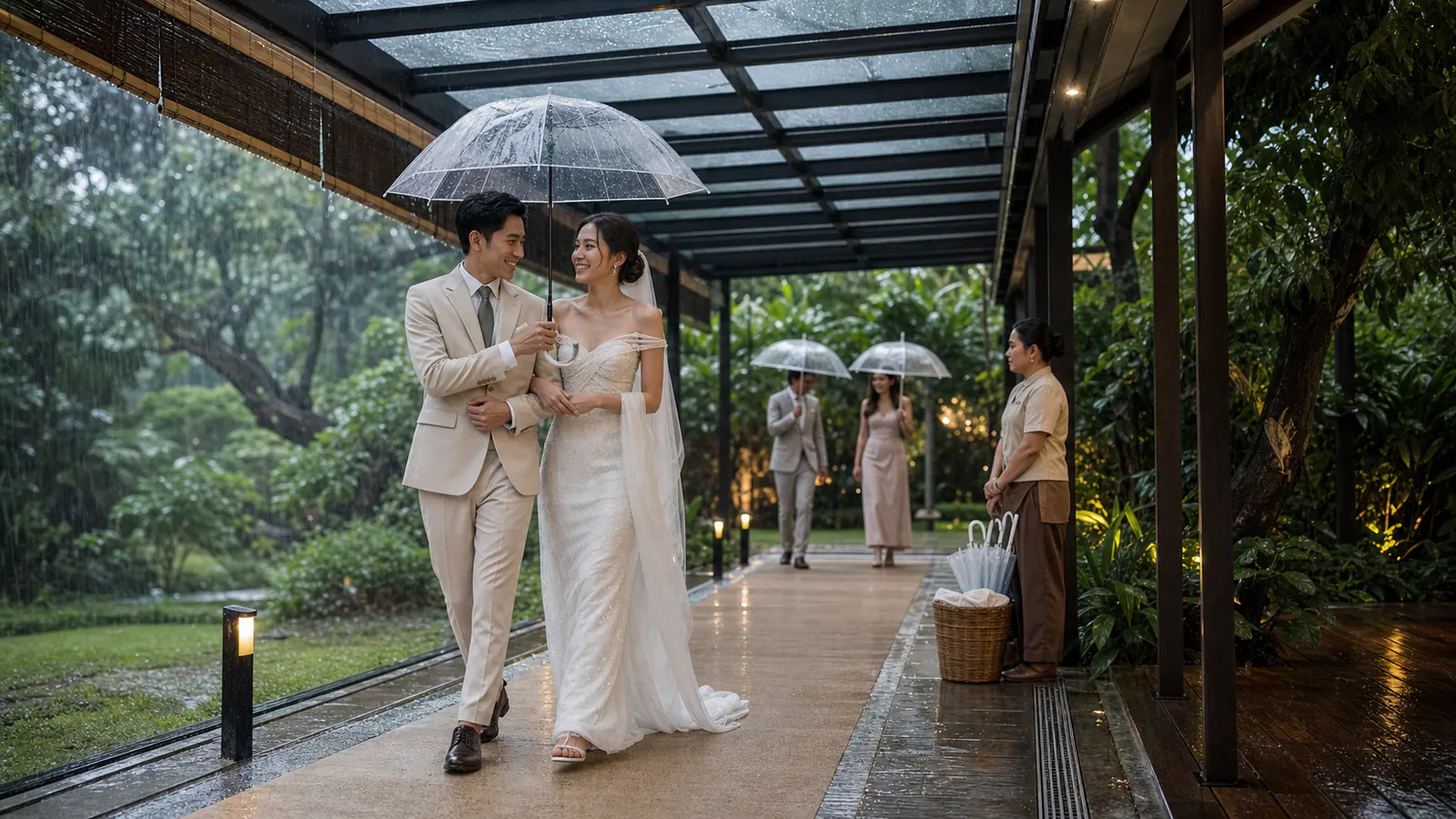
- Are the walkways and car park covered? If not, you'll need staff with golf umbrellas ferrying guests from their cars, or people arrive already soaked.
If you're set on staying outdoors, a clear marquee is the answer: it keeps the rain off completely while still letting daylight through, and it looks lovely strung with fairy lights. Just plan for the rest of the outdoor wedding problem set alongside it — wind, insects, and how stuffy a marquee gets.
2. Fix the decision point before the day
This is the heart of it. What wrecks a wet wedding isn't the rain — it's the argument about whether to move, which eats the setup time you needed.
- Make it a number. Agree one sentence with the venue and your team: "If it's still raining at 3pm, the backdrop goes into the ballroom." No conditions, no second look at the sky.
- Count backwards from setup. Ask the crew how long a full move takes, then count back from the ceremony start. That's your decision point — not the moment it merely feels too wet.
- Give one person the authority. Your planner or lead coordinator calls it alone. You'll be getting ready and unreachable. Put it in the team brief in plain words: this person decides, no phone call required.
- Accept you might move for nothing. Sometimes the sky clears the minute you finish. Annoying, but don't move back. The second move is what makes everything run late.
3. Rehearse the move: who carries what, in how long
A Plan B nobody has walked through is a Plan B that doesn't work. Have your coordinator run it item by item.
- Sort everything into three piles: moves first (backdrop, ceremony chairs, sound), moves later (signage, photo corner), and stays put (anything that shrugs off rain).
- Put a name on every pile. Not "the decor team will help" — because on the day everyone converges on the same item and nobody lifts the rest.
- Guests move before props. Get people under cover first, then shift the pretty things. Guests standing in the rain while staff carry flowers past them is the worst image of the day.
- Have the kit ready in advance: clear umbrellas for guests, small towels in the bathrooms, and floor fans along the walkways so the floor doesn't turn slippery once wet shoes come through.
4. What changes once you're inside
Moving indoors changes the mood on its own. Three things keep it feeling warm and intentional rather than improvised.
- A hot option on standby. Ask the kitchen to hold a wet-weather addition — hot soup, tea, or warm herbal drinks at the welcome point. Guests who've just come through a downpour feel looked after immediately.
- A drink that cuts through a grey sky. A sharp, sweet signature cocktail lifts the room when the light outside is flat.
- Decor that survives the move. Delicate fresh flowers bruise the moment rain or strong wind hits them. Build in sturdier elements from the design stage — candles in storm jars, lanterns, timber structures — all of which look just as good once they're indoors.
5. Photographs when the rain arrives
Rain isn't the enemy of good pictures, as long as you've talked it through with your photographer first.
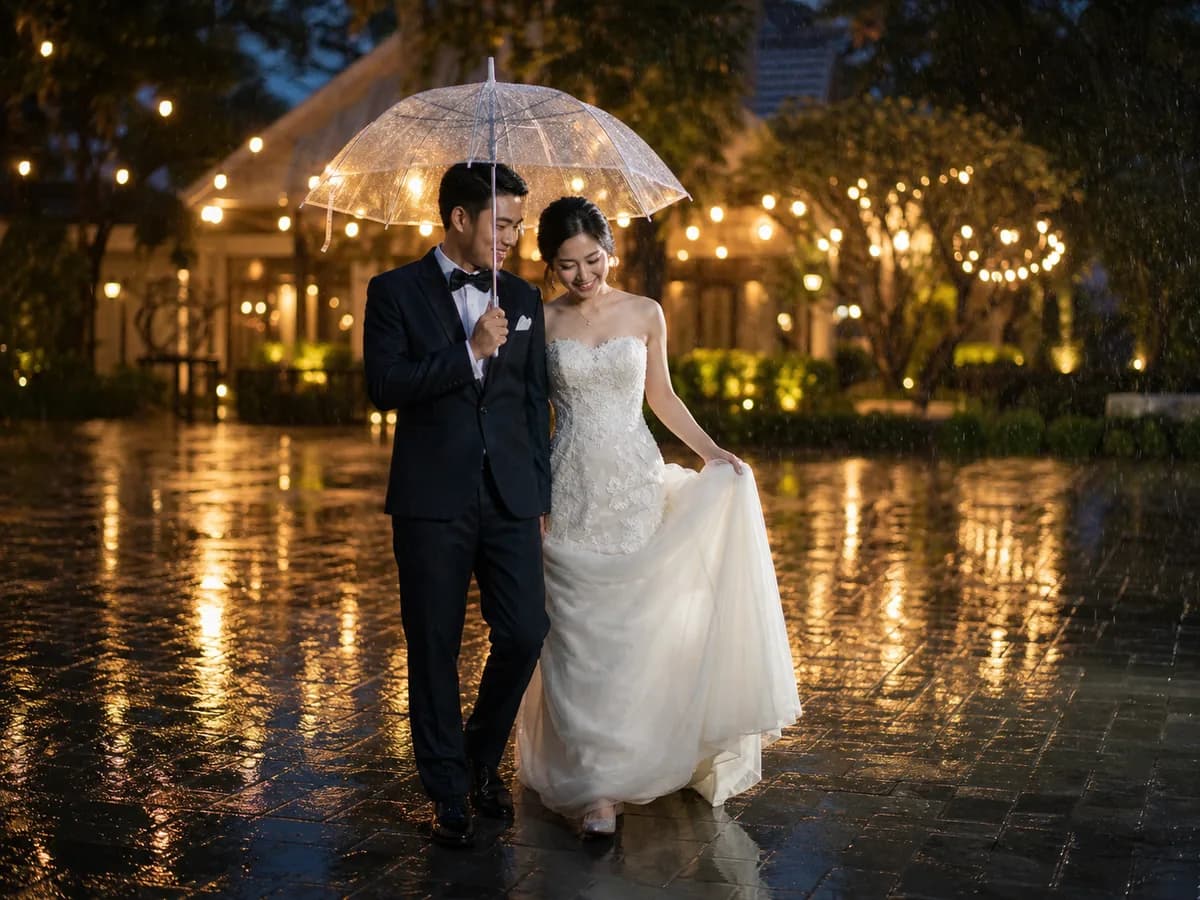
- Clear umbrellas are a genuinely good prop. Keep two or three on hand — classic, romantic, and they don't shade your faces.
- Wet ground reflects light beautifully. A professional will know exactly how to use it.
- Keep the portrait slot flexible. Agree upfront that if it's pouring you'll either wait out the worst of it or move to a good indoor corner of the venue instead.
6. Tell your guests the minute you decide
The moment the call is made, the next thing that happens is telling people — not letting them wander into a wet garden.
- Say it before the day. Note on the invitation or your RSVP page where things move to if it rains, so guests arrive prepared instead of anxious.
- Send an update on the day. Use the Digital Invitation & Updates feature in Wedly to tell everyone in real time which room you've moved to, so nobody is left standing in the rain or walking into the wrong building.
- Station someone at the drop-off. One person with an umbrella, redirecting anyone who arrives after the move.
Plan your whole wedding in one app
In short
A good Plan B isn't a backup room. It's someone with the authority to call it, a time everyone already agreed on, and a list of who carries what. Get those three settled before the day and the rain stops being able to derail anything.
The rest is attitude. Thai tradition reads rain on a wedding day as a blessing — coolness, abundance, a marriage that stays refreshed. Let your team handle what's in front of them, hold hands, and enjoy your own day.
Ready to start planning your wedding?