

Loading…
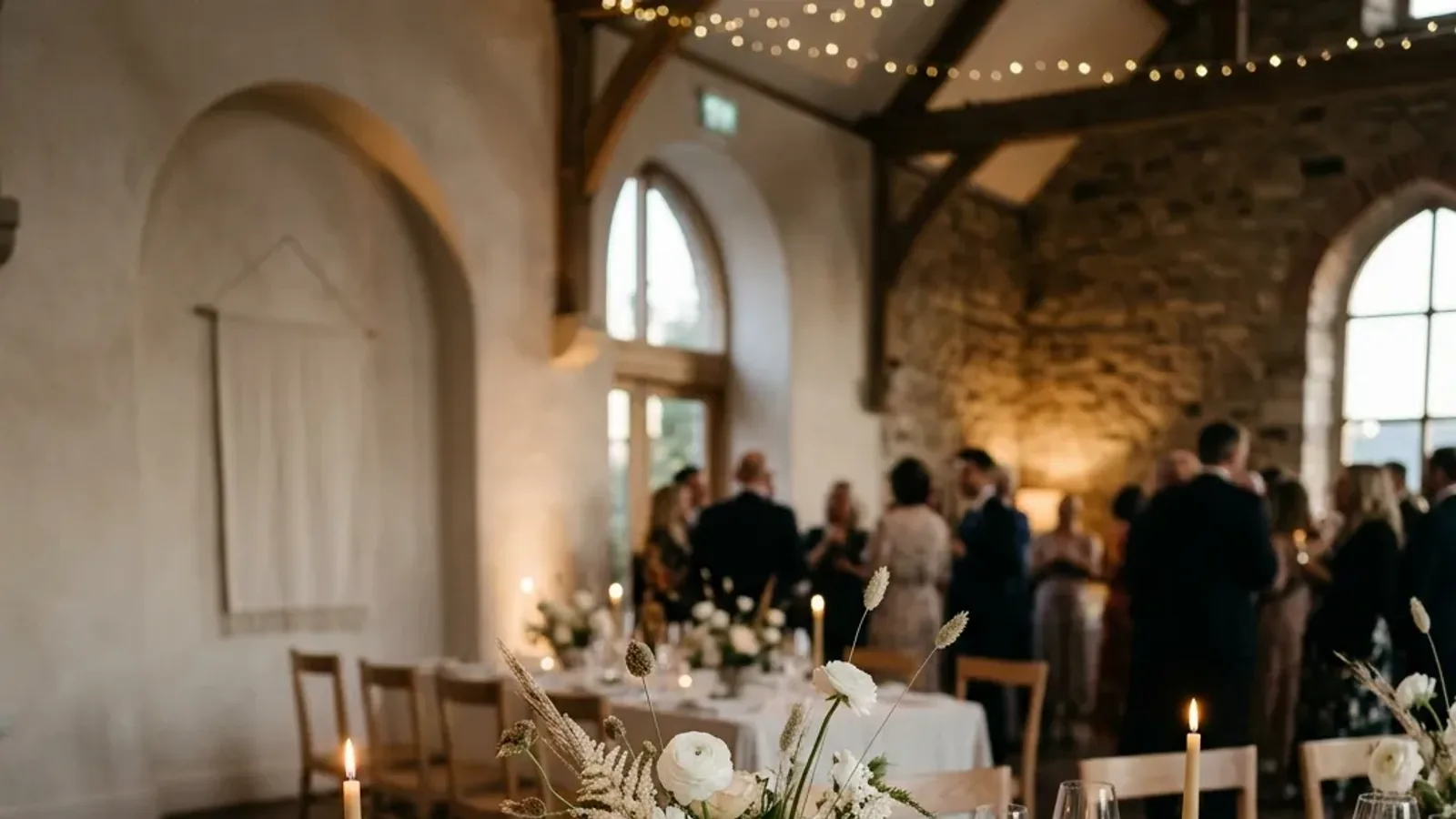
Planning a wedding can sometimes feel like an exercise in managing chaos. With so many details, colors, and decorative elements to choose from, it’s easy for a venue to feel cluttered rather than elegant. That’s where the beauty of minimalist wedding decor comes in.
Minimalism in weddings isn’t about stripping away all the fun or having a bare, empty room. Instead, it’s about intentionality. It's the art of focusing on what truly matters, selecting elements that make a statement, and giving everything space to breathe. Here are some elegant and clutter-free minimalist wedding decor ideas for your special day. (Curious where the look came from and who it suits? Our piece on the minimalist wedding trend sets the scene.)
When you choose a minimalist theme, you are making a conscious decision to prioritize quality over quantity. Every item placed on a table or hung from the ceiling should serve a purpose or add a specific aesthetic value. This approach not only creates a sophisticated atmosphere but can often be more budget-friendly and significantly less stressful to set up.
Think "clean lines," "neutral tones," and "uncluttered surfaces." The goal is to let the venue, the couple, and the natural beauty of the surroundings take center stage.
Instead of covering every surface with flowers, choose a few strategic locations for floral arrangements. A single, dramatic floral installation—like a hanging centerpiece above the main table or an asymmetrical arch at the altar—can have a much more profound impact than dozens of small bouquets scattered around.
Going big in one place means briefing your florist clearly that you're buying one statement piece, not twenty small ones — our tips for working with a wedding florist cover how to phrase that.
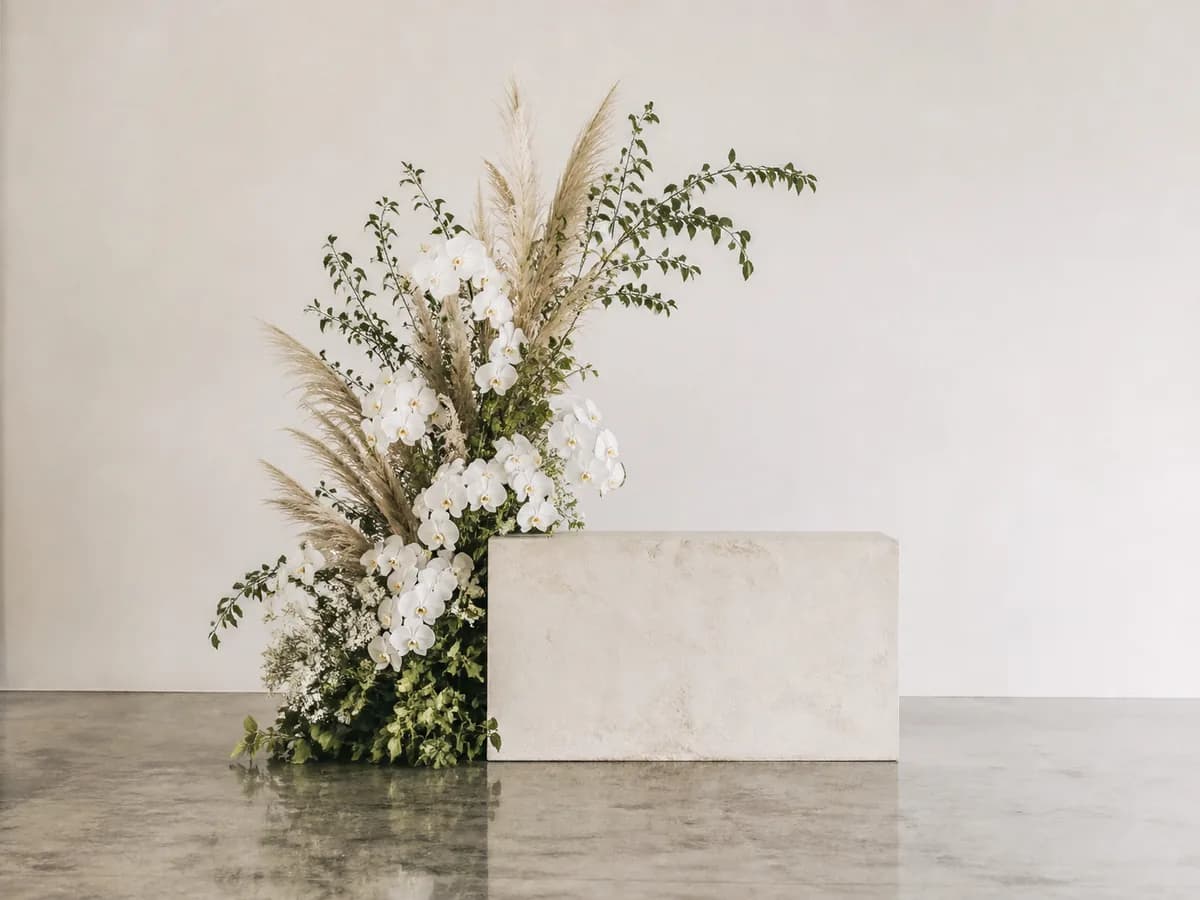
A key element of minimalist decor is the color scheme. While bright colors can certainly be used minimally, a palette of neutrals—whites, creams, grays, and soft earth tones—naturally lends itself to a clean aesthetic.
These colors reflect light well, making spaces feel larger and more open. If you want a pop of color, consider muted versions like sage green, dusty rose, or terracotta. Our wedding colour theme guide shows how to carry one palette from the flowers right through to the attire. Keep the base tones neutral so that the subtle colors can truly shine without clashing.
Lighting is arguably the most important decorative element in any minimalist wedding. Because there are fewer physical objects in the room, the way light interacts with the space becomes incredibly important.
If your celebration is outdoors or runs past sunset, lighting carries even more of the load — see our guide to outdoor wedding lighting.
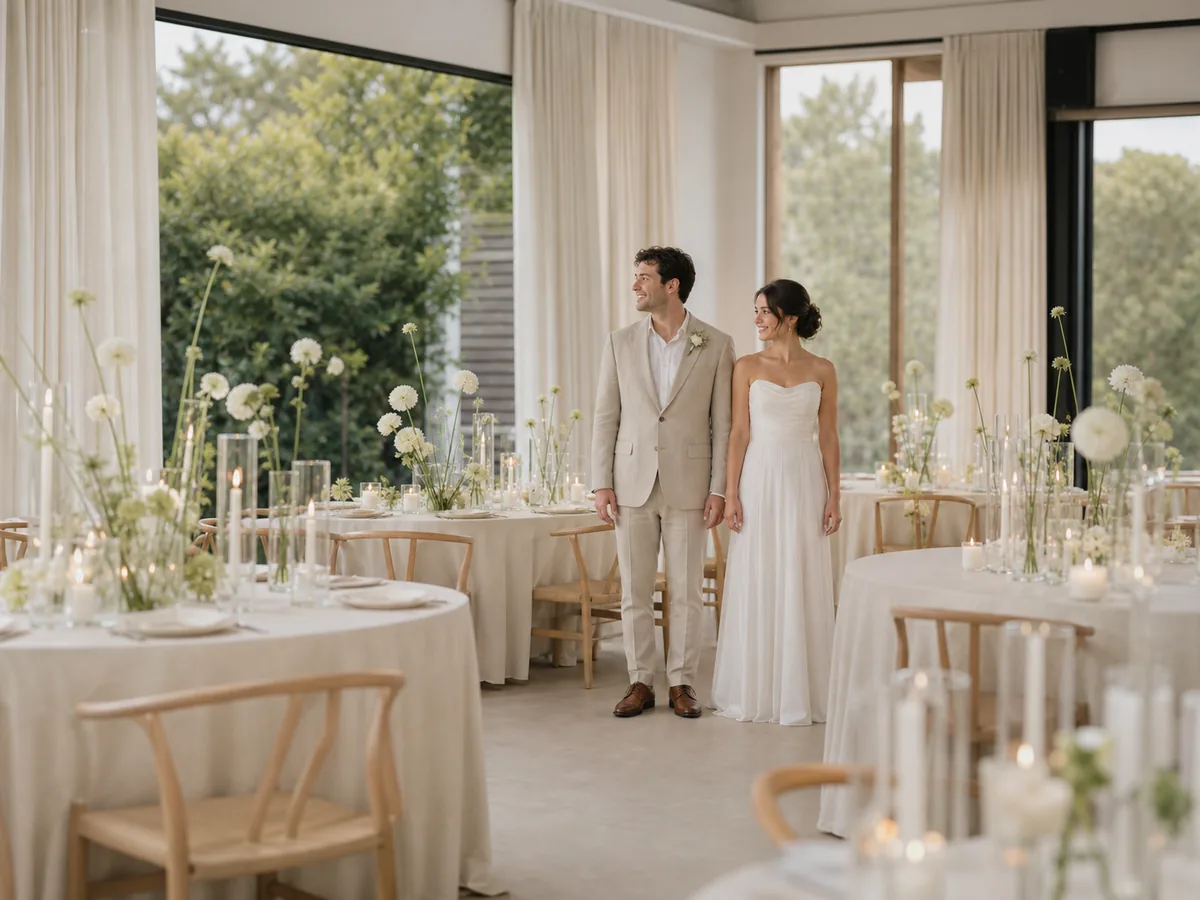
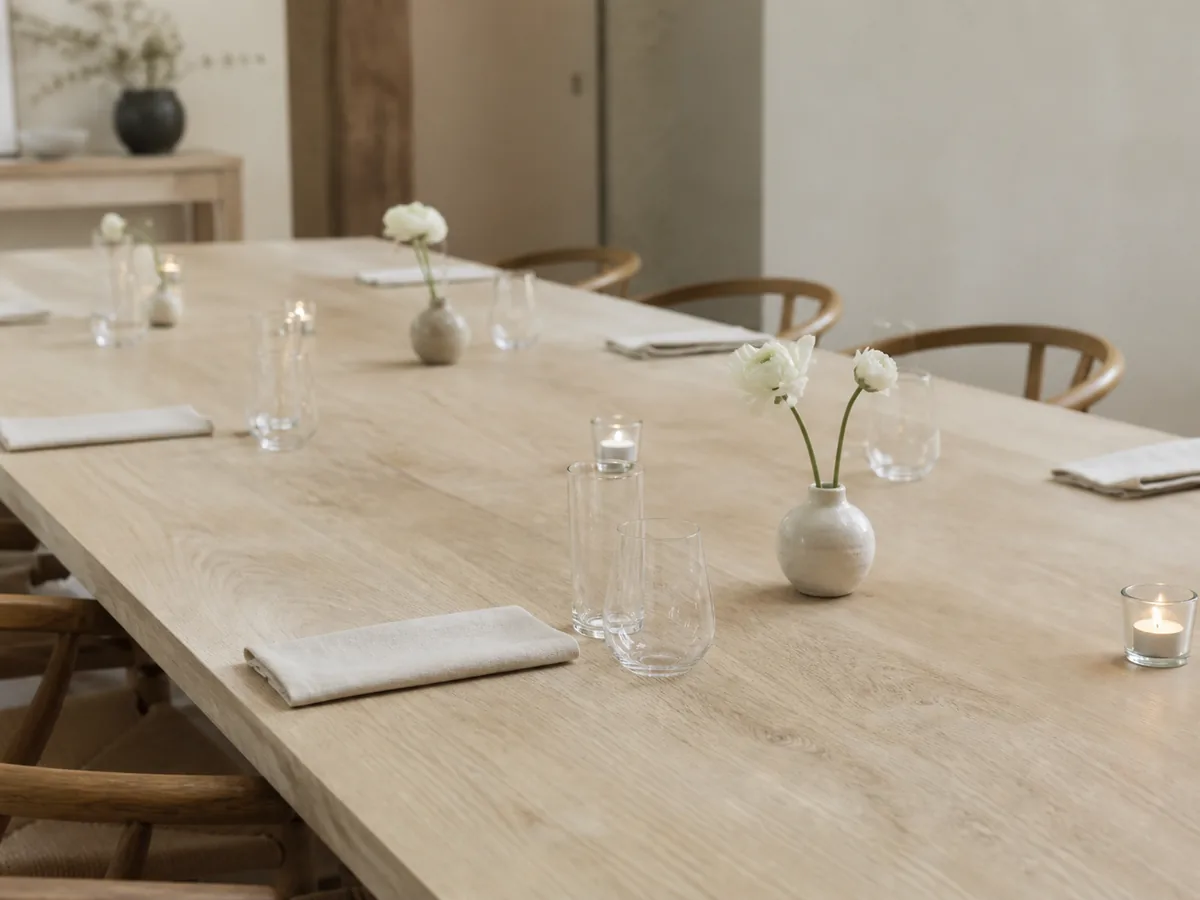
The reception tables are where clutter often accumulates. Centerpieces, table numbers, place cards, menus, multiple glasses, and favors can quickly overwhelm a table.
For a minimalist approach:
Using materials like acrylic and glass is a fantastic way to add functionality without visual weight. Ghost chairs, acrylic signage, and clear glass vases seem to disappear, keeping the space feeling open and airy.
An acrylic welcome sign or seating chart with elegant, modern calligraphy is a hallmark of minimalist chic. It serves its purpose perfectly without blocking any views or introducing conflicting colors.
Minimalist wedding decor allows you and your guests to focus on the joy, the emotion, and the significance of the day itself, rather than being distracted by overwhelming decorations. By choosing each element thoughtfully and embracing negative space, you can create an elegant, timeless, and perfectly uncluttered celebration.
Usually, because there is simply less to buy. But the savings only hold if you invest in the few focal points — one large floral installation and proper lighting — since those are what separate elegant restraint from an empty room.
Neutrals such as white, cream, grey and soft earth tones. They bounce light and make the space feel larger. For a hint of colour, keep it muted — sage green, dusty rose or terracotta.
No. Minimalism is about intent, not absence. Every object on the table should earn its place, with enough space around it to be seen properly.
Ready to start planning your wedding?