How to Gracefully Handle Uninvited Guests at Your Wedding
Hello to all brides and grooms-to-be! When planning a wedding, I believe one of the most headache-inducing details is the "guest list," right? We put so much effort into curating the list and perfecting the seating chart, but when the big day arrives, "uninvited guests" (or unexpected plus-ones) somehow show up!
Some bring their partners, some bring their kids, or worse, a friend of a friend tags along. If not handled well, this can easily ruin the mood or dampen the atmosphere. Today, our team has gathered some techniques on "how to gracefully handle uninvited guests." We guarantee the situation will go smoothly! (Guests who never RSVP'd and simply turn up are a slightly different problem — we cover those in handling un-RSVPed guests.)
1. Why do "uninvited guests" show up?
First, we need to understand that when guests bring someone along, it's not always an intentional slight. It usually stems from misunderstandings or miscommunication, such as:
Assuming plus-ones are always welcome: Many people are used to traditional banquet-style weddings where they can bring anyone as long as there are empty seats.
Not wanting to attend alone: Some guests might feel awkward attending an event without a friend or acquaintance.
Miscommunication: You might have printed on the envelope that the invitation is for 1 person only, but the guest didn't notice or assumed it included their family.
When we understand the root causes, we can handle the issue with more calmness and compassion.
2. Preparation: Prevention is better than cure
To reduce the chances of this happening, clear communication from the start is key.
Be clear on the invitation: If your event has limited seating, you should print a polite but clear message on the invitation, such as "Due to venue constraints, we can only accommodate the number of guests specified on the invitation" or use an online invitation with a built-in RSVP that specifies the number of reserved seats (e.g., "We have reserved 1 seat in your honor"). The headcount then tallies itself, so you see the real number early.
Follow up on RSVPs: As the wedding approaches, if guests haven't RSVP'd, have your team or close friends call them to follow up and emphasize the guest count again.
Always prepare backup tables/seats (Buffer Zone): No matter how well you plan, always leave about 1-2 backup tables (or 10-20 seats) for unexpected additions or guests who declined but changed their minds at the last minute. Our table calculator has a buffer field built in, so you can see how many spare tables your headcount actually needs.
3. When it happens at the event: Tactical solutions
If you've prepared well but guests still bring friends on the day, here's what you and your team should do:
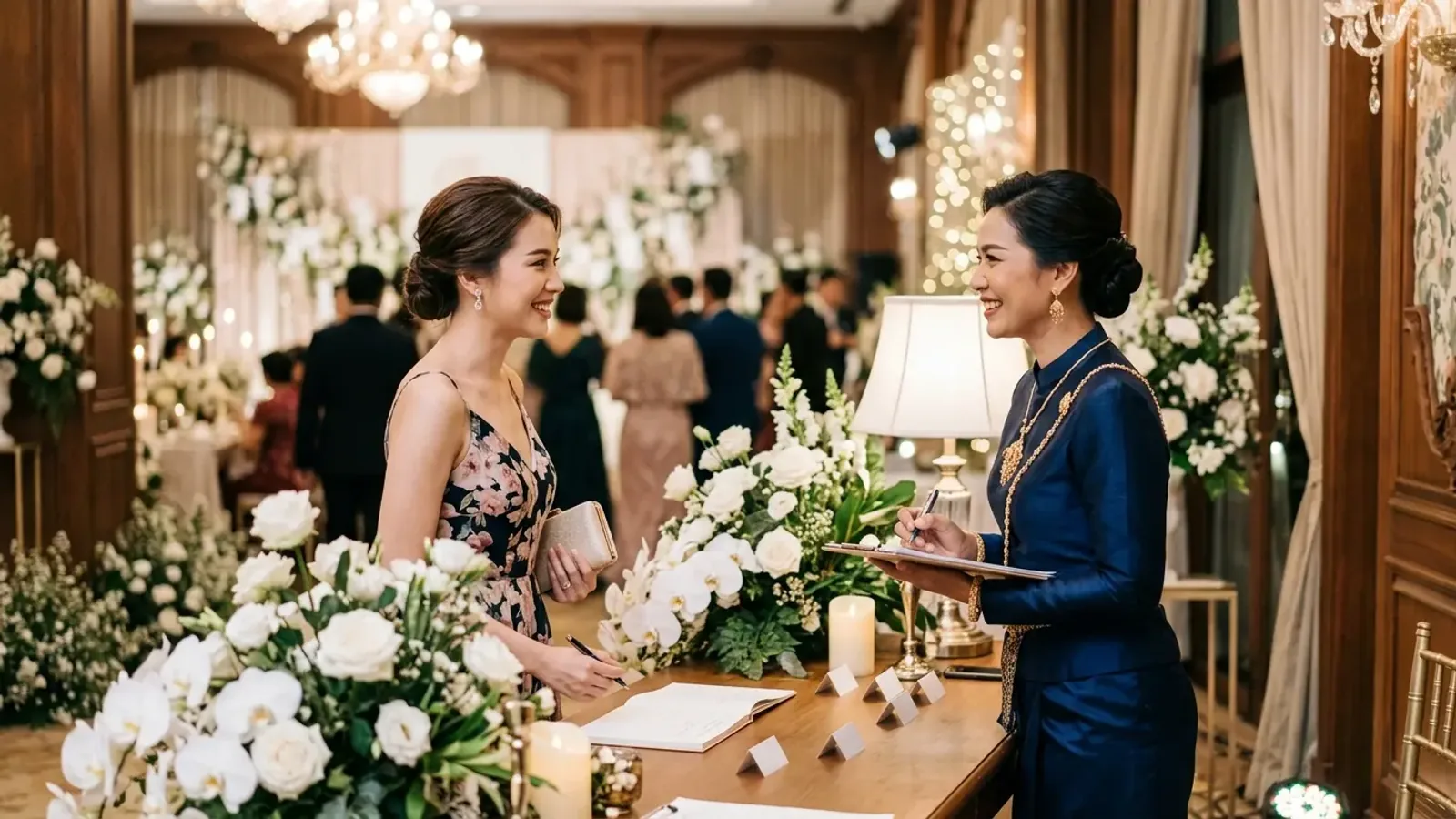
Smile and guide politely: When guests approach the registration table, the team should welcome them with a normal smile. Never show a shocked expression or frown.
Check the list discreetly: The team can say, "Hello, may I have your name to check your table assignment for a moment?" If there are extra people, politely say, "I apologize, it seems the confirmed list only has 1 person, but don't worry! We will quickly coordinate to find extra seating for you. Please wait a moment."
Use a wedding planner or assistant:This is very important! Never let the bride, groom, or their parents handle this themselves. Let the person in charge of managing the event (like the wedding planner or a close friend who is the team leader) handle the coordination with the hotel to add chairs or open a backup table.
Find a compromise: If it's a sit-down dinner with exact seating, adding a chair might make it too crowded. The team might need to guide the extra guest to a backup table or group them with other guests where there are empty seats instead — much faster if you mapped the banquet seating chart in advance and know exactly which tables have room.
4. Warning! Things you should "NEVER" do
Turn guests away: Unless the person is causing a serious disturbance, asking guests to leave will ruin the atmosphere and create irreparable resentment.
Make a scene or show displeasure: No matter how frustrated you are, hold it in! Today is your day. Leave the headaches to your team, and go take beautiful photos and welcome other guests instead.
Publicly shame or be sarcastic: Making jokes about it on stage or gossiping behind their backs to other guests won't improve the situation; it will only make the couple look unprofessional.
Conclusion
A wedding is an event of joy and celebration. Having a few uninvited guests show up adds color (even if it causes a slight headache) to the event. But trust me, if you prepare in advance, have backup tables ready, and have a team that can politely and professionally solve immediate problems, this issue will just be a minor detail that absolutely cannot ruin the happiness of your big day.
Wishing all brides and grooms-to-be happiness with your wedding preparations!
Frequently asked questions
What should I do if a close friend brings an uninvited plus-one?
Always prepare 1-2 backup tables for situations like this. If there really aren't enough seats, add an extra chair to your friend's table, or have the team coordinate and provide an extra chair immediately without ruining the mood.
How can I tell guests that the wedding is strictly private for invited guests only?
You should clearly state it on the invitation card or wedding website with 'RSVP Required' or 'Seats are strictly limited to invited guests only'. If anyone asks, politely reply that due to venue capacity constraints, you can only accommodate a limited number of guests.
Who should be the one to handle uninvited guests at the event?
It should be the duty of the wedding planner or designated friends taking care of the registration desk. The bride, groom, or their parents should never have to deal with these issues themselves on the wedding day.